



こんにちは,
Victoria from Techpoint here,
- Twiga Foods enters administration after years of pressure
- Airtel Kenya Telesonic is shutting down after two years
- Spiro wants more electric bikes on African roads
Twiga Foods enters administration after years of pressure

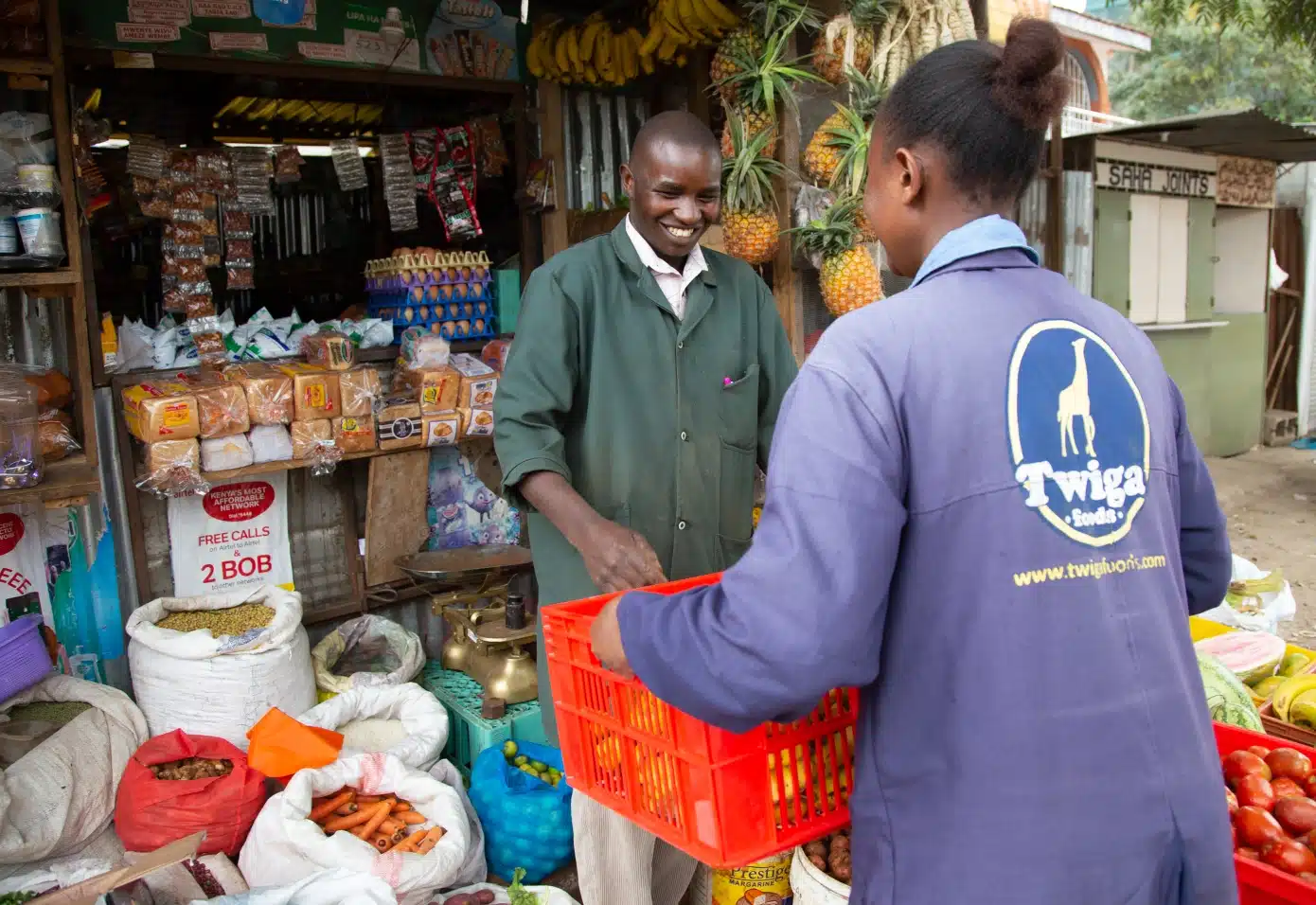
Twiga Foods, one of Kenya’s agritech startups, has entered administration after years of financial pressure. The company is now operating under the supervision of an administrator, a move that gives creditors a formal process to recover what they are owed while giving the business a chance to be restructured rather than immediately shut down. The administration took effect on August 17, 2026, with Mohamed Mohamed appointed as administrator. Twiga Foods One Limited has since been renamed GT Flow Limited, according to records cited in the latest reporting.
As you may know, administration is not quite the same as liquidation. Under Kenya’s insolvency framework, an administrator takes control of the company’s affairs with the aim of keeping it running or finding a better outcome for creditors than simply selling everything off. So, for Twiga, this is effectively a major reset rather than an immediate goodbye. But it also means the company’s directors no longer have full control of its affairs, and the business now has to prove that there is enough value left to preserve.
Twiga’s fall is particularly notable because of how much money and attention it attracted during its growth years. Founded in 2014, the startup set out to use technology to connect farmers with informal retailers and make Kenya’s fragmented food supply chain more efficient. In November 2021, it raised a $50 million Series C, taking its total funding to about $110 million at the time. The round was led by Creadev, with investors including TLcom Capital, IFC, Goldman Sachs’ spinoff Juven and DOB Equity.
But the growth story started getting messier. In November 2022, Twiga laid off some of employees as it tried to reduce costs, and by 2023 it was already dealing with pressure from suppliers and other creditors. It also reduced its headcount by one third in August.
In November 2023, the company secured fresh funding to refinance its business and pay more than 100 suppliers with long-outstanding bills. It also had a public dispute with cloud services provider Incentro Africa over a KES 40 million ($261,879) debt claim. Things did not settle down for long. Twiga laid off another 59 employees in August 2024, while in May 2025 it launched an even bigger restructuring, creating a new holding company and cutting more than 300 jobs. That restructuring was part of a shift towards an asset-light model, including acquisitions of three FMCG distributors and a move away from owning as much of the physical distribution infrastructure itself.
The latest administration therefore looks less like a sudden collapse and more like the end point of several years of trying to make a difficult business model work. Twiga was trying to fix a very real problem, including moving food efficiently through Kenya’s fragmented retail market, but that meant dealing with warehouses, transport, fuel, inventory, spoilage, working capital, and thousands of small retailers.
By June 2025, it had even temporarily halted its Nairobi operations while considering cheaper locations for its distribution hub. The Twiga story is a useful reminder that raising tens or even hundreds of millions of dollars can help a startup scale, but it cannot permanently cover weak unit economics. For African startups, especially those operating in capital-heavy sectors such as logistics, agriculture, and commerce, the harder question is still whether the underlying business can eventually make money.
Airtel Kenya Telesonic is shutting down after two years

Airtel Africa is winding down Airtel Kenya Telesonic, its wholesale fibre business in Kenya, just about two years after launching it. The company has surrendered its Network Facilities Provider Tier 2 (NFPT2) licence to the Communications Authority of Kenya (CA), and the shutdown process is now underway. The Registrar of Companies is expected to strike the company off the register by December 2026.
For Airtel, this means pulling the plug on a Kenyan fibre business that never really got going. Telesonic reported zero revenue in both 2024 and 2025, while its net loss jumped from KSh 2.9 million ($22,000) in 2024 to KSh 16.1 million ($125,000) in 2025. By the end of 2025, it had accumulated losses of about KSh 19.1 million and just KSh 284,275 in cash, leaving the company with negative equity.
Airtel was trying to play in one of Kenya’s increasingly important infrastructure markets. Fibre networks sit underneath everything from enterprise connectivity and cloud services to broadband and data-heavy digital businesses. Telesonic was meant to sell wholesale connectivity to governments, large businesses, SMEs, startups and cloud providers. But Kenya already has some deeply established players, including Safaricom, Liquid Intelligent Technologies, Seacom and MTN’s Bayobab. Competing for wholesale fibre customers in that market clearly proved harder than expected.
The interesting part is how quickly things changed. Airtel launched Telesonic in February 2024 as a dedicated wholesale fibre business, using Airtel Africa’s existing terrestrial fibre and submarine cable infrastructure across its 14 markets. At launch, the company said it had more than 75,000 km of terrestrial fibre and planned to offer services including leased lines, dedicated internet access, IP transit, and MPLS. Telesonic was also connected to Airtel’s participation in the 2Africa subsea cable, which was expected to strengthen connectivity between African markets and the rest of the world.
But the Kenyan unit never found its footing. During 2025, it began the process of surrendering its fibre licence, and on January 21, 2026, the Communications Authority asked the company to return the original licence booklet for cancellation. It was submitted on February 6, the same day the board passed a resolution confirming the surrender.
With no meaningful revenue, rising losses, and little left on its balance sheet, the company prepared its 2025 accounts on a liquidation basis rather than as a going concern. The shutdown is a reminder that even with rising demand for connectivity across Africa, building or selling telecom infrastructure is a brutally competitive business, and having a huge regional network does not automatically translate into a profitable operation in every market.
Spiro wants more electric bikes on African roads

Africa’s electric mobility race is getting another big push. Yesterday, African EV company Spiro announced a partnership with Chinese electric two-wheeler giant Yadea to develop and scale electric motorcycles across the continent. The deal combines Yadea’s manufacturing and R&D capabilities with Spiro’s operations and battery-swapping network across seven African countries, with the two companies targeting commercial fleets, delivery riders, logistics operators and everyday commuters.
The partnership will make EVs work for African roads and pockets, rather than simply importing off-the-shelf electric bikes. Spiro and Yadea plan to co-develop two-wheelers suited to local road conditions and commercial use, while plugging them into Spiro’s battery-swapping ecosystem. That matters because riders who use their motorcycles for work cannot afford to sit around for hours waiting for a battery to charge. Swapping a depleted battery for a charged one can get them back on the road much faster.
There is a pretty big market behind this bet. Africa’s electric two- and three-wheeler imports from China jumped 60% in the first half of 2026 to $114.6 million, with electric motorcycles increasingly being used for commercial transport in East and West Africa. The shift is being driven by expensive fuel, demand for cheaper transport and governments looking for ways to cut emissions and reduce dependence on imported petrol and diesel. For companies like Spiro, the opportunity is therefore less about convincing people to buy electric cars and more about electrifying the motorcycles already carrying passengers, food and parcels around African cities.
Spiro has also been putting serious money behind that strategy. In June 2026, it raised $215 million in equity, followed by another $55 million from Chinese growth-stage investor NewTrails Capital, bringing the total raised that month to $270 million. The company said the money would go towards expanding its industrial footprint and battery-swapping infrastructure. This follows years of building out its network, including assembly and battery-swapping operations across markets such as Kenya, Nigeria, Rwanda, Uganda, Benin, and Togo.
The Yadea deal is essentially Spiro trying to move from building an African EV network to scaling it much faster. Yadea brings manufacturing scale and product-development expertise, while Spiro brings something that is harder for an overseas manufacturer to build from scratch: knowledge of African riders, commercial use cases and the infrastructure needed to keep electric bikes moving. If the partnership works, it could make electric motorcycles more affordable and easier to operate at scale. But the bigger test will be whether the two companies can solve the familiar EV problems, including financing, battery infrastructure, maintenance, and local manufacturing, well enough to make electric mobility commercially viable for Africa’s mass market.
In case you missed them
- This second-time founder left his consulting business to make Nigeria’s mining data accessible
- Police arrest Nigerian lady behind viral OPay shutdown tweet
What I’m watching
- The hidden rules of human connection | Daniel Coyle
- Every Level of Intelligence | You are Not At the Top
Opportunities
- Flutterwave is hiring for several roles. Apply here.
- Moniepoint is hiring for over 100 roles. Apply here.
- Follow Techpoint Africa’s WhatsApp channel to stay on top of the latest trends and news in the African tech space here.
Have a lovely Tuesday!
Victoria Fakiya for Techpoint Africa