



Γεια σου,
Victoria from Techpoint here,
Here’s what I’ve got for you today:
- Kenya wants one short code for everyone
- AI is coming for Africa’s radiology gap
- ARC Ride raises $33.3M to bet big on electric bikes
- Algeria opens tender for 3,000 areas
Kenya wants one short code for everyone

If you’ve ever seen a bank use one USSD code on Safaricom and another on Airtel, that could soon become a thing of the past. Kenya’s Communications Authority (CA) has introduced a new framework that changes how short codes are allocated, moving from an operator-based system to a service-based one. So instead of a business needing different codes depending on the network its customers use, one short code can now be tied to the service itself and work across networks. The new framework was announced yesterday, September 8, 2026, and applies to newly assigned codes.
That could make life considerably easier for businesses that depend on SMS, USSD and voice services. Think banks sending transaction alerts, schools sending notifications, broadcasters running voting lines, or organisations collecting donations. Under the old setup, a service could end up with separate codes for Safaricom, Airtel, and Telkom customers. The new system means the same service can use a single code across those networks, making it easier to advertise and less confusing for customers.
There’s another important change hiding underneath this. Content service providers can now apply directly to the CA for short codes, including bulk allocations they can subsequently assign to their customers. Previously, these providers had to work through individual mobile operators. For startups and companies building services around USSD and SMS, that removes one layer of negotiation and could make it easier to launch services that work across Kenya’s mobile networks from day one.
The move also comes as Kenya is trying to modernise how it manages something that is surprisingly easy to overlook: phone numbers are a finite national resource. The CA has been updating its numbering rules as mobile usage and digital services have evolved. In May 2025, its numbering plan already listed national short codes such as 112 and 999 for emergencies and 116 for the Child Helpline, while a draft framework published last year proposed broader changes, including harmonising short codes and eventually repealing the older 2012 short-code guidelines.
For ordinary Kenyans, not much changes today. Existing short codes allocated under the old system will continue working until their existing contractual or logical terms expire, so this isn’t a case of waking up to find your bank’s USSD code suddenly dead. The bigger change happens behind the scenes: new services can now be allocated codes based on what they do, rather than which network they sit on. And with the CA also working on rules for recycling inactive phone numbers and separately proposing a new licensing category for data centres, Kenya is clearly in the middle of a much broader telecom regulatory reset.
AI is coming for Africa’s radiology gap

The problem isn’t always getting an X-ray. Sometimes, it’s finding someone qualified to tell you what the X-ray shows. Across sub-Saharan Africa, imaging infrastructure is growing, but radiologists remain in painfully short supply. International guidelines suggest around 100–120 radiologists per million people, while many African countries have fewer than one radiologist for every 300,000 to 500,000 people. In Nigeria, which has a population of more than 230 million, there are fewer than 700 consultant radiologists, meaning one specialist could potentially serve hundreds of thousands of people. And because many specialists and imaging centres are concentrated in big cities, patients in underserved communities can still wait too long for a diagnosis.
That’s the gap South African healthtech company Nexus AI is trying to tackle. The company has built an AI-powered medical imaging tool that can analyse a chest X-ray in about 45 seconds, flagging possible abnormalities and signs associated with diseases such as tuberculosis. The interesting bit is that Nexus AI isn’t designed only for hospitals with reliable electricity and internet. Its technology can work in settings with limited infrastructure, which makes it particularly useful for mobile clinics and community-based screening programmes. The goal isn’t to replace radiologists but to help healthcare workers and specialists identify potentially abnormal scans faster and prioritise the cases that need human attention.
The company’s roots go back to 2013, when co-founders Gerhard Ferreira and Andries Vorster started LTE Medical Solutions to provide primary healthcare services across Africa. Ferreira, a medical doctor and former hospital group owner, and Vorster, an electronic engineer specialising in medical engineering, had spent years working in communities where healthcare access was difficult. Their work eventually took them into mobile X-ray screening in Mozambique, where they ran into another problem: healthcare teams were collecting huge amounts of patient data using spreadsheets, making it difficult to track patients, avoid duplication and ensure people got follow-up care. They responded by building Healthcare Framework, a clinical management platform that has since been used in about 20 African countries and processed more than five million consultations. Nexus AI was spun out in 2021 to tackle the next bottleneck: getting chest X-rays interpreted quickly enough.
Nexus AI is now positioning itself as another layer between screening and diagnosis, particularly in places where there simply aren’t enough radiologists to keep up. The company’s Class IIb medical-device classification also reflects that role: the AI is an assistant, not a replacement for the specialist. If it can reliably flag the scans that need attention, it could help healthcare teams screen more people without forcing every X-ray into an already overstretched radiology queue. For more information, check out the latest on Techpoint Africa.
ARC Ride raises $33.3M to bet big on electric bikes
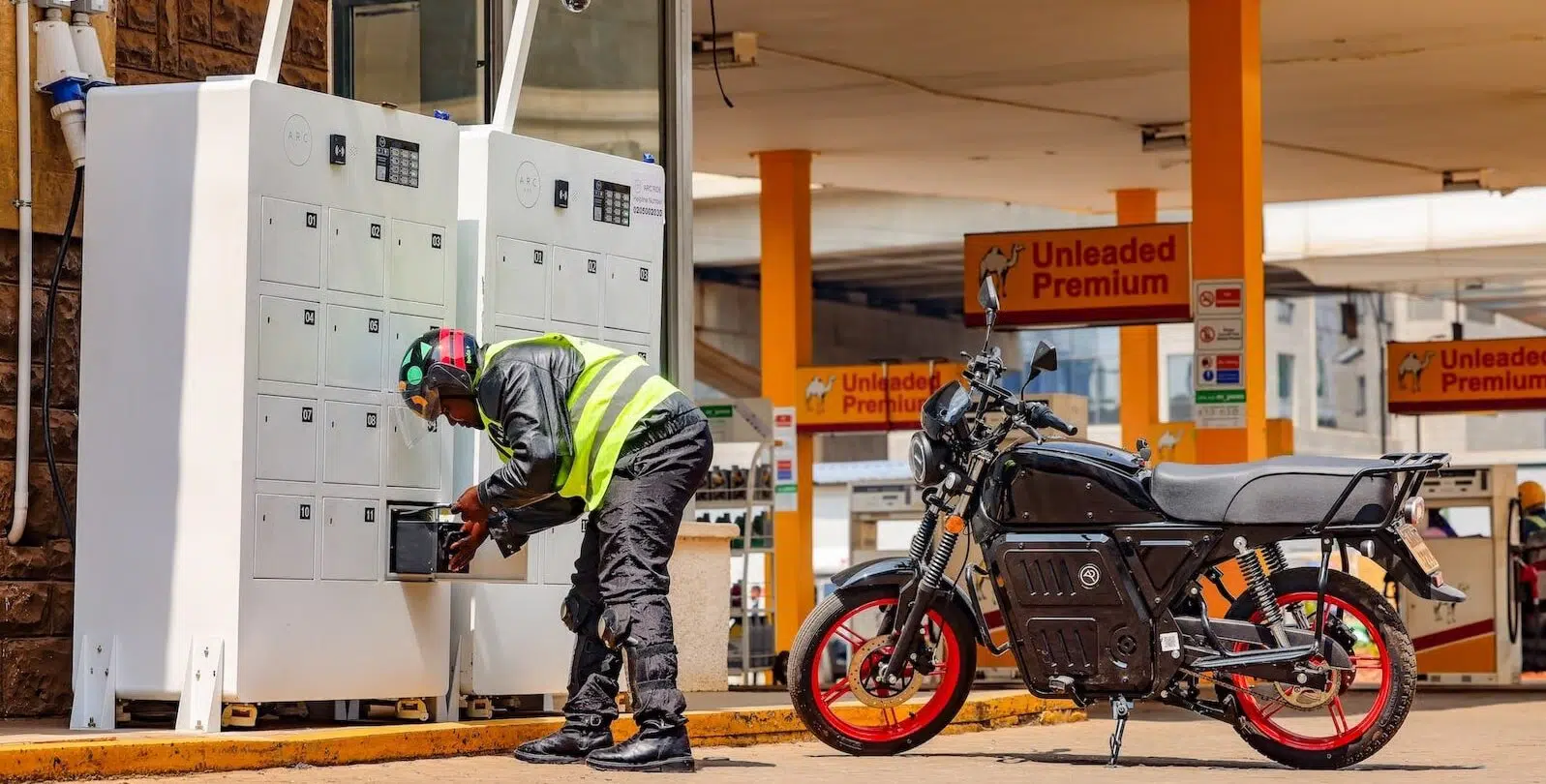
ARC Ride is putting serious money behind the idea that Africa’s motorcycle taxis can go electric. The Kenyan e-mobility company has just raised $33.3 million in a round led by Novastar Ventures and Norrsken22, with IFC, British International Investment (BII) and Proparco also participating. Existing backers Musashi Seimitsu and Talanton returned with more money, while the financing also includes debt from BII’s Kinetic programme and Mirova. ARC Ride says it will use the cash to expand its battery-swapping network and electric transport business across Africa.
The big plan is to put 5,000 more electric motorcycles on African roads while building the infrastructure to keep them running. Instead of riders waiting around for their bikes to charge, ARC Ride’s Battery-as-a-Service model lets them swap a depleted battery for a charged one at a swap station. That matters in markets where motorcycles are a major source of income and fuel can eat into a rider’s daily earnings. ARC Ride currently has operations or expansion plans spanning Kenya, Ghana, South Africa, Tanzania, and Uganda.
South Africa is particularly interesting because ARC Ride has been working towards entering the market this year. The company began a pilot of its ARC Panther electric motorcycle there in 2026 and has been developing battery-swapping infrastructure in Gauteng and Cape Town. It has also established an assembly operation in the country and produced its first motorcycles locally, according to industry reports. So this funding isn’t simply about selling more electric bikes. ARC Ride is trying to build the network around them, including batteries, swap stations, maintenance, and eventually local manufacturing, that could make electric two-wheelers practical at scale.
The company has been building towards this for several years. ARC Ride was founded in 2019/2020 and started in Kenya, where it developed electric two-wheelers alongside its battery-swapping infrastructure. In 2022, Japanese automotive supplier Musashi Seimitsu invested in the company and began working with ARC Ride on powertrain and vehicle components. Then, in September 2025, Mirova provided a $10 million debt facility, while IFC disclosed a proposed $5 million equity investment in February 2026, which its board approved in April. The IFC investment was aimed at expanding ARC Ride’s network in Kenya and supporting expansion into other African markets.
The timing also says something about where African e-mobility is heading. ARC Ride isn’t the only company chasing the battery-swapping opportunity: Spiro, Ampersand, Roam, and Kofa are also building electric motorcycle businesses across different African markets, with development finance institutions increasingly backing the sector. Spiro, for example, secured $50 million in debt financing earlier this year to expand its own swapping network. ARC Ride’s new $33.3 million round therefore isn’t just another startup funding story; it’s another sign that investors are becoming more willing to put serious money behind the infrastructure needed to move African transport away from petrol.
Algeria opens tender for 3,000 areas

Getting a mobile signal could soon become a lot less frustrating for people living in some of Algeria’s more remote communities. The country’s telecom regulator, the Regulatory Authority of Post and Electronic Communications (ARPCE), has launched a competitive tender to select one or more operators to provide mobile network coverage to 3,000 low-density localities across Algeria. The tender, announced on September 7, 2026, is part of the country’s universal electronic communications service programme and is aimed at extending public mobile networks to places where serving a small population may not otherwise make much commercial sense.
The idea is bigger than simply putting up more towers. Algeria wants the project to improve access to mobile and internet services in communities that have historically been harder to serve, helping reduce the digital gap between densely populated cities and less populated areas. The regulator says the project should also support the social and economic development of these communities and make access to communications less dependent on where someone lives. In other words, this is Algeria using regulation and universal-service funding to push operators into places where the business case for network investment is weaker.
And there is a reason this matters beyond the people who live in those 3,000 communities. Mobile connectivity has increasingly become the gateway to banking, government services, education, healthcare, work and the wider digital economy. Leaving low-density areas with poor coverage effectively leaves people there on the wrong side of Algeria’s digital economy. The government has also been looking at other ways to expand connectivity, including satellite services: in April 2026, ARPCE launched a tender for two licences for public electronic communications networks using non-geostationary-orbit satellites.
This latest push also builds on work that was already underway. In February 2025, Algeria’s Ministry of Post and Telecommunications said it wanted operators to improve coverage across populated areas and major roads, increase internet speeds and accelerate a universal-service programme targeting 1,400 low-density areas with 4G and voice coverage. By 2024, ARPCE had already published the results of bids connected to a 2023 tender for operators to provide universal communications services to those 1,400 locations. The new 3,000-locality tender therefore looks like a significant expansion of that earlier effort rather than a completely new idea.
The big question now is how quickly operators can turn the tender into actual coverage. ARPCE says the selected operator or operators will be responsible for providing the public mobile network coverage under the universal service framework. If the project delivers as planned, thousands of communities that have struggled with weak or missing connectivity could get better access to mobile Internet and communications. For Algeria, that makes this less about another telecom tender and more about closing one of the stubborn gaps in its digital infrastructure.
In case you missed them
- The startup that took Lagos danfos cashless paid transport unions in cash, weekly. It wasn’t enough
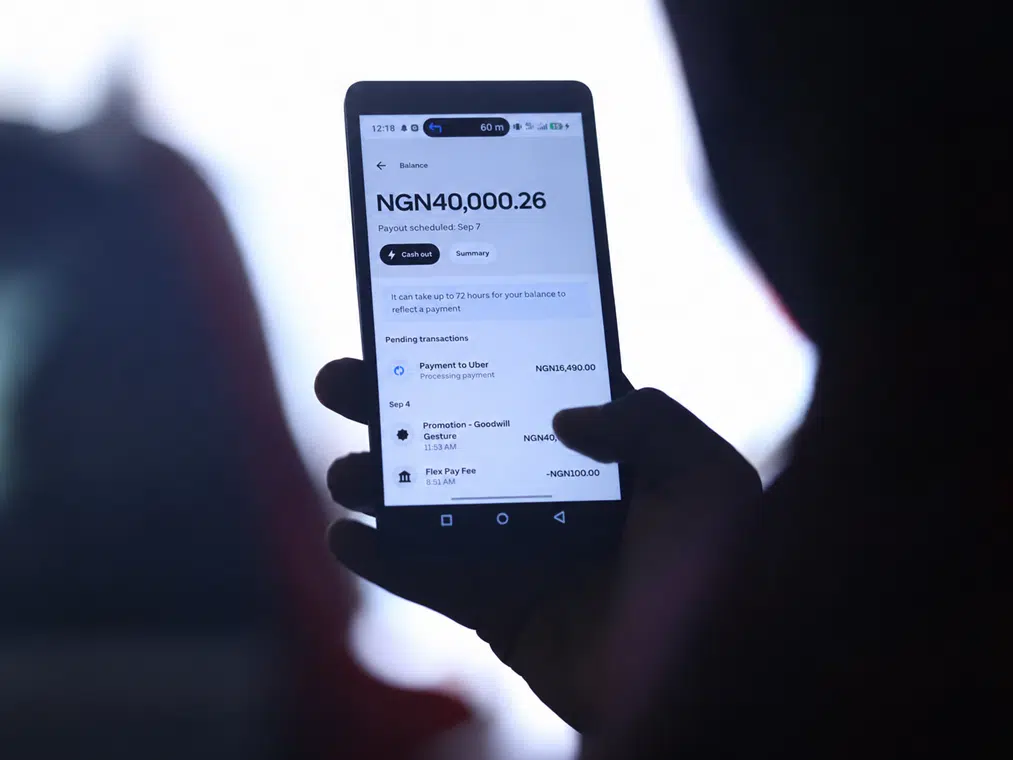
- Uber offers Nigerian drivers ₦40,000 ($30.28) each in conditional payouts after exit
- Why Africa is yet to have its own tech billionaire class
What I’m watching
- Why Cancer Is Rising in Young People
- How your Brain Hallucinates your Conscious Reality – Anil Seth
Opportunities
- Flutterwave is hiring for several roles. Apply here.
- Moniepoint is hiring for over 100 roles. Apply here.
- Follow Techpoint Africa’s WhatsApp channel to stay on top of the latest trends and news in the African tech space here.
Have a wonderful Wednesday!
Victoria Fakiya for Techpoint Africa