



S̄wạs̄dī,
Victoria from Techpoint here,
Here’s what I’ve got for you today:
- Airtel’s 25-year licence still awaits approval in Kenya
- Why Nigeria is probing Uber
- Netflix, WhatsApp face ICASA probe
- DStv Premium is losing its grip in SA
Airtel’s 25-year licence still awaits approval in Kenya

Airtel Kenya thought its long-running licence headache was finally over. Not quite. The Communications Authority of Kenya (CA) has now published a notice showing that Airtel’s applications for two key permits are still awaiting approval, despite the company saying in August that it had secured a new 25-year licence. The CA says the applications for a Network Facilities Provider Tier 1 (NFPT1) licence and an International Gateway Systems and Services (IGSS) authorisation are open for public submissions until September 28, 2026, after which the regulator can make a decision.
The NFPT1 permit allows Airtel to deploy communications infrastructure across Kenya, including data centres, while the IGSS authorisation covers satellite-related services and technology. And that second one is particularly important right now because Airtel is preparing to bring Starlink Direct-to-Cell connectivity to Kenya. Airtel and SpaceX successfully tested satellite-powered data and messaging in Kenya in March 2026, but a successful test doesn’t mean the service can simply go live without regulatory approval.
For customers, the bigger story is what Airtel could eventually do with the satellite partnership. The idea is to let compatible phones stay connected in places where Airtel’s terrestrial network doesn’t reach, without customers needing a Starlink dish. Airtel Africa launched its first commercial Starlink Mobile service in the DRC in August 2026, but the company has said rollouts across its other markets will depend on local regulatory approvals. So Kenya is now stuck at an interesting point: Airtel has tested the technology, but the regulatory door still needs to open fully.
And this licence confusion has been years in the making. Airtel’s original Kenyan licence expired in 2015, and the company spent years in a dispute with the regulator. Airtel had inherited the licence from YuMobile after acquiring the operator in 2014. An out-of-court settlement in 2022 helped trigger a renewal of the expired licence through 2025. Then, in September 2024, the CA gave Airtel a temporary two-year extension, effective January 2025, while the two sides worked through issues including fees, spectrum and penalties for service outages. That temporary permit runs until January 2027.
Then came the apparent breakthrough. On August 6, 2026, Airtel Kenya CEO Djibril Tobe said the company had secured a 25-year licence after paying an undisclosed fee and that only the final administrative steps, including the satellite permit, remained. A few weeks later, however, the CA’s August 28 gazette notice showed that the applications were still going through the formal approval process. The regulator and Airtel have not publicly explained the apparent mismatch. Meanwhile, rival Safaricom has already secured its own 25-year licence. So for now, Airtel is operating, but the exact status of its long-term permits, and when its Starlink-powered service can launch in Kenya, remains an unusually messy regulatory puzzle.
Why Nigeria is probing Uber

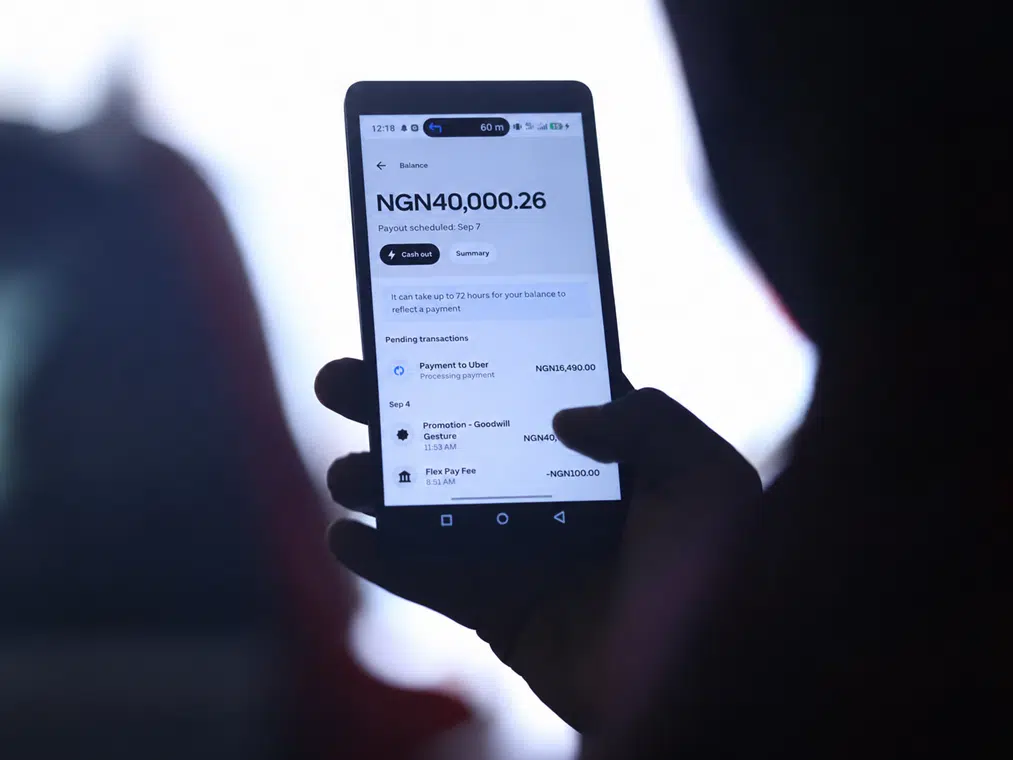
Uber may have left Nigeria, but the story clearly isn’t over. The Federal Competition and Consumer Protection Commission (FCCPC) has now opened a probe into the ride-hailing company’s exit, with a particular focus on whether customers were left with unfulfilled services or other outstanding obligations. FCCPC CEO Tunji Bello disclosed the investigation to Bloomberg on September 6, just four days after Uber shut down its Nigerian operations.
Recall that on September 2, 2026, the company announced that it was winding down in Nigeria and Uganda effective immediately, ending its 12-year run in Nigeria. Uber said the decision followed a review of its business and investment priorities, but it did not give a specific reason for leaving Nigeria. Its help centre is expected to remain available until September 23 for customers with outstanding account issues.
For customers, the FCCPC’s question is pretty straightforward: what happens to people who were still owed something when the app went dark? That could include unresolved customer issues or services that had not been completed. And there is a bigger competition question hanging over the exit too. Uber was one of the country’s biggest ride-hailing platforms, so its departure leaves Bolt, inDrive, and other players with more room to grab riders and drivers. For consumers, that could eventually mean fewer choices and potentially higher fares if competition weakens.
Uber’s departure also comes after years of tension in Nigeria’s ride-hailing market. The company launched in Lagos in 2014 and expanded to other cities, but operating in Nigeria became increasingly difficult as inflation, fuel and vehicle costs, naira volatility, and competition squeezed the economics of the business. Drivers have also protested over fares, commissions, and working conditions at different points, including in 2017, 2023 and 2025. More recently, there was a separate dispute over e-hailing operations at Nigerian airports, although Uber and the Federal Airports Authority of Nigeria have both said the FAAN issue was not the reason for Uber’s exit.
What’s more, on September 2, alongside the Nigeria and Uganda exits, Uber announced plans to cut more than 3,000 jobs globally as it restructures and refocuses spending. The company has not said that Nigeria was unprofitable or that the airport dispute forced it out. For now, its official explanation is a review of its evolving business priorities and investment focus. The FCCPC probe could therefore shed more light on the practical side of the exit, especially whether Uber properly dealt with its obligations to customers before switching off the service.
Netflix, MTN, WhatsApp face ICASA probe

South Africa’s telecom regulator is opening two fresh investigations that could put MTN, Vodacom, Telkom, and Cell C, as well as big Internet platforms such as Netflix and WhatsApp, under even more pressure. ICASA says it wants to examine both the impact of over-the-top (OTT) services on traditional telecoms and broadcasting players and why communications remain so expensive in the country. The regulator’s notices were published on September 4, with the move coming as the government grows increasingly frustrated that years of interventions have not brought prices down enough.
For Netflix and WhatsApp, the interesting bit is the OTT investigation. These platforms deliver services over networks owned and maintained by telecom companies, without operating like traditional licensed broadcasters or network operators. ICASA says services such as Netflix and WhatsApp have disrupted traditional broadcasting by competing for audiences and revenue while using conventional communications infrastructure. The inquiry could therefore reopen the long-running “fair share” argument, where telecom operators want large traffic-generating platforms to contribute towards the cost of building and maintaining the networks they rely on.
And then there is the part ordinary South Africans will probably care about most: how much they pay to stay connected. ICASA says the country still has concerns around the affordability of voice and broadband services, particularly for low-income households, rural communities, young people, and informal businesses. That matters because cheaper spectrum and more competition were supposed to make connectivity more affordable, but consumers are still complaining about the cost. ICASA’s latest move is effectively asking: if all these interventions have happened, why does getting online still cost this much?
This frustration has been building for years. In 2019, the Competition Commission’s data services inquiry found problems with South Africa’s mobile data market and pushed MTN and Vodacom towards significant price reductions and other measures. Then, in March 2022, ICASA finally completed its long-delayed high-demand spectrum auction, raising more than R14.4 billion and giving MTN, Vodacom, Telkom, Cell C, Rain, and Liquid additional spectrum. The expectation was that more spectrum would improve capacity, coverage, and ultimately help bring prices down. Four years later, ICASA and the government clearly aren’t convinced the benefits have reached consumers quickly enough.
Now the pressure is coming from several directions at once. In August 2026, Communications Minister Solly Malatsi’s department launched its own investigation into the best policy tools for reducing South Africa’s high communications costs, while ICASA has also been considering the impact of OTT platforms since earlier this year. Last week, major telcos even sought a competition waiver to share infrastructure-planning information, potentially helping them reduce costs and expand into underserved areas. ICASA’s enquiries will now go through questionnaires, stakeholder submissions, public discussions and hearings, with the full process potentially taking nine months to a year or longer. So this isn’t an overnight price-cut announcement, but it could eventually reshape how South Africa regulates both the companies carrying the internet and the platforms using it.
DStv Premium is losing its grip in SA

If you’re a DStv subscriber in Nigeria or Kenya, don’t rush to start checking your decoder just yet. The big package shake-up happening from September 17, 2026, is currently a South Africa story. But it could still tell us quite a bit about where DStv is heading across Africa. In South Africa, MultiChoice is scrapping Access, Family, and Compact, replacing them with Starter, Select, and Sports, while adding a new Movies & Series package. The biggest change is that sports such as cricket, the UEFA Champions League, and more domestic rugby are moving down from Premium into the new Sports tier.
The new South African Sports package will cost R479 a month on satellite and R399 on DStv Stream, and will include every Premier League, PSL, and Champions League match; all cricket; the Currie Cup; the SA Cup; Varsity Rugby; and some URC and UFC content. Premium, meanwhile, remains R979 on satellite, although customers willing to sign a 24-month contract can get it for R799. There’s also a Movies & Series package at R500, bringing M-Net and KykNet outside the Premium wall for the first time, alongside movie and entertainment channels.
For subscribers outside South Africa, the important thing is that there’s no announced September 17 overhaul of this scale in those markets. For instance, DStv Nigeria’s current line-up still includes Premium, Compact Plus, and Compact, with Premium at ₦44,500, Compact Plus at ₦30,000, and Compact at ₦19,000 a month. Kenya similarly still has Premium, Compact Plus, Compact, Family, Access, and Lite. So while the South African experiment could eventually influence how MultiChoice structures its other markets, it would be wrong to say other subscribers outside South Africa are getting these new packages right now.
Interestingly, DStv is clearly trying to stop making customers buy a huge bundle just to get the one thing they actually want. In South Africa, that thing is often football. MultiChoice itself admits customers have complained for years about being pushed towards Premium when they only wanted particular sports and entertainment channels. The company is taking a risk by putting more premium content into cheaper tiers but it is betting that a simpler line-up will bring people in, keep them subscribed, and reduce the temptation to downgrade or leave altogether. It also fits with the wider move away from the old decoder-first model: since June 1, 2026, DStv Stream has been pre-installed on new Samsung smart TVs across 18 African markets, including Nigeria and Kenya.
What’s more, MultiChoice has spent 2026 trying to simplify its streaming strategy after Canal+ took control of the group. In March 2026, it announced that Showmax would be discontinued because its losses were no longer sustainable; the standalone service eventually shut down on April 30, with much of its content moved into DStv Stream. Now DStv is simplifying the traditional package business too, while pushing harder into streaming. For Nigeria and Kenya, there’s no new package overhaul to celebrate yet. But if this South African experiment works, it could become a blueprint for how DStv tries to keep African households paying in a world where Netflix, YouTube, and cheaper streaming options are making the old pay-TV bundle increasingly difficult to defend
In case you missed them
- The startup that took Lagos danfos cashless paid transport unions in cash, weekly. It wasn’t enough
- Uber offers Nigerian drivers ₦40,000 ($30.28) each in conditional payouts after exit
- Why Africa is yet to have its own tech billionaire class
What I’m watching
- How AI Is Breaking the Internet (and What to Do About It) | Matthew Prince | TED
- Gaslighting Expert: This Question Catches Liars, Spot Deception Every Time! | Dr Leanne Ten Brinke
Opportunities
- Flutterwave is hiring for several roles. Apply here.
- Moniepoint is hiring for over 100 roles. Apply here.
- Follow Techpoint Africa’s WhatsApp channel to stay on top of the latest trends and news in the African tech space here.
Have a lovely Tuesday!
Victoria Fakiya for Techpoint Africa