



Goeie dag,
Victoria from Techpoint here,
Here’s what I’ve got for you today:
- MoMo PSB names ex-Flutterwave COO CEO
- Timon is building finance without borders
- Starlink goes live in Equatorial Guinea
MoMo PSB names ex-Flutterwave COO CEO

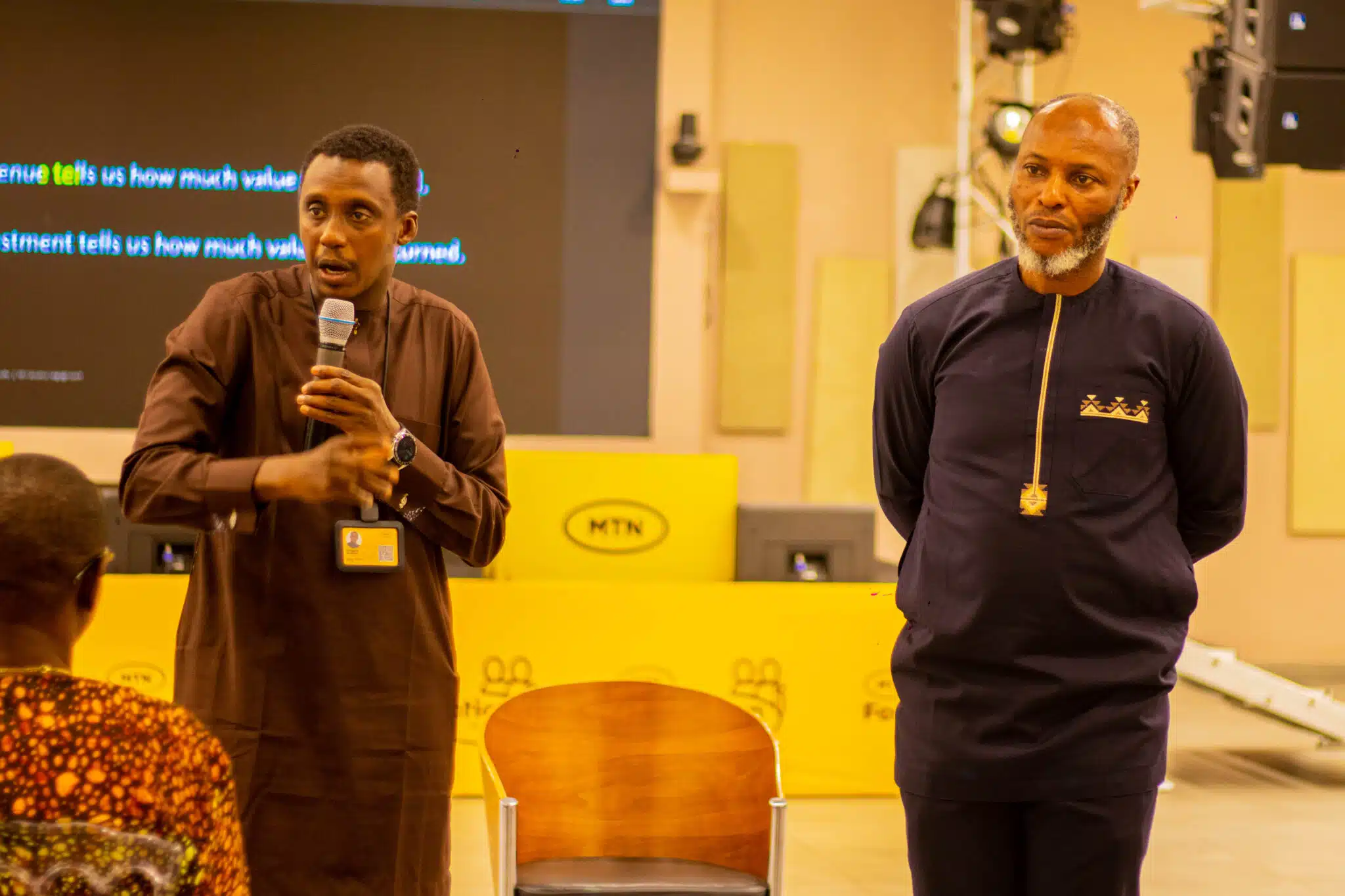
MoMo Payment Service Bank is getting a new boss. Bode Abifarin, the former Chief Operating Officer of Flutterwave, will become MoMo PSB’s Managing Director and CEO, starting today, September 1, 2026, taking charge of MTN Nigeria’s fintech business at a time when the group is pushing much harder into financial services. Abifarin brings more than 23 years of experience across financial services, consulting, digital payments, fintech and business transformation.
The appointment is interesting because Abifarin is coming from one of Africa’s biggest fintechs. At Flutterwave, she was involved in scaling operations across multiple markets, building operating models and working with regulators as the company expanded. Before that, she spent 15 years at KPMG, rising to Associate Director in management consulting and advising financial institutions and other organisations across Africa. She later founded Strata Advisory, a technology-focused consultancy. In other words, MoMo is bringing in someone who has seen both the consulting side of financial transformation and the messy business of actually scaling a fintech.
And she is walking into a business that is about to become more important to MTN’s strategy. In April 2026, MTN Nigeria announced plans to sell a 60% stake in MoMo PSB and Y’ello Digital Financial Services (YDFS) to MTN Group for ₦152.06 billion, while MTN Nigeria would retain the remaining 40%. The restructuring is intended to create a more focused fintech operation within the wider MTN Group. Abifarin, therefore, isn’t simply taking over a mobile-money business; she is arriving as MTN reorganises the business around a bigger financial-services ambition.
That ambition has also become clearer in recent weeks. On August 25, 2026, MTN Group CEO Ralph Mupita said the company was exploring banking licences in selected markets as it looks to move deeper into lending. MTN sees credit as a major growth opportunity, potentially allowing the group to move beyond payments and mobile wallets into more financial products. For MoMo PSB in Nigeria, which already has the advantage of MTN’s huge customer base and distribution network, the opportunity is to turn that reach into a broader digital financial-services platform.
So Abifarin has plenty on her plate. She is expected to expand MoMo PSB’s digital financial services while deepening financial inclusion and making the platform more useful to individuals and businesses. And the timing is favourable: Nigeria’s digital financial ecosystem continues to grow alongside mobile usage, with the country recording 157 million active mobile subscriptions in May 2026, according to Nairametrics. MTN alone accounted for 83.5 million of those subscriptions. The bigger question now is whether Abifarin can turn that enormous distribution advantage into a fintech business that can compete not just on payments but across the wider financial-services market.
Timon is building finance without borders

One of the most annoying parts of travelling as an African is having money but somehow not being able to spend it. Your card works perfectly at home, then suddenly becomes useless when you land in another country. You need to download a new app, register for a local payment service, get another card, or figure out how to move your money just to pay for lunch. After years of dealing with this, Timon co-founders Tomi Ayorinde and Chizaram Ucheaga decided they were tired of working around the problem and wanted to build something for it.
The founders had both experienced different versions of the same frustration for more than a decade. And while Africa’s fintech boom has made sending and receiving money across borders easier, Ayorinde says much of the infrastructure is still designed around individual countries. Think of someone earning in dollars, living in Lagos, travelling to Nairobi and then heading to London. Their money may technically travel with them, but their financial products often don’t. That can mean juggling different cards, banking apps, wallets, currencies and payment methods every time they cross a border.
That became the starting point for Timon. The company initially focused on giving Africans a card they could use abroad, but the founders soon realised that payments were only one part of the problem. Today, Timon combines multi-currency wallets, virtual and physical cards, cross-border transfers, US dollar accounts, local payment options, and eSIMs in one platform. It is also working on services such as flight bookings, with the broader goal of making it easier for people to move between African and global markets without rebuilding their financial lives every time they travel.
But how does all of this actually work, and what does Timon offer that existing fintech products don’t? Read more about how the company works in Delight’s latest on Techpoint Africa.
Starlink goes live in Equatorial Guinea

Equatorial Guinea is now officially on Starlink’s African map. The satellite Internet service went live in the country on August 29, 2026, after Starlink and Elon Musk confirmed its availability, and residents can place orders through Starlink’s website. That makes Equatorial Guinea the 30th African country where Starlink is available, adding another market to the company’s rapid expansion across the continent.
But there’s an important catch: this isn’t yet a straightforward, permanent market entry. On July 29, 2026, Vice President Teodoro Nguema Obiang Mangue granted Starlink provisional approval, exactly a month before the service went live. The state-owned GITGE is now overseeing the rollout and will assess Starlink’s operations before deciding what long-term regulatory conditions should apply. So for now, Starlink is effectively operating on a trial basis, and the rules could still change.
That cautious approach has some history behind it. Starlink’s engagement with Equatorial Guinea dates back to at least March 2026, when the service was being considered largely as backup connectivity around a papal visit in April. Under an earlier regulatory framework, Starlink access was largely restricted to the oil and gas industry and other strategic infrastructure, while ordinary consumers needed government approval. The fact that a consumer order page is now live suggests the government is testing whether Starlink can have a wider role. Still, GITGE’s review will determine what happens beyond the current provisional period.
The timing also matters because Equatorial Guinea has a relatively small but still significant connectivity gap. The country had about 1.18 million Internet users at the end of 2025, representing roughly 60.4% internet penetration. For communities where extending fibre or mobile infrastructure is difficult or expensive, Starlink’s low-Earth-orbit satellites offer a way to get broadband without waiting for traditional infrastructure to reach them. The challenge, of course, is affordability: Starlink may improve availability, but that doesn’t automatically mean most households can afford the hardware and monthly subscription.
And this is part of a much bigger Starlink push across Africa. As of June 2026, the company had reached 26 African markets, with around 300,000 subscribers across the continent, and by July it was commercially available in 28 markets. Its rapid growth has even started creating capacity constraints in some countries, where demand has outpaced available network capacity. Now, with Equatorial Guinea becoming its 30th African market, the more interesting question isn’t whether Starlink can keep expanding but how governments will regulate it, how affordable the service will be, and whether satellite broadband can actually close Africa’s stubborn connectivity gaps.
In case you missed them
- After relying on OpenAI and Anthropic, Decide is building some AI of its own
- Meta agrees to pay up to $18 billion over claims Facebook and Instagram harmed children
- Mental Illness vs. Spiritual Warfare
What I’m watching
- Feel Better in 30 Days: A Doctor’s Simple Gut Reset to Stop Bloating & Boost Energy
- What Makes Humans Unique? The Science Of Imagination | SLICE SCIENCE | FULL DOC
Opportunities
- Flutterwave is hiring for several roles. Apply here.
- Moniepoint is hiring for over 100 roles. Apply here.
- Follow Techpoint Africa’s WhatsApp channel to stay on top of the latest trends and news in the African tech space here.
Have a lovely Tuesday!
Victoria Fakiya for Techpoint Africa