Shalom,
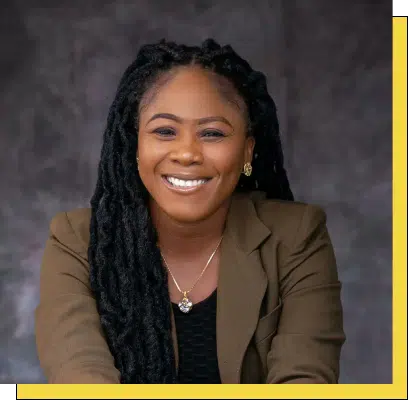
Victoria from Techpoint here,
Here’s what I’ve got for you today:
- DStv owner cuts over 300 jobs in South Africa
- Why Nigerians suddenly can’t borrow airtime
- SA withdraws draft AI policy over bogus references
DStv owner cuts over 300 jobs in South Africa

The latest sign of the pressure facing South Africa’s pay-TV industry came last week as MultiChoice, the owner of DStv, confirmed that more than 300 employees in South Africa have left the company through a voluntary severance programme. The job cuts form part of a broader restructuring effort that has been gathering pace since French broadcasting giant Canal+ completed its takeover of MultiChoice in late 2025. While the company insists these were voluntary exits rather than retrenchments, the move underscores how aggressively management is trying to cut costs and reshape the business for a streaming-first future.
What it means is that one of Africa’s most influential media companies is being forced to adapt to a very different entertainment landscape. For decades, DStv dominated pay television across the continent, but that advantage has been eroded by streaming platforms such as Netflix, YouTube, Disney+, and Amazon Prime Video. At the same time, consumers across South Africa and other African markets are facing economic pressure, making expensive television subscriptions easier to cancel. Subscriber numbers have been falling for several years, while profits have come under strain.
Interestingly, MultiChoice remains one of Africa’s largest investors in local television, film production, sports broadcasting, and news content. When the company cuts costs, the effects ripple through production houses, freelancers, suppliers, and the broader media ecosystem. The restructuring is also an indication of how rapidly traditional broadcasting is being disrupted by digital platforms, a trend that is affecting media companies worldwide.
The road to this point has been years in the making. As far back as 2018 and 2019, MultiChoice was already warning about pressure from streaming competitors and changing viewing habits. In 2019, the company proposed cutting more than 2,000 customer-service-related positions as digital self-service channels replaced traditional call centres. Since then, subscriber growth has stalled, revenues have weakened, and the company has repeatedly launched cost-cutting initiatives to protect profitability.
The latest round of departures also comes against the backdrop of Canal+’s takeover. When competition authorities approved the deal, employment protections were among the conditions, including a three-year moratorium on retrenchments following implementation. However, Canal+ has made no secret of its intention to streamline operations and improve efficiency. Earlier reports suggested further restructuring was likely as the new owners sought to stabilise the business. The challenge now facing management is whether it can stop the decline in subscribers and convince African viewers that DStv still has a place in an entertainment market increasingly dominated by on-demand services.
Why Nigerians suddenly can’t borrow airtime

Imagine running out of airtime in the middle of an important call or needing a quick data top-up before payday, only to discover that the borrowing service you’ve relied on for years has suddenly disappeared. That’s the reality many Nigerians have faced in recent weeks as airtime and data advance services became unavailable across some major networks, leaving millions of subscribers wondering what went wrong.
At the heart of the disruption is a new regulatory framework called the Digital Economy and Online Consumer Lending (DEON) Regulations 2025. The rules were introduced by the Federal Competition and Consumer Protection Commission (FCCPC) to crack down on predatory loan apps known for harassment, privacy violations, and aggressive debt collection tactics. But while the policy was initially aimed at digital lenders, its scope has expanded much further than many expected.
The FCCPC now considers airtime and data advances a form of consumer lending because subscribers receive a service upfront and repay it later. That classification means the technology companies powering these advances behind the scenes could be required to register under the new framework, comply with stricter data-sharing requirements, and pay additional regulatory fees. Industry players argue the new obligations could significantly increase costs and complicate operations.
The fallout has already been felt by consumers. Rather than immediately adapting to the new rules, some operators suspended parts of their airtime borrowing services, cutting off what has become an essential financial lifeline for an estimated 40 million Nigerians. What started as a crackdown on loan sharks has now sparked a broader battle involving regulators, telecom operators, technology providers, and the courts. Find out more information in Delight’s latest story for Techpoint Africa here.
SA withdraws draft AI policy over bogus references

What’s new? South Africa has formally withdrawn its draft National Artificial Intelligence Policy after an investigation confirmed that several references cited in the document were fictitious and likely generated by AI tools. The withdrawal was initially announced by communications minister Solly Malatsi in late April 2026, but in early June, the Cabinet officially endorsed the decision, clearing the way for a complete rewrite of the policy. Officials say a revised version is now expected to be published for public comment in January 2027 after review by an independent expert panel.
Why does this matter? Because this wasn’t just any government document. The draft policy was supposed to become South Africa’s roadmap for regulating artificial intelligence, supporting local AI development, creating new oversight bodies, and positioning the country as an African leader in the technology. Instead, the policy became a global cautionary tale about one of AI’s biggest weaknesses: hallucinations. The irony was impossible to ignore. A policy intended to promote responsible AI use was itself undermined by what appears to have been irresponsible AI use.
Here’s some backstory: On April 10, 2026, the draft policy was published for public comment after receiving Cabinet approval. Days later, journalists and researchers began identifying references that simply didn’t exist. By April 24, concerns had been formally raised with the government, and on April 26, Malatsi withdrew the entire document after internal checks confirmed the problem. The minister acknowledged that AI-generated citations had likely been inserted without proper verification and called the episode a major failure of oversight.
The fallout didn’t stop with the policy itself. By the end of April, two officials in the Department of Communications and Digital Technologies had been placed on precautionary suspension while investigations continued. The controversy widened when the Department of Home Affairs discovered a similar problem in one of its own policy papers, where more than 100 references were reportedly unverifiable. Government departments have since begun reviewing documents and introducing stronger checks around the use of generative AI in official work.
Perhaps the bigger story is what this reveals about governments worldwide. South Africa is far from the first institution to discover that AI can produce convincing-looking citations that don’t actually exist. One of the best-known examples came in 2023, when two New York lawyers relied on ChatGPT for research in the Mata v. Avianca lawsuit and unknowingly submitted court filings containing fake legal cases generated by the chatbot. The incident became a global warning about the risks of using AI-generated research without verification.
However, what made this case remarkable was that the hallucinations survived multiple layers of review, Cabinet approval, and publication before being caught by outsiders. Critics have argued that local AI experts should have been consulted earlier, while online reaction ranged from disbelief to mockery. Now the government faces the task of rebuilding trust, rewriting policy, and proving it can govern AI without falling victim to the technology’s most famous flaw.
What I’m watching
- The dark side of AI – Exploitation of humans and nature | DW Documentary
- Why millions are choosing not to have children | The Population Bust
Opportunities
- Qore is hiring for several positions. Apply here.
- Oui Capital has an exclusive AI mixer coming up on June 26. Interested founders, researchers, and engineers should apply here. Apply here.
- inDrive is hiring to fill several vacancies in different countries. Apply here.
- Are you a female-led tech or tech-enabled business preparing for sustainable growth and opportunity to access capital? Apply for the Female Founders Growth Programme and grab up to $2 million. Apply here.
- Bamboo is hiring in Ghana and Nigeria. Apply here.
- Cowrywise is recruiting some engineers. Apply here.
- PiggyVest is looking for a Product Technical Manager. Apply here.
- Paystack is hiring for a few roles. Apply here.
- Moniepoint is recruiting for several roles. Apply here.
- Flutterwave is hiring for several roles in Nigeria, the UK, and the US. Apply here.
- As one of Techpoint Africa’s most engaged readers, you have a direct hand in shaping what we publish next. Take our quick, 3-minute survey to tell us the stories and features you value most. Your responses are anonymous, and your feedback will help guide our editorial focus in the months ahead. Fill the survey here.
- Moniepoint is hiring for over 100 roles. Apply here.
- To pitch your startup or product to a live audience, check out this link.
- Follow Techpoint Africa’s WhatsApp channel to stay on top of the latest trends and news in the African tech space here.
Have a productive week!
Victoria Fakiya for Techpoint Africa