



Kaixo,
Victoria from Techpoint here,
Here’s what I’ve got for you today:
- Yango is coming for Africa’s ride-hailing giants
- Nairobi breathes again as transport strike pauses
- MultiChoice braces for major job cuts
Yango is coming for Africa’s ride-hailing giants
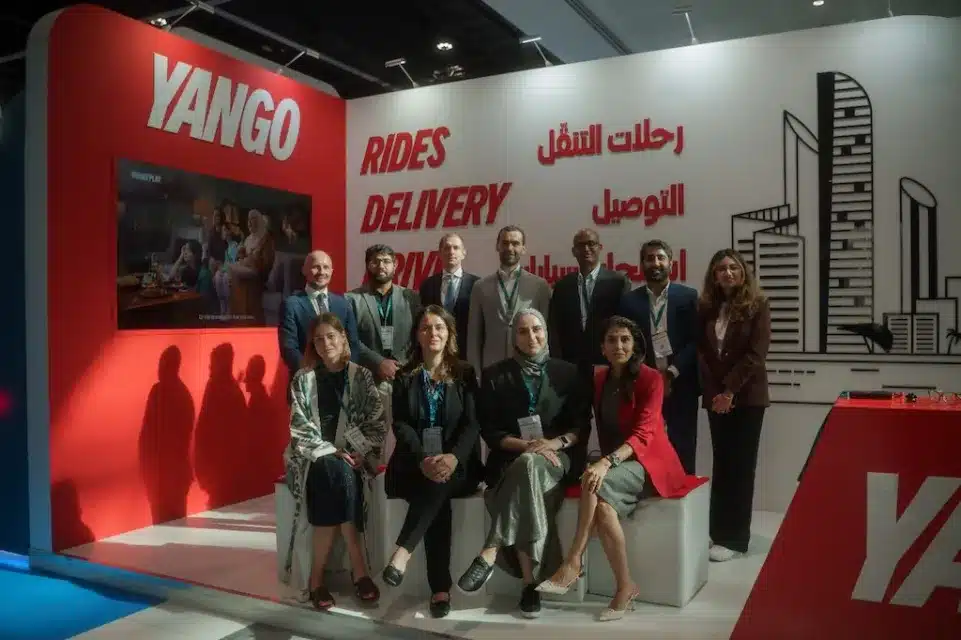
Africa’s ride-hailing wars just got a lot more serious. Yesterday, Yango Group announced a fresh $150 million funding round to expand its African operations, giving the Dubai-based tech company a much bigger war chest to compete with Uber, Bolt, and InDrive across the continent. Yango may still feel newer to many African users, but the company has been moving quietly and aggressively behind the scenes for years. What started as a ride-hailing app has steadily expanded into food delivery, parcel logistics, mapping, payments, vehicle financing, entertainment, and fintech tools for drivers and small businesses. This latest raise feels less like ordinary expansion capital and more like Yango formally announcing its intent to become part of Africa’s daily infrastructure.
The interesting thing is that Yango is not only spending money on rides. The company has been building what looks increasingly like a full super-app ecosystem underneath the surface. In Kenya, it backed BuuPass, the intercity transport booking platform that has processed millions of bus tickets. It also invested in Zanifu, a fintech helping small retailers access inventory loans, and later expanded into gig-worker vehicle financing through Gigmile. In markets like Cameroon, Yango has already layered ride-hailing with delivery services, logistics, and in-app lending products. The strategy is becoming clearer now: use mobility as the entry point, then slowly connect transport, commerce, payments, and financial services into one ecosystem people depend on every day.
That matters because Africa’s ride-hailing market has mostly been a two-player story for years. Uber dominated premium urban markets while InDrive built traction by letting passengers negotiate prices directly with drivers. Bolt remained competitive on pricing and availability in several cities, but nobody really attempted to build a Southeast Asia-style super-app ecosystem at serious scale. Yango is now trying exactly that. Alongside this new $150 million raise, the company already launched a separate $20 million venture arm earlier in 2025 to invest directly into African startups tied to logistics, fintech, and online-to-offline infrastructure. It is essentially attacking the market from both sides at once, operating services directly while also funding the infrastructure startups its own ecosystem could eventually rely on.
Yango expanded rapidly after separating from Yandex following sanctions linked to Russia’s invasion of Ukraine. Instead of collapsing, the restructuring allowed Yango to focus aggressively on emerging markets across Africa, Latin America, and the Middle East, where growing smartphone use and weak transport infrastructure created major opportunities.
The company is now aiming to become a “super-app” by combining ride-hailing, food delivery, maps, payments, logistics, vehicle financing, and startup investments into one ecosystem. Backed by $150 million in funding, Yango is positioning itself as a serious competitor to Uber and inDrive in Africa. However, achieving that vision will require major investment, strong infrastructure, and the ability to navigate complex regulations and build customer loyalty across different cities and markets.
Nairobi breathes again as ride-hailing strike pauses
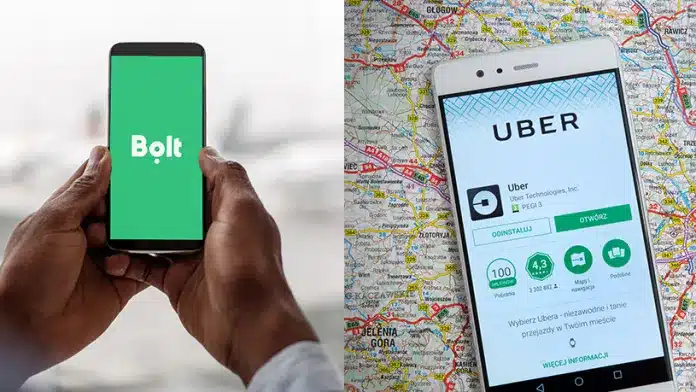
Kenya’s transport sector is moving again, but few believe the crisis is truly over. On May 19, 2026, matatu operators, ride-hailing drivers, and other transport groups agreed to suspend their nationwide strike after hours of negotiations with the government in Nairobi. The temporary truce gives both sides seven days to continue talks under a consultation framework overseen by Interior CS Kipchumba Murkomen and Nairobi Governor Johnson Sakaja. Public transport has returned to the roads for now, but operators insist this is only a pause, not a resolution. If negotiations fail before May 26, the strike could resume just as quickly as it ended.

Victoria Fakiya – Senior Writer
Techpoint Digest
Stop struggling to find your tech career path
Discover in-demand tech skills and build a standout portfolio in this FREE 5-day email course
The standoff was triggered by soaring fuel prices. In the latest pricing cycle, diesel prices increased by KSh 46.29 per litre, while petrol rose by KSh 16.65, pushing diesel prices in Nairobi to nearly KSh 243 per litre. Transport operators say fuel costs have surged by almost 70% within two months, blaming global supply disruptions linked to the US-Israel conflict involving Iran and shipping tensions around the Strait of Hormuz. Matatu groups immediately warned of fare increases of up to 50%, while drivers rejected the government’s proposed KSh 8 to KSh 10 fuel relief package during negotiations, arguing that it barely addresses the scale of the increase. Their demands now include a complete rollback of the diesel hike, removal of fuel VAT, and the scrapping of the Road Maintenance Levy.
Before the agreement was reached, the nationwide strike brought much of Nairobi to a standstill. Bus stops overflowed with stranded commuters, matatus disappeared from the roads, and many residents were forced to walk long distances to work. At the same time, boda boda riders and Uber and Bolt drivers bypassed ride-hailing apps to demand direct cash payments, underscoring the scale of the disruption.
The unrest became more serious after reports that four protesters were killed during clashes with police, transforming the strike from an economic protest into a broader political confrontation. Protesters are demanding lower fuel prices, the removal of Energy CS Opiyo Wandayi, reforms at the Energy and Petroleum Regulatory Authority, changes to Kenya’s fuel import system, and the revival of the Changamwe Oil Refinery project to support local oil refining.
The larger challenge for Kenya is that the government has limited room to manoeuvre. Global oil prices remain unstable, while the Finance Bill 2026 is introducing new taxes across the digital economy at a time when public frustration over the cost of living is already high following last year’s Finance Bill protests. Although transport services have resumed after the temporary agreement, the underlying issues — rising fuel costs, taxation, transport regulation, and growing economic pressure on ordinary citizens — remain unresolved. The strike may be suspended, but the tensions that created it are still very much alive.
MultiChoice braces for major job cuts

MultiChoice’s long-rumoured restructuring is no longer rumours anymore. After months of financial pressure, subscriber losses, and the shutdown of Showmax, reports now suggest Canal+ is preparing major job cuts across the company as part of a wider overhaul of the African pay-TV giant. The French media company, which officially took control of MultiChoice earlier this year, is trying to stop the bleeding fast. In March 2026, Canal+ announced a $115 million turnaround plan alongside planned layoffs, making it clear that cost-cutting is now central to its strategy for rebuilding the company.
The timing explains why anxiety inside MultiChoice is rising. Showmax, once positioned as Africa’s answer to Netflix, officially shut down on April 30, 2026, after years of heavy losses and an expensive relaunch effort tied to Comcast’s Peacock technology partnership. Canal+ executives reportedly described the streaming platform internally as an “expensive failure,” with MultiChoice losing billions of rand over the last three financial years through streaming investments, licensing costs, and content spending. The company has since started moving Showmax content into DStv Stream instead, while trying to cut overlapping operations and simplify the business.
What makes this especially sensitive is that MultiChoice is not just another media company in South Africa. It sits at the centre of the continent’s sports broadcasting, entertainment, and local production industries. Thousands of jobs across film crews, production houses, technical contractors, writers, and creative teams depend on its spending. While competition regulators blocked Canal+ from retrenching permanent South African staff until at least mid-2028 as part of takeover conditions, concerns are growing that the real impact may hit freelancers, contractors, production budgets, and outsourced creative work first. Analysts and MPs have already warned that high-budget local productions could be among the first casualties as Canal+ aggressively cuts costs.
The build-up to this moment has been happening for years. MultiChoice has been battling falling subscriber numbers, rising piracy, foreign exchange pressure across African markets, and growing competition from Netflix, YouTube, Amazon Prime Video, TikTok, and cheaper streaming alternatives. By late 2025, cracks were already visible everywhere: channel shutdowns, licensing disputes, rising subscription prices, and mounting pressure on DStv’s traditional satellite model. Canal+’s acquisition was originally framed as a rescue mission that would stabilise the business and protect jobs. Now the strategy looks more like a deep corporate reset built around leaner operations, reduced overheads, and a return to core pay-TV profitability.
Behind all of this is a much bigger question about the future of African television itself. Canal+ says it still plans to invest in local African productions and expand distribution across the continent, but the company is also clearly moving away from the expensive “streaming wars” strategy that defined the last few years. Instead of trying to outspend Netflix globally, the new management appears focused on tightening operations, protecting sports rights, simplifying platforms, and rebuilding margins market by market. The problem is that turnarounds like this almost always come with casualties, and inside MultiChoice right now, many workers are waiting to find out whether they are part of the future or part of the restructuring spreadsheet.
In case you missed it
- Nigeria sets June 17, 2026 as official date for analogue-to-digital broadcast switchover
What I’m watching
- This is What Happens When You Die
- Why Brain Cancer is SO Dangerous
Opportunities
- Qore is hiring for several roles. Apply here.
- Didii is recruiting for several roles. Apply here,
- Clarus Technologies, in partnership with Norrsken East Africa, has launched Scale Velocity, a go-to-market accelerator aimed at helping high-potential startups across East Africa refine growth, strengthen commercial systems, and scale faster. Applications for the first cohort are now open, and founders are encouraged to apply. Apply here.
- Moniepoint is recruiting for several roles. Apply here.
- Flutterwave is hiring for several roles in Nigeria, the UK, and the US. Apply here.
- As one of Techpoint Africa’s most engaged readers, you have a direct hand in shaping what we publish next. Take our quick, 3-minute survey to tell us the stories and features you value most. Your responses are anonymous, and your feedback will help guide our editorial focus in the months ahead. Fill the survey here.
- Moniepoint is hiring for over 100 roles. Apply here.
- Building a startup can feel isolating, but with Equity Merchants CommunityConnect? You can network with fellow founders, experts, and investors, gaining valuable insights and exclusive resources to help you grow your business. Click here to join.
- To pitch your startup or product to a live audience, check out this link.
- Follow Techpoint Africa’s WhatsApp channel to stay on top of the latest trends and news in the African tech space here.
Have a wonderful Wednesday!
Victoria Fakiya for Techpoint Africa