



สวัสดีครับ,
Victoria from Techpoint here,
Here’s what I’ve got from you today:
- Airtel Africa posts record $813M profit, delays IPO
- Paytags could change how Nigerians send money
- Abuja court tells MTN and Airtel to stop blocking Nairtime
Airtel Africa posts record $813M profit, delays IPO

Last week, Airtel Africa posted the strongest numbers in its history and then immediately hit pause on the one thing investors were waiting for most. On May 8, 2026, the telecom giant reported a profit after tax of $813 million for the year ended March 31, up a massive 147% from $328 million the previous year. Revenue also climbed 29.5% to $6.41 billion, powered largely by growing demand for data and mobile money services across its 14 African markets. But despite all that momentum, the company also confirmed that the long-awaited Airtel Money IPO is no longer happening in the first half of 2026 as initially planned.
Airtel Money was the star inside those numbers: The mobile money business added customers aggressively over the last year, growing its user base by 21.3% to 54.1 million users. Even more striking, the number of active transacting customers jumped 74%, while annualised transaction value crossed $215 billion by the final quarter of the financial year. Those are the kind of numbers public market investors usually love. Which is exactly why the IPO delay feels less like a business problem and more like a timing problem.
Per Airtel Africa CEO Sunil Taldar, the company is still fully committed to listing Airtel Money but wants to wait for more stable market conditions. The reason? Global geopolitical tensions, particularly the Iran conflict, which has rattled markets, pushed up oil prices, and made investors more cautious about big emerging-market listings. In simple terms, Airtel doesn’t want to walk into Wall Street or London at the exact moment investors are nervous about risk.
For that reason, that caution makes sense because Airtel Money isn’t chasing a small listing. The IPO is expected to raise somewhere between $1.5 billion and $2 billion, with analysts previously floating valuation estimates around the $10 billion mark. Big institutional names are already invested in the business, including Mastercard, TPG, and a fund linked to Qatar’s sovereign wealth system. Airtel clearly believes the business is valuable enough to command serious global attention. The problem is that global markets right now are behaving like investors would rather wait than gamble.
What also makes this story interesting is that the same geopolitical tensions delaying the IPO are already showing up inside Airtel’s operations. Airtel Africa reported record EBITDA margins of 50.3% in the final quarter of FY26, the highest in its history, but also warned that rising energy costs could squeeze those margins going forward. Telecom networks across Africa rely heavily on diesel-powered infrastructure, so when global oil prices rise, operational costs rise almost immediately too. The war affecting investor confidence is also quietly increasing the cost of running the business itself.
Still, the bigger takeaway here is that Airtel Africa now looks less like a traditional telecom company and more like a fintech business hidden inside a telecom wrapper. Mobile money is increasingly becoming the growth engine, not just a side business. And while the IPO delay may disappoint investors hoping for a quick listing, Airtel’s latest numbers suggest the company is betting that waiting for calmer markets could ultimately help Airtel Money debut at a much stronger valuation later in the year.
Paytags could change how Nigerians send money
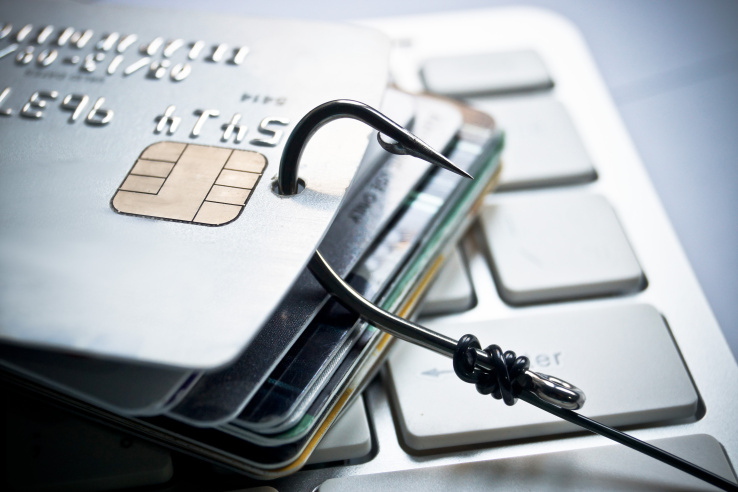
Every time you send money in Nigeria, you’re probably sharing more than you realise. A transfer that takes five seconds can quietly expose your full name, your bank, your phone number, and sometimes enough information for someone to start piecing together parts of your identity. Nigeria’s fintech ecosystem has spent years obsessing over speed and convenience — instant transfers, quick onboarding, and seamless payments — but as digital transactions explode, so have fraud and privacy concerns. And according to Chika Okere, the real vulnerability may not even be the payment rails themselves. It’s the amount of personal information attached to every transaction.
Speaking recently about the problem, Okere argued that fraud in Nigeria rarely begins with one dramatic data breach. It usually starts small: an account number shared for a transfer, a leaked phone number, a BVN exposed somewhere else, or a name tied to a payment trail. Over time, those fragments become enough for scammers to impersonate people or pull off social engineering attacks. “Nobody has all your information at once,” he explained. “They collect it gradually.”
That concern is what led Flex to build what it calls paytags, unique identifiers that allow users to send and receive money without exposing their actual account numbers publicly. The idea isn’t entirely new. Payment usernames and tags already exist globally across platforms like Cash App and Zelle. But in Nigeria, where fraud cases continue rising, and financial identity theft is becoming harder to ignore, the concept hits differently.
Instead of revealing your banking details every time you need to receive money, a paytag acts like a protective layer between your identity and your account. The banking infrastructure still works underneath, but users only see the tag, not the sensitive details attached to it.
For Okere, the idea became personal after a parking attendant recognised and called him by his middle name simply because he had transferred money to him previously. That moment triggered a bigger question: why should sending money require exposing personal information at all? Flex’s answer is not to replace banks but to mask the information banks expose during transactions. And as regulators tighten compliance rules and consumers grow more aware of data privacy risks, solutions like paytags may start looking less like a convenience feature and more like a necessary layer of protection in Nigeria’s digital economy. For more information, check out Chimgozirim’s and Delight’s latest for Techpoint Africa.
Abuja court tells MTN and Airtel to stop blocking Nairtime

If you’ve been following Nigeria’s airtime borrowing drama, here’s a new update: A Federal High Court in Abuja has ordered MTN and Airtel not to cut off Nairtime Nigeria Limited from critical telecom infrastructure like SMS, USSD, short codes, and billing systems while an ongoing legal battle plays out. Justice Emeka Nwite issued the interim order in suit FHC/ABJ/CS/779/2026 after Nairtime accused the telcos of disrupting its operations following the suspension of airtime lending services across the country.
At the centre of this story is Nairtime Nigeria Limited, a subsidiary of the global fintech group Optasia. Most Nigerians probably don’t know the company by name, but they’ve likely used services powered by it. Nairtime sits quietly in the background, providing the infrastructure that allows products like Xtratime and airtime advances to work across telecom networks. So when MTN and Airtel suspended those services in April following pressure linked to the FCCPC’s consumer lending rules, the disruption didn’t just affect subscribers trying to borrow ₦200 airtime. It effectively cut off Nairtime’s operational lifeline, too.
The important detail here is that the court order protects the infrastructure layer, not necessarily the consumer-facing products themselves. In other words, the judge is saying MTN and Airtel cannot block Nairtime’s technical access while the matter is still in court. But that doesn’t automatically mean airtime borrowing services are back. For millions of Nigerians who depended on those small advances to make calls or buy emergency data, the services are still unavailable. The pipes have been protected legally. The actual water still isn’t flowing.
What’s making this situation even more chaotic is that there are now multiple court orders and regulators pulling the industry in completely different directions. The FCCPC wanted operators to suspend lending services until they complied with digital lending rules. A Lagos court later restrained the FCCPC from enforcing parts of those same regulations. Then, Abuja courts stepped in to order the restoration of Nairtime’s access to infrastructure. So right now, the FCCPC, the NCC, telecom operators, fintech infrastructure providers, and two Federal High Courts are all tangled inside the same dispute, while subscribers remain caught in the middle, wondering why borrowing airtime suddenly became a legal crisis.
The bigger issue this exposes is how fragile Nigeria’s digital lending ecosystem really is. Companies like Nairtime built businesses on top of telecom infrastructure they don’t own, relying entirely on access to USSD systems, billing integrations, and SMS gateways controlled by the telcos. Once that relationship breaks down, the whole model becomes vulnerable overnight. The coming court battles will now determine something much larger than airtime borrowing: who actually controls Nigeria’s digital credit ecosystem, which regulator has authority over it, and whether the country’s current mix of telecom and consumer protection rules is enough to govern a financial system increasingly running through mobile networks.
In case you missed it
- When fake vendors look real: Inside Nigeria’s food delivery loophole
What I’m watching
- Professor Jiang: World War 3 Is About To Begin, Let Me Explain!
- She Can Read Minds? Real Interview with an Intuitive Child
Opportunities
- Clarus Technologies, in partnership with Norrsken East Africa, has launched Scale Velocity, a go-to-market accelerator aimed at helping high-potential startups across East Africa refine growth, strengthen commercial systems, and scale faster. Applications for the first cohort are now open, and founders are encouraged to apply. Apply here.
- Moniepoint is recruiting for several roles. Apply here.
- Flutterwave is hiring for several roles in Nigeria, the UK, and the US. Apply here.
- As one of Techpoint Africa’s most engaged readers, you have a direct hand in shaping what we publish next. Take our quick, 3-minute survey to tell us the stories and features you value most. Your responses are anonymous, and your feedback will help guide our editorial focus in the months ahead. Fill the survey here.
- Moniepoint is hiring for over 100 roles. Apply here.
- Building a startup can feel isolating, but with Equity Merchants CommunityConnect? You can network with fellow founders, experts, and investors, gaining valuable insights and exclusive resources to help you grow your business. Click here to join.
- To pitch your startup or product to a live audience, check out this link.
- Follow Techpoint Africa’s WhatsApp channel to stay on top of the latest trends and news in the African tech space here.
Have a productive week!
Victoria Fakiya for Techpoint Africa