



Γεια σου,
Victoria from Techpoint here,
Here’s what I’ve got for you today:
- Gabon just made the Internet a surveillance system
- Lagos responders now train on virtual bridge
- KRA in hot water over tax fraud scheme
Gabon just made the Internet a surveillance system

As of April 2026, Gabon’s new social media law is already stirring serious debate. Word on the block is that it could redefine free speech in the country. The rules, published on April 8, 2026, formally end online anonymity and introduce strict controls on how people use digital platforms. Authorities claim that the goal is to restore order online, but many view it as a pivotal moment for digital rights.
The central focus of this issue is a comprehensive ordinance signed by President Brice Oligui Nguema on February 26, 2026. It requires anyone using social media to submit verified personal details — full name, home address, and national ID. Platforms must enforce these rules or face penalties. Users can also be fined up to CFA50 million (about $89,000) or even face prison time for serious violations. In short, every post, message, or share is now tied to a real identity. This means online anonymity in Gabon is effectively over.
What makes this significant is how deeply it changes everyday Internet use. This isn’t a temporary shutdown; it’s a full redesign. The law introduces joint liability (so sharing illegal content can get you punished too), forces group admins to actively moderate conversations, bans harmful deepfakes, and even sets a minimum social media age of 16. Platforms now have 12 months to fully comply, but there are already concerns that some global companies may struggle, or refuse, to adapt to such strict, country-specific rules.
Why this matters goes beyond Gabon. Across Africa, governments have often responded to unrest by shutting down the Internet. Gabon itself did exactly that on February 17, 2026, when authorities blocked major platforms like WhatsApp, Facebook, and TikTok, citing “false information” and threats to national stability. But this new law signals a shift, from temporary blackouts to permanent control. Instead of switching the Internet off during crises, the state is now building a system where everything online is traceable all the time.
The buildup to this moment has been years in the making. Gabon has a history of Internet shutdowns during political tension. Think the 2016 post election protests, the 2019 coup attempt, and again during the August 2023 coup that brought Oligui to power. More recently, rising protests over the cost of living and public sector strikes in late 2025 added pressure. By early 2026, the government had already suspended social media and, within days, moved to formalise that control as law. The result is what we’re seeing now: not just restriction but a permanent, enforceable system that could reshape how digital freedom works, not just in Gabon, but potentially across the continent.
Lagos responders now train on virtual bridge

More than 300 emergency responders in Lagos are now training for life-and-death situations without ever stepping into danger. Instead of crowded classrooms or staged drills, they’re putting on VR goggles and finding themselves on the Lekki-Ikoyi Link Bridge, responding to a simulated accident that feels almost real.
The idea, according to Tunde Rotimi at MacTay, is simple: repetition without risk. Recreating real emergencies like fires or major crashes in the physical world is expensive, risky, and often impractical. But in virtual reality, those same scenarios can be repeated over and over again. “You can’t have more than seven people training on that bridge at once,” he explains. “Now imagine trying to train hundreds.”
That shift is part of a bigger transformation inside MacTay, which is moving from a traditional HR consulting firm into a tech-driven company focused on AI and immersive learning. The VR programme, developed under its Better Lagos Initiative, is already being used to train responders from the Lagos State Ambulance Service. What started as a tool for teaching STEM in classrooms, like exploring human anatomy in 3D, has now been repurposed for emergency response, where the stakes are much higher.
Inside the simulation, trainees assess victims, check vital signs using haptic feedback, administer first aid, and coordinate evacuations, all in real time. It’s not just about knowledge anymore; it’s about building instinct and muscle memory before the real thing happens. And in a city like Lagos, where emergencies are unpredictable, that kind of preparation could make all the difference. For a deeper look at how this is playing out, check out Bolu’s story for more information.
KRA in hot water over tax fraud scheme
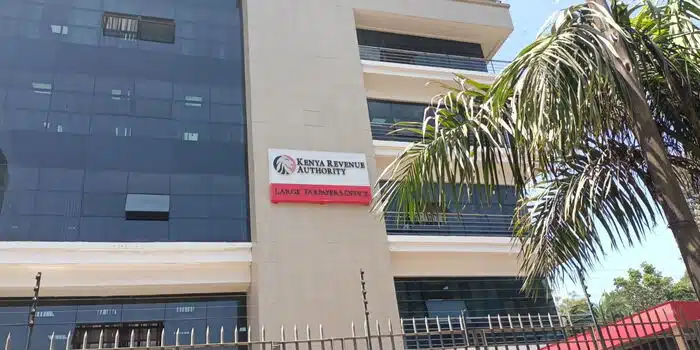
Kenya’s tax authority, the Kenya Revenue Authority (KRA), is under fire again. This time over a bribery scheme involving the sale of Tax Compliance Certificates (TCCs), per BusinessDaily. These certificates are critical for businesses to access government tenders, VAT refunds, and other official services. Investigations revealed that some KRA staff were illegally issuing them to non-compliant companies.
One case that stood out involved an officer at the Sheria Desk who allegedly received nearly Sh894,863 (about $6,900) in suspicious M-Pesa payments between August 2018 and May 2019. He was eventually dismissed, but the case exposed a much bigger problem inside the agency.
What this means is simple: the system meant to enforce tax compliance is being gamed from within. A TCC is supposed to prove that a business has paid its taxes. Without it, companies are effectively locked out of major opportunities. But if officials are selling these certificates, it allows tax dodgers to win government contracts, claim VAT refunds, and operate freely, while honest businesses get sidelined. Investigators say the bribery network ran into millions, with payments disguised as loans or savings contributions to avoid suspicion.
This hits harder because of the timing. Kenya is already under pressure to raise revenue and reduce its growing debt burden. Yet while ordinary citizens face higher taxes and stricter enforcement, insiders have been helping others bypass the system for a fee. Back in 2022, President William Ruto warned that collusion within KRA was costing the country up to KSh400 billion (around $3.1 billion) in lost revenue. More recent estimates suggest fraudulent VAT schemes alone drain at least KSh30 billion ($230 million) every year.
The troubling part is that this isn’t new. Reports of bribery within KRA’s Domestic Taxes Department date back to April 2021, triggering internal investigations and dismissals. By September 2024, the agency had sacked 25 staff and recovered KSh549 million ($4.2 million) through lifestyle audits. Then, in March 2026, another scandal surfaced involving cargo clearance fraud, with KSh452.5 million ($3.5 million) recovered and multiple staff and agents implicated. The pattern is clear: insiders repeatedly exploiting their positions.
Zoom out, and this looks less like isolated incidents and more like a system struggling to police itself. Internal tools meant to enforce compliance have reportedly been abused, with legitimate businesses sometimes caught in the crossfire while fraudulent ones slip through.
In March 2026, KRA even had to hurriedly remove thousands of firms from a blacklist, raising more questions about how the system is being managed. With a new Commissioner General expected to take over, the real challenge isn’t just leadership. It’s whether the institution can rebuild trust from the inside out.
In case you missed it
- Nollywood needs to get on the microdrama train now
What I’m watching
- Everyday Foods that Feed CANCER Cells
- The Psychology of People Who Dream Big But Do Nothing
Opportunities
- Qore is hiring for several roles, including Cloud Infrastructure Engineer, Lead Product Manager, Full Stack Software Engineer (.NET framework & React), and Software Engineer (.NET framework), in Nigeria and Ethiopia. Apply here.
- Rayda is recruiting People & Culture Manager, Legal & Compliance Officer, and Technical Product Manager. Apply here.
- Source Bank is looking for a Product Analyst. Apply here.
- Flutterwave is hiring for several roles in Nigeria, the UK, and the US. Apply here.
- LemFi is looking for a Head of Financial Crime Operations in the UK. Apply here.
- Cognition is hiring a Developer Community Manager. Apply here.
- Chess dot com is looking to hire a Product Designer. Apply here.
- Bujeti is currently expanding operations and hiring across several roles. Apply here.
- Prenetics is hiring a remote Email Marketing Specialist. Apply here.
- InterviewReady is looking for a Software Developer, a Product Associate, and a Marketing Associate. Apply here.
- Flutterwave is recruiting for several roles. Apply here.
- Briter is hiring a Commercial Director, a Senior Research Associate, and an Insights and Market Intelligence Associate. Apply here.
- Opay is currently recruiting for these roles: Partnership Manager (Fintech Experience), Junior Accountant, Junior Product Manager (Research), and IT Manager.
- Oyster is looking to hire a Risk Analyst. Apply here.
- Circle is looking to hire a Lead Product Designer (Remote). Apply here.
- SafetyWing (YC W18) is hiring a Product Manager Intern (fully remote). Apply here.
- Paystack is hiring a Performance Marketing Specialist. Apply here.
- VOYA (visa travel tech startup) is hiring an Operations and Admin Director (fully remote). Apply here.
- MTN MoMo TechSpark Graduate Programme is open. Apply here.
- MAX is looking for interns. Apply here.
- McKinsey is hiring for several roles, including Junior and Senior roles. Apply here.
- Paystack is hiring a Business Development Partner. Apply here.
- Zenith Bank is recruiting a Junior Software Tester Quality Control. Apply here.
- UNICEF Abuja is looking for a National Consultant (Immunization Programme Monitoring and Evaluation). Apply here.
- Standard Chartered Bank is hiring an Executive Research Partner. Apply here.
- e-Tranzact is looking to hire a product marketing officer. Apply here.
- Bumpa is hiring for several roles, including Bumpa Expert Lead (Account Management) – Customer Success; Product Designer; and Mid-level Motion/Graphic Designer, Mid-level Full-stack Engineer (Commerce), and Senior Fullstack Engineer (Commerce). Apply here.
- ABDS 2026 will take place April 29–30, 2026, in Lagos, gathering founders, investors, developers, and policymakers shaping Africa’s blockchain and Web3 ecosystem. The summit focuses on industry insights, partnerships, and investment opportunities in one of the world’s fastest-growing crypto markets. Secure your pass or sponsorship here.
- Paga is hiring a Sales Manager. Apply here.
- Paga is hiring senior sales executives. Apply here.
- Paga is looking for sales executives. Apply here.
- Paga is recruiting Senior Key Account Managers. Apply here.
- Paga is hiring Account Managers. Apply here.
- As one of Techpoint Africa’s most engaged readers, you have a direct hand in shaping what we publish next. Take our quick, 3-minute survey to tell us the stories and features you value most. Your responses are anonymous, and your feedback will help guide our editorial focus in the months ahead. Fill the survey here.
- Moniepoint is hiring for over 100 roles. Apply here.
- Building a startup can feel isolating, but with Equity Merchants CommunityConnect? You can network with fellow founders, experts, and investors, gaining valuable insights and exclusive resources to help you grow your business. Click here to join.
- To pitch your startup or product to a live audience, check out this link.
- Follow Techpoint Africa’s WhatsApp channel to stay on top of the latest trends and news in the African tech space here.
Have a wonderful Wednesday!
Victoria Fakiya for Techpoint Africa