



Olá,
Victoria from Techpoint here,
Here’s what I’ve got for you today:
- WhatsApp will charge businesses per message
- Telecom Egypt tests new 6 GHz spectrum
- Kenya arrests 14 over online ticket fraud
WhatsApp will charge businesses per message

Starting October 1, 2026, businesses using the WhatsApp Business Platform will have to pay for something that has effectively been free: replying to customers. Meta is ending the free treatment for service messages and will begin charging businesses per delivered message, meaning a company that replies to 10,000 customers could suddenly have a WhatsApp bill where it previously had none.
For African businesses, the differences are worth paying attention to. A Nigerian business replying with a chargeable utility-type message to a Nigerian number will pay about $0.0101 (roughly ₦14) per message; in Kenya, it is about $0.0044 (roughly KSh0.57); in South Africa, the rate is $0.0076 (roughly R0.12); and in Egypt, about $0.0054 (roughly E£0.28).
Meta’s rate card also shows that marketing messages are considerably more expensive: around $0.062 (₦84) in Nigeria, $0.0248 (KSh 3.3) in Kenya, $0.62 (R10.0) in South Africa, and $0.0773 (EGP 4.1) in Egypt per message. These are approximate equivalents based on recent exchange rates, so the actual local-currency amounts may vary with currency fluctuations. The important distinction is that this does not affect ordinary WhatsApp or the standard WhatsApp Business app; it applies to businesses using the Business Platform/API to communicate with customers at scale.
Why should anyone care? Because WhatsApp has quietly become part of the customer-service infrastructure for African businesses. Banks, airlines, retailers, telcos, eCommerce companies, and smaller businesses increasingly use the Business Platform to send order updates, payment confirmations, and OTPs and respond to customers at scale. A few cents sounds insignificant until you multiply it by hundreds of thousands or millions of interactions. A Nigerian fintech, for instance, handling 500,000 chargeable messages at $0.0101 would face roughly $5,050 in Meta fees alone. And that is before adding whatever a business pays its Business Solution Provider or software platform. Meta charges based on the recipient’s country and the category of message, rather than simply charging every business the same global price.
This has actually been building for a while. WhatsApp moved away from its old conversation-based pricing model to per-message pricing for business-initiated template messages on July 1, 2025, changing how companies were billed for marketing, utility, and authentication messages. At the time, however, there were still important free routes. Service messages, essentially replies to customers who had contacted a business, remained free within the 24-hour customer-service window. Utility messages sent during that window also had favourable treatment. Meta has now decided to monetise more of those interactions from October 1, 2026. In other words, the October change isn’t WhatsApp suddenly deciding to charge businesses for using the platform; it is the next step in a pricing model that Meta has been gradually tightening for more than a year.
In summary, WhatsApp is becoming less of a free communication channel and more of a business infrastructure layer. That matters particularly in markets such as Nigeria, Kenya, Egypt, and South Africa, where businesses use messaging heavily to reach customers and where WhatsApp can effectively function as a storefront, support desk, sales channel and notification system. The upside for Meta is obvious: enormous volumes of commercial activity are happening on its platform, and charging for each delivered business message turns that activity into recurring revenue.
For African startups and SMEs, however, it means they will have to get much smarter about which messages they send, how often they send them, and whether every customer interaction needs to happen through the API. The difference in country rates also means a business operating across Africa cannot simply apply the South African 12-cent figure to the whole continent.
Telecom Egypt tests new 6 GHz spectrum
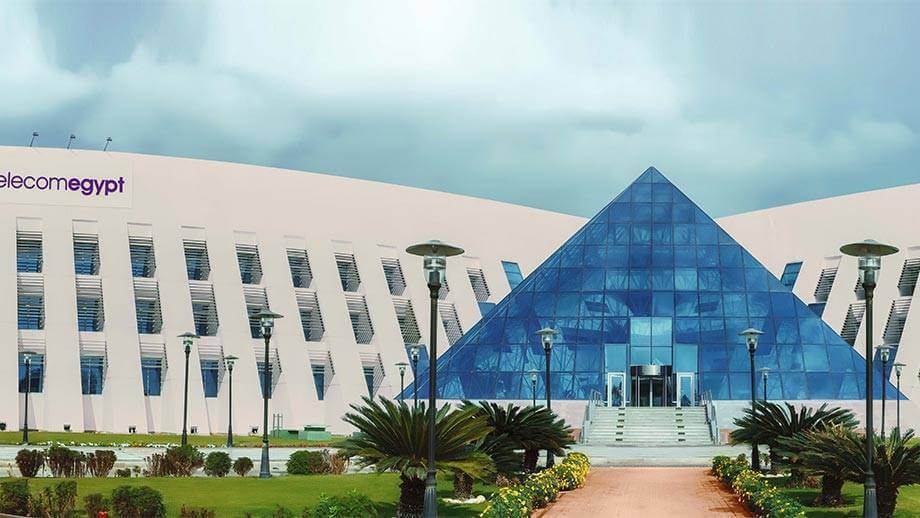
The latest development is that Telecom Egypt, together with Egypt’s telecom regulator NTRA and Huawei, has completed what officials describe as Africa’s first trial of mobile services using the 6 GHz band. The trial involved a 6 GHz mobile base station and a data call, reaching roughly 1.7 Gbps per user. That is significant because 6 GHz is being considered globally as an important band for high-capacity mobile networks, particularly as operators look beyond today’s 4G and 5G spectrum constraints. Egypt says the band is now part of its longer-term spectrum planning for 2030–2035.
This is about giving networks more room to breathe. Mobile traffic keeps growing as people consume more video, cloud services, AI applications, and other data-heavy products, and operators eventually run into a spectrum problem: there are only so many radio frequencies they can use. The 6 GHz band offers a large chunk of relatively high-capacity spectrum, potentially allowing operators to serve more users at higher speeds, particularly in crowded locations. The 1.7 Gbps achieved in the Egyptian test is therefore less about consumers immediately getting 1.7 Gbps on their phones and more about demonstrating what the spectrum could eventually deliver when deployed commercially.
The timing is also interesting because Egypt has been aggressively building out its 5G infrastructure. Telecom Egypt conducted a 5G trial with Ericsson in February 2024, using its existing 2.6 GHz spectrum, before Egypt commercially launched 5G in June 2025. Then, in February 2026, Egypt allocated a combined 410 MHz of additional spectrum to its four mobile operators — Vodafone Egypt, Orange Egypt, e&, and Telecom Egypt — in a deal worth about $3.5 billion. That allocation was expected to increase network capacity and accelerate 5G expansion. So the 6 GHz experiment isn’t coming out of nowhere; it is another step in Egypt’s attempt to stay ahead of rapidly increasing demand for mobile data.
Egypt is effectively positioning itself as a testing ground for the next generation of mobile connectivity. That matters because spectrum availability is becoming increasingly important as African countries try to move beyond basic connectivity and support things like AI, cloud computing, smart cities, industrial IoT and high-bandwidth enterprise services. Telecom Egypt has already been involved in other high-capacity infrastructure experiments: in February 2024, it and Huawei completed what was described as Africa’s first 1.2 Tbps single-channel DWDM laboratory test, aimed at pushing more capacity through existing fibre networks.
The bigger question now is what happens after the demonstration. A successful trial doesn’t automatically mean 6 GHz mobile service will appear across Egypt tomorrow; regulators still have to determine how the band should be allocated and shared with existing users and other services. But Egypt is clearly preparing for that conversation. NTRA says the successful trial will help it assess the technology before making longer-term spectrum decisions. And for Telecom Egypt, which has increasingly been positioning its fixed, fibre and mobile infrastructure as a foundation for Egypt’s digital economy, having early experience with another high-capacity spectrum band could become a useful competitive advantage as African networks prepare for the next wave of data demand.
Kenya arrests 14 over online ticket fraud

Kenya’s Directorate of Criminal Investigations (DCI) has arrested 14 people in Nakuru over an alleged online bus-ticket scam that used cloned websites to trick travellers into paying for tickets that did not exist. The arrests happened on yesterday, August 19, after detectives from the Banking Fraud Investigations Unit and officers from Nakuru Police Station raided a house in the Pangani area of Nakuru town. Police recovered 25 mobile phones, 16 SIM card plates and 10 SIM cards, which they believe were being used in the operation. The suspects allegedly created fake websites impersonating three bus companies — Zain Coach, Harmain Coach, and Habesh Coach — targeting people looking to book buses serving routes in northeastern Kenya.
What makes this worth paying attention to is that this wasn’t simply someone sending a dodgy payment number over WhatsApp. The alleged scammers cloned the online presence of legitimate transport companies, betting that travellers would trust a website that looked familiar enough. That matters because Kenya’s transport industry, like many other parts of Africa, is moving more of the ticket-buying process online. For a traveller trying to secure a seat, especially during busy periods, a professional-looking booking page can be enough to create a false sense of security. And once the money has been sent, particularly through mobile money, recovering it can be difficult. The DCI said victims were left with their money gone and no genuine ticket to show for it.
The Nakuru case also fits into a bigger pattern that has been developing in Kenya. Website cloning and phishing aren’t new, but transport has increasingly become an attractive target as more people buy tickets digitally. In November 2025, Kenyan media reported warnings about fake ticketing pages and cloned websites being used to con travellers during the holiday travel rush. Then, earlier in 2026, budget airline Jambojet warned that fraudsters were using its name, logo and other assets across fake booking websites, social media pages, WhatsApp groups and other platforms. So the latest arrests aren’t happening in isolation; they’re part of a broader shift from traditional scams towards impersonating trusted brands and recreating the digital experiences customers already know.
There is also a useful lesson here for the wider African internet economy. As more services move online — transport, banking, shopping, government services and travel — scammers don’t necessarily need to hack the real company. Sometimes they just need to look like the company. A cloned website can exploit something more basic than a technical vulnerability: trust. The same playbook can potentially be used against businesses anywhere on the continent, particularly where customers are accustomed to discovering services through Google, social media or messaging apps. And AI could make this problem harder to police: Techweez notes that Google is taking legal action against China-based scammers accused of using its Gemini AI to help clone government and brand websites.
For consumers, the uncomfortable takeaway is that a website looking legitimate is no longer enough. The safer approach is to independently find the company’s official website or verified social account rather than clicking a booking link sent through an unsolicited message or search result. Check the domain carefully, look for inconsistencies in the company’s name or URL, and be suspicious if payment is being directed somewhere that doesn’t match the company’s normal channels. For businesses, meanwhile, brand protection is becoming part of cybersecurity: monitoring fake domains, social accounts and booking pages can be just as important as securing the actual website. The Nakuru arrests show that online fraud is becoming more organised, but they also show that law enforcement is adapting, with cybercrime and banking-fraud investigators working together to dismantle these operations.
In case you missed them
- Nigeria incorporates Bridge OA to run its 90,000km fibre build, but the backbone was never the hard part
- MTN at 25: How much has Nigeria changed with it?
- CBN’s second sandbox cohort quietly opens a testing ground for permission-based data sharing
What I’m watching
- John Lennox: Will Technology Change What It Means to be Human?
- The Lapsed Atheist: Charles Murray Makes the Case for God
Opportunities
- Flutterwave is hiring for several roles. Apply here.
- Moniepoint is hiring for over 100 roles. Apply here.
- Follow Techpoint Africa’s WhatsApp channel to stay on top of the latest trends and news in the African tech space here.
Have a superb Thursday!
Victoria Fakiya for Techpoint Africa