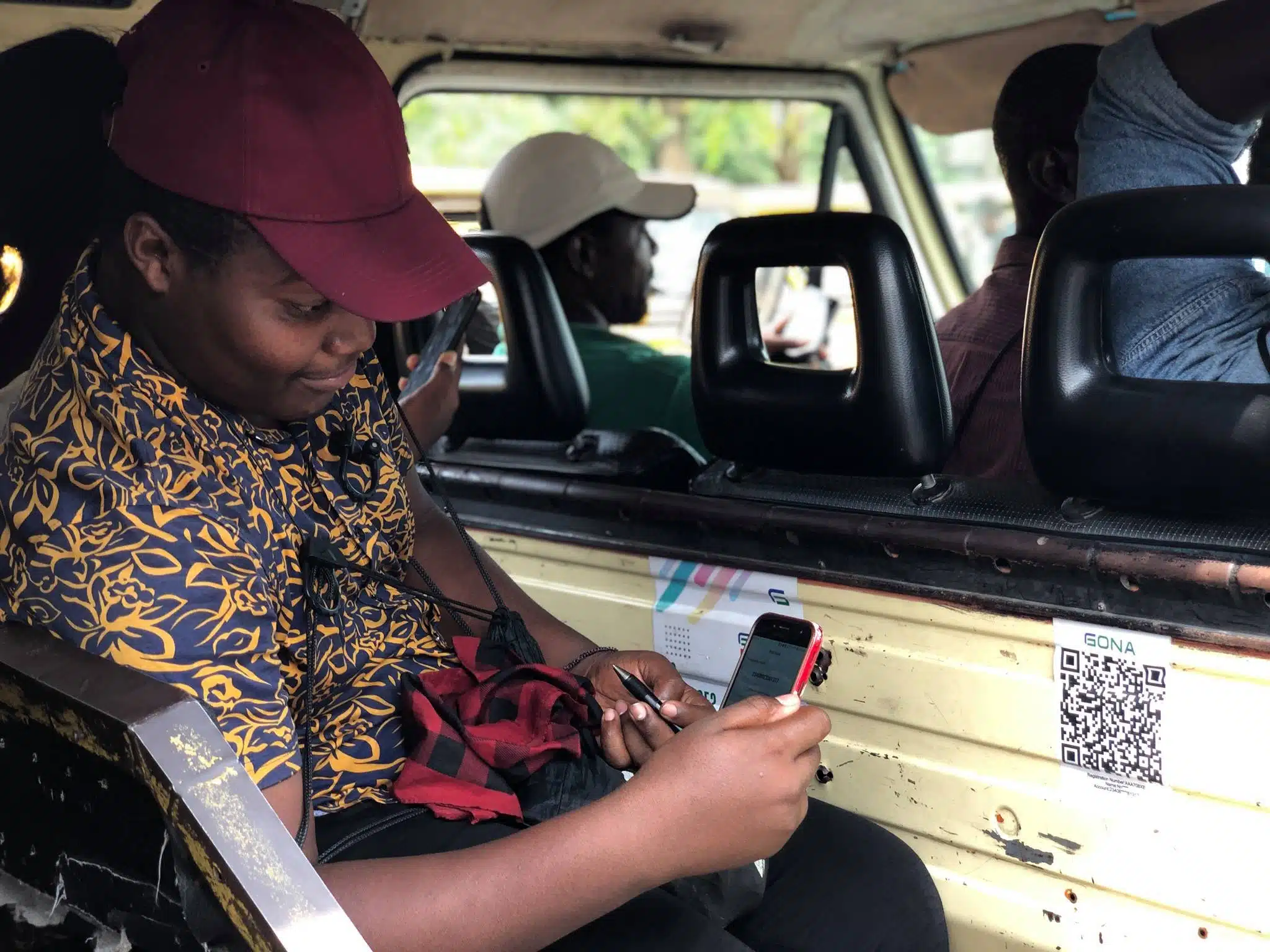


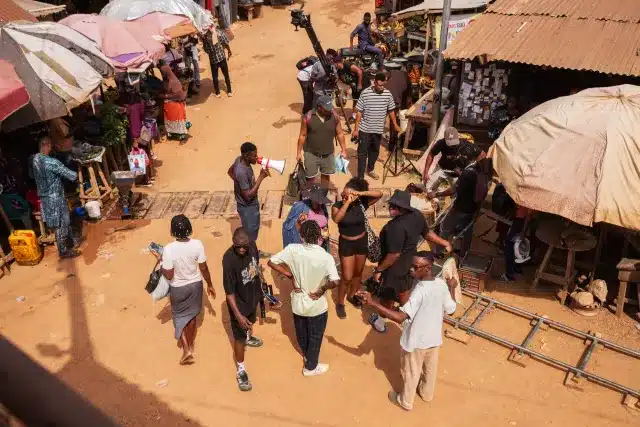

For many content creators, public spaces have become content studios. Markets, bus stops, restaurants, parks, and busy streets are regularly featured in prank videos, social experiments, and skits, with some street interviews attracting thousands, and sometimes millions of views online.
However, the people who appear in these videos are often strangers going about their daily lives, captured in the background, caught in the middle of a prank, or unknowingly drawn into the story.
The practice has become so common that few people stop to question it. After all, if something happens in public, isn’t it fair game? The rise of social media has changed what it means to be in public. Most of these content makers often shoot in busy environments where passers-by become part of the final production.
For creators, these settings offer authenticity. Real reactions make content more engaging, and public spaces provide an endless supply of stories, personalities, and interactions. But the same authenticity that makes the content appealing also raises questions about consent.
Unlike actors who knowingly participate in a production, many of the people featured in these videos never agreed to be part of it; some only discover their appearance after friends, family members, or colleagues point it out.
So where does a creator’s right to film end, and where does a person’s right to privacy begin?
Filming in public is not illegal, but that is only part of the story
One of the biggest misconceptions around public filming is the assumption that recording people in public automatically violates the law. According to Moses Faya, lawyer and founder of Tech Policy Advisory, the issue is not quite that straightforward.
“There’s nowhere expressly in Nigerian law that says that no, do not film in public or filming in public is illegal,” Faya explains.
More importantly, the Constitution does not specifically address public filming, photography, social media content, or viral videos. However, that does not mean privacy rights disappear once someone steps outside their home.
Section 37 of the Constitution guarantees the privacy of Nigerian citizens. Although the provision was written long before social media became part of everyday life, legal experts argue that courts increasingly interpret privacy rights broadly enough to accommodate emerging digital realities.
The challenge lies in balancing two competing interests. On one side is the creator’s right to freedom of expression and creative work. On the other hand is an individual’s right to privacy, dignity, and control over personal information.
Being in a public space generally means lower expectations of privacy. It’s like being in a market and expecting complete privacy: it’s like expecting complete silence in a crowded environment. Public spaces naturally involve a degree of exposure. Yet that reduced expectation of privacy does not mean people lose all rights over how their image is used.
Filming and publishing, however, are not necessarily the same thing. Recording someone in public may not automatically create a legal issue. The bigger question is often what happens afterward.
“Where the issue would likely begin is when the content is being posted, is monetised, or is used in a way that affects the person’s dignity, their privacy, or their reputation,” Faya says.
A video can remain on a personal device, be shared with a small group of friends, or be uploaded to a platform where it generates views, engagement, and income. Once content enters the public domain, different considerations begin to emerge.
Courts are likely to focus on whether the use of the content interferes with a person’s privacy, harms their dignity, or damages their reputation. This distinction is particularly relevant in today’s creator economy.
When strangers become unwilling participants
A prank video filmed in a marketplace may seem harmless to the creator. But if the person featured becomes the subject of ridicule, embarrassment, or unwanted attention, the legal analysis changes. Likewise, if a creator profits from content that prominently features another person who never consented to appearing in it, questions may arise about whether that use was fair or exploitative.
In many cases, the issue is not simply that someone was filmed. It is whether the footage was later used in a manner that negatively affected them. Many of those being filmed have little or no knowledge of what is happening.
Digital rights and tech policy lawyer, Chinnan Pudens, argues that consent remains an important consideration, particularly when content is created for entertainment or commercial purposes.
“If immediately a [creator] carries his/her phone and I, as a passenger in a bus [or public place], tell them I don’t want to be recorded, at that moment [the creator] is supposed to stop recording me. If captured, you have to blur my face or blur whatever is attached to me to the extent that nobody can identify me,” she says.
In situations where filming serves another purpose, such as documenting an event or raising public awareness, measures such as blurring faces can help prevent people from being identified.
Can content creators be sued?
The simple answer is yes. According to Faya, several legal claims can potentially arise when a person’s image is used without consent.
“You can sue for privacy violation; you can sue for defamation, reputational harm, or breach of data protection laws,” he says.
However, whether such claims succeed depends heavily on context. Courts would likely examine factors such as whether the person was identifiable, whether consent was obtained, whether the content was used commercially, and whether the publication caused any measurable harm.
“Was this content used exploitatively or in a manner that would harm the reputation of whoever was filmed?” he says, describing the kinds of questions courts may consider.
Pudens shares a similar view concerning prank content that has become increasingly popular online.
“It’s wrongful to a very large extent because first of all, you didn’t even get the person’s permission to be in your video,” she notes.
Whether such content amounts to defamation would depend on how the individual is portrayed and the message the video ultimately communicates. This means two similar videos could produce entirely different outcomes.
For example, a person who briefly appears in the background of a crowded public scene may push for a different legal situation than someone who becomes the central subject of a prank video viewed by millions. Likewise, a video intended to raise awareness about a public issue may be viewed differently from one designed primarily for entertainment or profit.
However, awareness of this remains low, and many people may not even realise they have rights in these situations.
“How many people actually even know that their rights are being infringed by these acts?” Pudens asks.
She also points to a recent case involving a man who approached her law firm after discovering that he had appeared in a movie without his knowledge or consent. The man only became aware of it when friends and acquaintances began asking him when he had become an actor.
The production company argued that it had placed a notice at the filming location informing members of the public that recording was taking place and that anyone who remained in the area could be captured on camera. The complainant, however, maintained that he had never expressly consented to the use of his image in a commercial production and that his likeness had ultimately become part of a product from which the filmmakers stood to benefit.
The matter was eventually resolved through mediation rather than litigation, but Pudens states that the case highlights a growing tension between content creators and individuals whose images are captured and distributed without their knowledge.
At the same time, regulators are beginning to pay closer attention. The Nigerian Data Protection Commission warns content creators against filming unsuspecting individuals and posting them online without consent, particularly for entertainment or monetisation purposes.
These developments suggest that public filming is no longer viewed solely as a creative issue. It is increasingly becoming a conversation about rights.
The law is still catching up
Perhaps the most significant takeaway from these discussions is that the law is still adapting to a world where almost everyone carries a camera.
The Constitution provides privacy protections. Data protection laws offer additional safeguards around personal information. Yet there is still no dedicated legal framework specifically designed for the realities of viral videos, creator-led media, and social platforms.
As a result, courts are often left to interpret existing laws in situations that lawmakers may never have anticipated. For now, there are few absolute answers.
Filming in public is generally not illegal. At the same time, appearing in a public place does not automatically strip individuals of their privacy rights. The legality of any particular situation often depends on context, consent, purpose, and the eventual use of the content. As Nigeria’s creator economy continues to grow, these cases are likely to become more common.