



Сәлеметсіз бе,
Victoria from Techpoint here,
Here’s what I’ve got for you today:
- SA’s Yoco expands beyond payments with AI deal
- He lost two startups. Now he’s back with CloutEye
- Visa wants AI to shop with your card in SA
SA’s Yoco expands beyond payments with AI deal
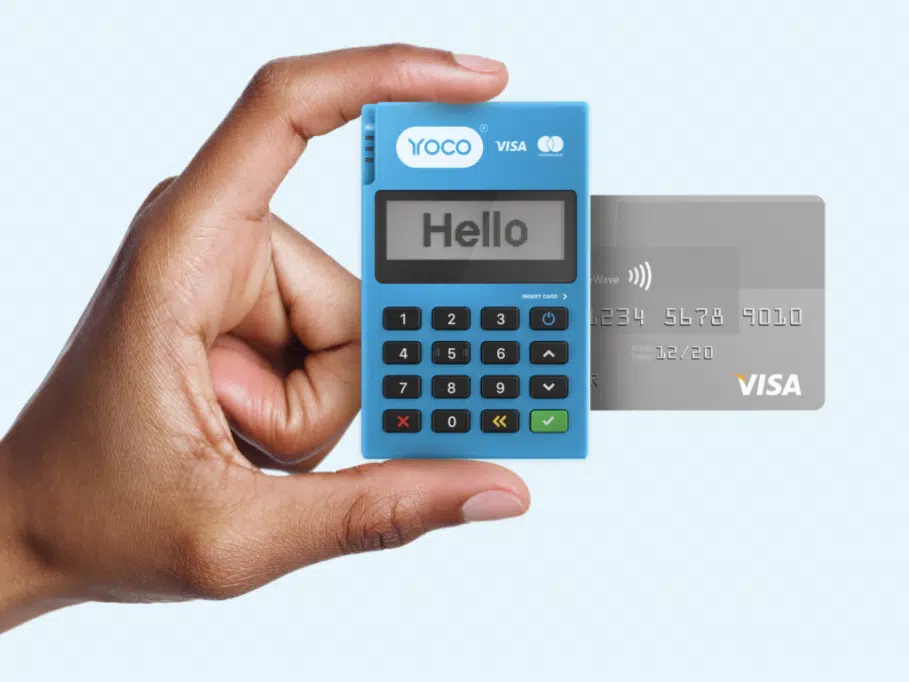
South Africa’s retail technology race has a new contender. Yoco, the fintech company known for its card machines and payment solutions, has made its first major acquisition, buying local AI software startup Dyner.AI. The deal marks a significant shift for the company, which is no longer content with simply processing payments. Instead, Yoco is positioning itself as a full-service commerce platform that could eventually compete for influence across the same retail ecosystem dominated by Checkers, Woolworths, Pick n Pay, Spar and Dis-Chem.
The significance of the acquisition lies in artificial intelligence. Dyner.AI developed software that helps restaurants and independent businesses manage operations, analyse performance and automate decision-making. By bringing that technology in-house, Yoco gains the ability to offer merchants far more than payment acceptance. The company is working toward a single platform that combines payments, point-of-sale systems, financial services, operational software and AI-powered tools. For retailers and small businesses, that means one ecosystem handling everything from transactions to business intelligence.
Interestingly, South Africa’s retail landscape is becoming increasingly digital. Grocery chains and pharmacy groups have spent years building delivery apps, loyalty programmes, financial services and data-driven platforms to lock customers into their ecosystems. Retailers increasingly compete on technology as much as pricing. Yoco’s move suggests it believes the next battleground will be the software running behind the scenes rather than the storefronts consumers see. With more than 200,000 merchants already using its services, the company has a sizeable customer base through which it can roll out these new capabilities.
The foundations for this strategy have been building for years. Founded in 2013 by Katlego Maphai, Carl Wazen, Bradley Wattrus and Lungisa Matshoba, Yoco grew from a startup helping small businesses accept card payments into one of South Africa’s most valuable fintech companies, with an estimated valuation exceeding R12 billion. Along the way, it expanded into point-of-sale systems, online payments and merchant funding, steadily increasing its role in day-to-day business operations. The Dyner.AI acquisition is the clearest signal yet that Yoco wants to become an end-to-end operating system for commerce rather than just a payments provider.
The acquisition also comes during a leadership transition. In May 2026, Yoco appointed former Solaris chief executive Carsten Höltkemeyer as its new CEO, marking the first time a non-founder has led the company. His background includes integrating generative AI into banking and financial services, making the Dyner.AI purchase look less like a standalone deal and more like part of a broader strategy. As South African retailers pour billions into technology, logistics and customer engagement, Yoco is betting that AI-powered software will be the next major growth engine. The company may not own supermarkets or pharmacies, but it increasingly wants to power the businesses that compete with them.
He lost two startups. Now he’s back with CloutEye

Most founders would probably quit after watching two startups collapse because of regulations. Not Adebanji Oluwatoni. The Nigerian entrepreneur is back at it again with CloutEye, a social intelligence platform built for Africa’s booming creator economy. But before launching his latest venture, Oluwatoni had already experienced the highs of rapid startup growth and the lows of being forced to shut everything down despite building products people actually loved.
His tech journey started in an unlikely place: video games. Growing up, he was fascinated by gaming but couldn’t always afford it, so he taught himself how to download games, burn CDs, and navigate the internet long before he knew those skills would shape his future. While studying political science at Ghana’s KNUST, he met people building websites and digital products, opening his eyes to a new possibility: technology wasn’t just something to consume; it was something you could create. That mindset followed him back to Nigeria after graduation, where he and a longtime friend began looking for problems worth solving.
That search led to Growly, a fintech startup designed to connect people seeking loans with those looking for investment opportunities. Armed with little more than Google searches and determination, the founders built the platform from scratch. The startup quickly gained traction, attracting nearly 1,000 users in its first week and growing to around 17,000 daily active users within months. But just as momentum was building, new Nigerian regulations introduced licensing and capital requirements that were simply out of reach for a bootstrapped startup. Despite exploring alternatives, the team eventually made the painful decision to shut the company down.
Rather than walk away, Oluwatoni and his team pivoted again, this time into cryptocurrency and decentralised finance, spotting another gap in the African market. Those experiences, including the setbacks, would eventually shape the founder of CloutEye today. For more insights into Oluwatoni’s entrepreneurial journey, the lessons he learned from failure, and how he’s building for Africa’s creator economy, check out Delight’s latest edition of After Hours.
Visa wants AI to shop with your card in SA

In South Africa, your next online purchase might not come from a click; it could come from an AI agent acting on your behalf. That’s the future Visa is betting on after announcing new partnerships and technology that will allow AI assistants to not only recommend products but actually pay for them using your Visa card. The payments giant is integrating its network with platforms like ChatGPT, opening the door for AI agents that can search, compare, book, and complete transactions with user-approved spending limits and safeguards in place.
In practical terms, this means consumers could eventually tell an AI assistant something like, “Find me the cheapest flight to Cape Town next month” or “Order groceries when I’m running low,” and the agent would handle everything from research to payment. Visa says users will remain in control through spending caps, merchant restrictions, approval requirements, and fraud protections. The company is positioning itself as the trusted payments layer that allows AI-powered commerce to happen safely at scale.
The move matters because it could fundamentally change how people shop online. For years, e-commerce has revolved around websites, apps, shopping carts, and checkout pages. Visa believes the next phase will be “agentic commerce,” where AI handles much of the work behind the scenes. If consumers embrace the idea, businesses may need to optimise not only for human shoppers but also for AI agents that compare prices, evaluate options, and make purchases automatically. Rival payment companies, including Mastercard and PayPal, are pursuing similar strategies, highlighting how seriously the industry is taking this shift.
This didn’t happen overnight. Visa began laying the groundwork in 2025 with the launch of Visa Intelligent Commerce, a platform designed to enable AI-assisted shopping and payments. In April 2026, it introduced Intelligent Commerce Connect, giving developers and merchants tools to support AI-driven transactions across multiple payment networks. Throughout late 2025 and early 2026, the company also tested protocols designed to verify trusted AI agents, reduce fraud, and ensure users remained in control of automated purchases.
Of course, not everyone is convinced. Some consumers and technology observers have raised concerns about handing spending power to systems that can still make mistakes. Questions around security, accidental purchases, privacy, and liability remain unresolved. Visa argues that strict controls, tokenised payment credentials, fraud monitoring, and user-defined permissions will address many of those concerns. Whether shoppers are ready to trust AI with their wallets remains to be seen, but one thing is clear: Visa is preparing for a world where AI doesn’t just help people buy things; it becomes the buyer.
In case you missed it
- Kenya’s plan to monetise citizen data sparks privacy debate despite government assurances
What I’m watching
- The science of ‘Dad Brain’ and how fatherhood changes men
- Scientists Finally Figured Out What Love Is For
Opportunities
- Qore is hiring for several positions. Apply here.
- Oui Capital has an exclusive AI mixer coming up on June 26. Interested founders, researchers, and engineers should apply here. Apply here.
- inDrive is hiring to fill several vacancies in different countries. Apply here.
- Are you a female-led tech or tech-enabled business preparing for sustainable growth and opportunity to access capital? Apply for the Female Founders Growth Programme and grab up to $2 million. Apply here.
- Bamboo is hiring in Ghana and Nigeria. Apply here.
- Cowrywise is recruiting some engineers. Apply here.
- PiggyVest is looking for a Product Technical Manager. Apply here.
- Paystack is hiring for a few roles. Apply here.
- Moniepoint is recruiting for several roles. Apply here.
- Flutterwave is hiring for several roles in Nigeria, the UK, and the US. Apply here.
- As one of Techpoint Africa’s most engaged readers, you have a direct hand in shaping what we publish next. Take our quick, 3-minute survey to tell us the stories and features you value most. Your responses are anonymous, and your feedback will help guide our editorial focus in the months ahead. Fill the survey here.
- Moniepoint is hiring for over 100 roles. Apply here.
- To pitch your startup or product to a live audience, check out this link.
- Follow Techpoint Africa’s WhatsApp channel to stay on top of the latest trends and news in the African tech space here.
Have a productive week ahead!
Victoria Fakiya for Techpoint Africa