


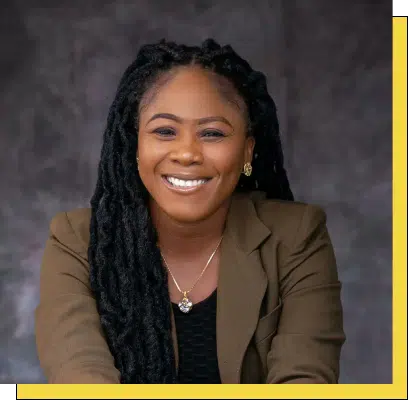
When Ofure Fortunate Agaga failed a medical school exam, she became obsessed with understanding why. Her search for answers led her from medicine to psychology and eventually into data analytics and artificial intelligence.
Today, she runs her company AceBuddy, a platform that uses cognitive science to help students study and retain knowledge.
In this edition of After Hours, Agaga shares how early exposure to technology shaped her journey from medicine to psychology and data analytics to founding an AI-powered edtech platform.
Early interactions with technology
My earliest memory of technology goes back to computer classes in primary school. Back then, computer classes felt special, almost like P.E. It wasn’t something we did every day; maybe once a week, we would be taken to the computer lab, so it felt like an event. You knew you were about to interact with something important, even if you didn’t fully understand it yet.
That was my first real exposure.
Then my parents got a computer at home when I was about nine years old. I remember how significant that felt. Having a computer at home made technology feel closer, more personal. It wasn’t just something in school anymore; it was part of my environment.
Later, in school, I also used a Chromebook. It was portable, simple, and extremely helpful. At the time, I didn’t know technology would eventually shape my career. It was just something I used. But looking back now, those moments were the beginning.
From medicine to psychology to tech
For most of my life, I believed I would become a doctor.
I started studying medicine and surgery at Ambrose Alli University when I was about 16. It was the expected path. When you’re considered intelligent growing up, people naturally push you toward medicine. It wasn’t just my parents, either; it was everyone. Science class meant medicine. That was the trajectory.

Victoria Fakiya – Senior Writer
Techpoint Digest
Stop struggling to find your tech career path
Discover in-demand tech skills and build a standout portfolio in this FREE 5-day email course
But everything changed when I failed an exam.
Failing that exam forced me to rethink everything. It felt like my life had been reset. For the first time, I had the opportunity to ask myself what I actually wanted, not what others expected of me.
I voluntarily transferred out of medical school and chose to study psychology at the University of Saskatchewan in Canada. Psychology had always interested me. I had the inclination for it, but I never truly considered it before because medicine had always been the default. That moment gave me permission to choose differently.
Even after psychology, I still knew I wanted something more. I had this strong internal drive to solve problems.
My entry into tech wasn’t because of a specific person or inspiration. It was because I was extremely analytical.
After earning my psychology degree, I spent time reflecting deeply on myself. I realised that what I enjoyed most was analysing things, breaking down problems, and finding solutions. Data analytics became the obvious path.
I started learning in late 2022 and early 2023. At first, I tried YouTube. It didn’t work; I was lost.
Then I got a scholarship to study data analytics, and after that, I paid for an intensive bootcamp. That decision changed everything. I worked on projects, had virtual internships, and built real skills.
That was when I discovered Python. There was something fascinating about programming. The idea that you could write code and a machine would understand and execute tasks for you felt powerful. I loved it immediately.
Python also became my bridge into artificial intelligence because AI relies heavily on it. By the time I wanted to build something of my own, I already had the technical foundation.
The journey wasn’t easy, though. I got interviews with major companies, which was encouraging, but I didn’t land a full-time job until December 2024. Before then, I worked on freelance projects and internships. The job market was tough.
Solving my own problem
AceBuddy exists because of a problem I experienced personally. When I failed that exam in medical school, I wanted to understand why. I had passed other exams, so it didn’t make sense.
I started analysing my study process deeply, and I realised the problem wasn’t intelligence. It was volume and time. There was too much content and too little time to truly retain everything. So I built a system for myself.
From 2021, I started refining this system to help me learn better and retain information. When I returned to school later, I used it, and it worked. It helped me pass exams. At the time, it wasn’t a product. It was just a personal solution.
Everything changed in June 2024. By then, I had learned Python and understood technology enough to build software. I realised I could turn my system into a real product. That became AceBuddy, which officially launched in 2025.
AceBuddy is an AI-powered platform designed to help exam takers learn and remember everything in their syllabus. It focuses on retention, not just reading. I knew other students had the same problem. So I shared it.
How technology shapes my daily life
Technology is fully integrated into my life now. The most obvious way is communication. My loved ones are spread across different places, and technology makes it possible for us to stay connected. Every day, I speak with friends, family, and my team through WhatsApp and other platforms.
It’s something we take for granted, but it’s powerful. Technology also influences how I work. I regularly use artificial intelligence tools like ChatGPT and constantly surf the Internet for research, learning, and problem-solving.
The biggest thing technology has given me is access to knowledge. Anything I want to know, I can find instantly. What used to require going to a library is now available on my phone.
At the same time, I’ve learned that technology can be overwhelming. I’ve had to take breaks from platforms like Twitter and Instagram because you can become overstimulated. The algorithm keeps feeding you information, and if you’re not careful, you lose control of your attention. Sometimes, you need to step away.
Twitter plays a huge role in keeping me updated. My feed is filled with technology discussions, so I hear about new tools and developments very quickly. When new AI products like Claude’s tools are released, I see them almost immediately.
But one of the biggest challenges I face with technology is accessibility. Many tools are behind paywalls. You find something useful, but you can’t access it without paying. For Nigerians, especially, the cost can be a major barrier. There have been times when I needed a tool urgently, and I couldn’t use it because I had hit a limit or couldn’t afford the subscription. When that happens, I either wait or look for alternatives. That’s the reality.
If I could improve one thing, it would be removing limits from the tools I use regularly, especially AI tools. Those limits can slow down work.
I believe Africa’s biggest problems are not purely technological. Many are grassroots problems. Technology will grow, but adoption may be slower than people expect.
In the next three to five years, I think Africa will still be catching up. Real change will come when we start building foundational infrastructure, such as data centres and research labs. Until then, progress will be gradual.
If there’s one thing my journey has taught me, it’s the importance of listening to yourself. I didn’t enter tech because of hype. I entered tech because it aligned with who I am. Failing that exam felt like the worst thing that could happen to me at the time. But it gave me clarity.
It pushed me toward psychology, toward tech, and eventually toward building AceBudy. Sometimes, the things that feel like failures are actually redirections. For me, that redirection changed everything.