

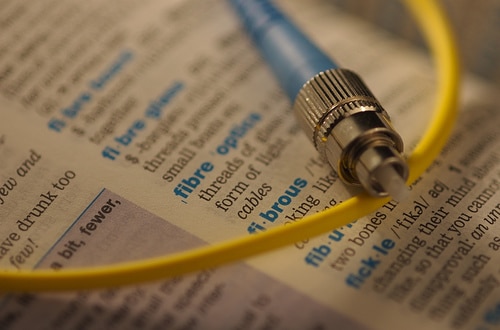


Nigeria’s federal government has incorporated Bridge Open Access (Bridge OA), an independent company that will oversee the construction of 90,000 kilometres of fibre optic cable across the country. The move pushes Project Bridge, the government’s flagship connectivity programme, out of planning and into delivery.
Bosun Tijani, Minister of Communications, Innovation and Digital Economy, announced the incorporation in a post on X, calling it the institutional platform required to complete strategic investor onboarding and accelerate nationwide deployment. He said the company would help position Nigeria as a regional digital connectivity hub for West Africa.
Project Bridge, formally Building Resilient Digital Infrastructure for Growth, is structured as a public private partnership. Under the framework set out in the government’s April 2026 investor pre-qualification notice, the federal government will hold between 25% and 49% of the special purpose vehicle (SPV), while private investors take at least 51%. The plan extends Nigeria’s national backbone from around 30,000km to roughly 120,000km, connects all 774 local government areas including schools, health facilities, agro-industrial zones and rural communities, and builds cross-border links with Benin, Cameroon, Niger and Chad.
Nigeria has been announcing this project, in one form or another, for over two years. Tijani first unveiled plans for a 90,000km SPV in 2024, pitched then at $2 billion. The World Bank committed $500 million in January 2025. The African Development Bank, the European Bank for Reconstruction and Development and other development finance institutions have since added their own commitments.
What did not exist through any of that was a legal entity. Money had been pledged to a project company that had not been registered. Bridge OA changes that. Investors now have something to buy into, contracts have a counterparty, and the government has a vehicle it can point auditors and lenders towards. That is a genuinely different position from where the programme sat six months ago, and it is the reason this announcement matters more than the ones before it.
Kilometres are not connections
The harder problem sits downstream. Nigeria already has tens of thousands of kilometres of backbone fibre, and it has not translated into fixed broadband for most people. Fibre-to-the-home connections number in the low hundreds of thousands nationally, a fraction of a percent of the population, even as overall broadband penetration climbs past the halfway mark on the back of mobile data.
Backbone fibre carries traffic between cities. It does not run into a house in Ilorin or a clinic in Yobe. That last stretch is expensive, permit-heavy and, in Nigeria, routinely destroyed. Operators log tens of thousands of fibre cuts a year, alongside thousands of access denials and theft incidents, which is why the government has been working to curb the damage and why telecoms infrastructure was designated Critical National Information Infrastructure. Right of way charges vary state by state, and not every state has adopted the harmonised rate.
What open access is meant to change
The design answer to this is the wholesale model. Bridge OA is not supposed to sell internet to anyone. It is supposed to sell capacity to everyone, on equal terms, so that no operator has to fund its own national trunk before it can compete for a subscriber in a secondary city. If it works, the economics of extending service to underserved areas improve for every player at once, and the 90,000km becomes useful rather than merely impressive.
If it does not, Nigeria ends up with a larger version of what it already has. A backbone the country can be proud of, and a broadband market that still cannot reach past the places it already reaches.

Victoria Fakiya – Senior Writer
Techpoint Digest
Stop struggling to find your tech career path
Discover in-demand tech skills and build a standout portfolio in this FREE 5-day email course
The test is not whether the fibre gets laid. It is whether anyone lights it.