

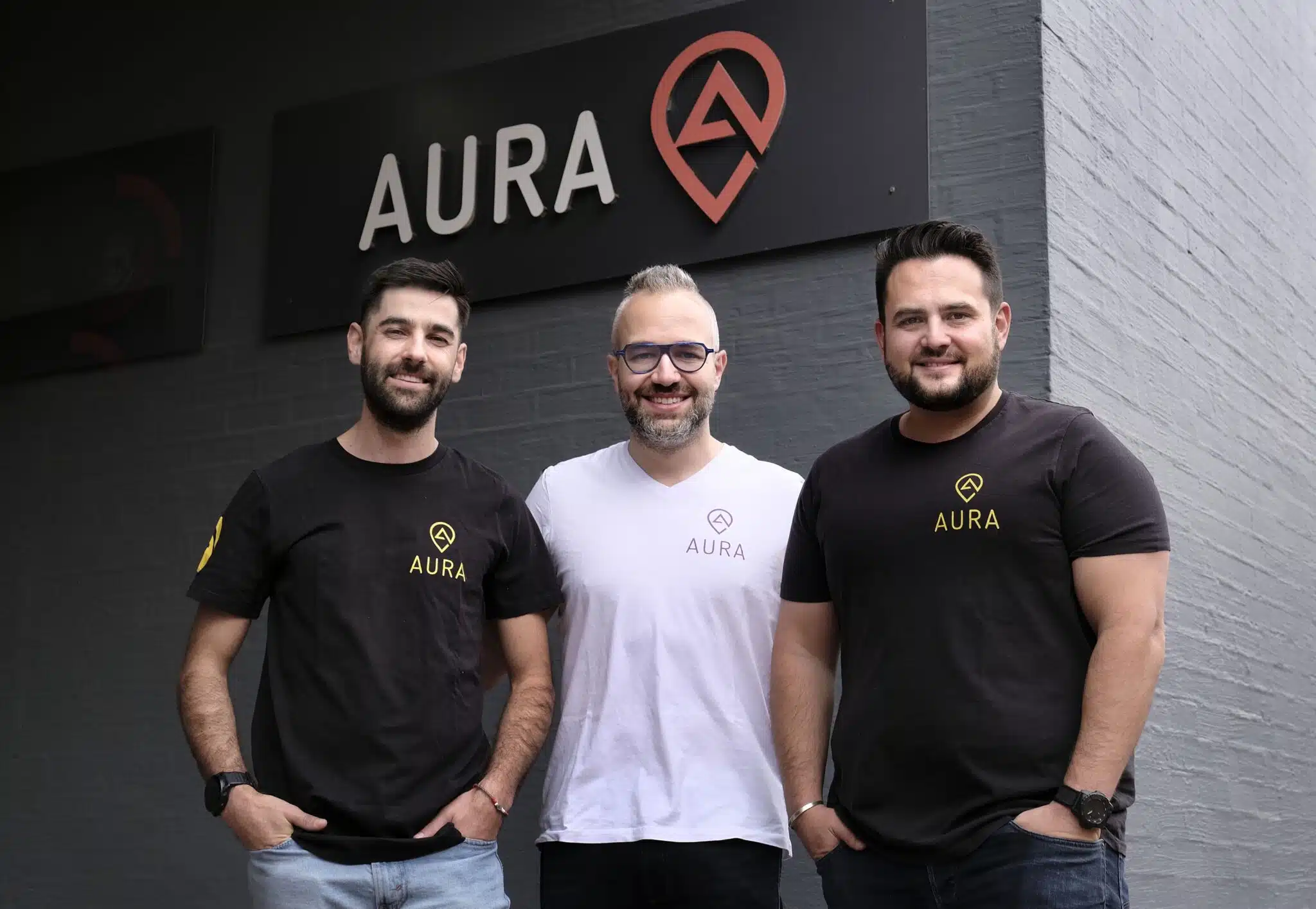


In South Africa, about 84% of the population relies on public healthcare services, with access deeply unequal across provinces and settlement types due to resource constraints and demand. In the United States, police response times have deteriorated sharply. The reasons differ, but the symptom is identical: when people call for help in a crisis, help increasingly fails to arrive, or arrives too late. AURA, a Johannesburg startup, believes it has spent eight years building a solution that works across both.
The founding insight behind AURA was straightforward.
“In an emergency, accessing help was often far more difficult than it should be,” Justin Suttner, AURA’s Head of Sub-Saharan Africa, explains. “Gaps in public infrastructure meant it was easier and quicker to order a pizza in South Africa than to get emergency assistance when someone’s life was at risk.”
AURA was built to connect people instantly with nearby vetted private security and medical responders through smart auto-dispatch and routing technology that matches emergency alerts with the nearest available provider.
The company works on a business-to-business-to-consumer (B2B2C) model, embedding its technology into consumer-facing platforms rather than operating its own brand. Partners such as Uber, FNB (one of South Africa’s largest banks), Samsung, and Discovery already use AURA’s APIs. When a user triggers an alert, the request is routed through AURA’s platform to the nearest vetted private response provider.
Suttner says emergency response is ultimately a race against time, so every element of the platform is designed to reduce delays—every microsecond between an alert being received and the nearest available responder being identified and dispatched matters.
Today, AURA operates one of the largest private emergency response networks in South Africa, with over 11,000 vetted medical and security responders, and average response times of under 10 minutes.
Suttner explains that AURA’s network is built on trust, so maintaining high standards as the platform scales has always been a priority. Before responders can join the network, they are assessed against metrics including capability, experience, legal requirements, reputational assessment, and readiness to respond.
“AURA is not simply aggregating a large number of responders but building a trusted network where users know that the person arriving has been properly verified,” Suttner notes.

Victoria Fakiya – Senior Writer
Techpoint Digest
Make your startup impossible to overlook
Discover the proven system to pitch your startup to the media, and finally get noticed.
The company now covers all nine South African provinces, including smaller towns and semi-rural areas, with GPS-based dispatch ensuring the closest available responder is sent regardless of location. That infrastructure is now being extended into a markedly different operating environment.
Crossing the Atlantic
AURA has launched in Dallas-Fort Worth as its first active American market, with plans to expand to Houston, Los Angeles, Seattle, Atlanta, and further cities across Texas, Florida, and Arizona. The gap it targets is well documented.
In Fort Worth, between 94 and 99% of alarm activations to which officers respond are false. Seattle formally stopped responding to most unverified burglar alarms in October 2024, joining Houston, Phoenix, and other cities in requiring audio, video, or human confirmation before dispatching officers.
The American challenge differs from South Africa’s but is related to it. While help remains available for the most serious emergencies, pressure on public services means that police departments in large urban centres often do not respond to unverified alarms. Law enforcement resources are finite, and officers need to focus on the most serious incidents where they can have the greatest impact. A significant proportion of alarms turn out to be false, up to 99% in some areas, so it makes sense that police would deprioritise these incidents to focus resources on genuine life-threatening situations.
Yet this creates a gap. Homeowners and businesses still want reassurance that someone will respond when an alarm is triggered. AURA provides different support by connecting alarm alerts to vetted private responders. Through its platform, unverified incidents can be routed to the nearest available responder for rapid assistance and real-time support. In the US market, AURA aims to keep its response time under 30 minutes.
AURA’s mission in America is not to replace law enforcement, but to complement existing public safety infrastructure, helping communities feel more secure while allowing police and emergency services to focus their resources on the highest-priority situations. Private responders handle the volume of low-priority calls that currently absorb police capacity without productive results, while officers focus on genuine life-threatening emergencies.
AURA’s measure of impact
The €13.5m Series B, co-led by Partech and the Cathay AfricInvest Innovation Fund and bringing total funding to €21m, is intended to fund the US expansion. The company claims to have saved close to 9,000 lives since 2017, and estimates it saves five lives per day in South Africa alone.
AURA defines a saved life as an incident in which a responder’s intervention played a critical role in preventing a fatal outcome. The platform’s documented cases include the prevention of gender-based violence, near-drownings, and support during premature childbirths.
As the platform expands into new markets and supports a wider range of emergencies, the underlying principle remains constant: making access to emergency response as quick and seamless as possible. This is the infrastructure challenge as the company scales. Building reliable networks in the US and maintaining the vetting and monitoring standards that define the network all depend on capital and careful execution.
In South Africa, average subscription costs sit well below $2 a month for those who access AURA through banking apps and ride-sharing platforms. Whether the company can deliver something comparable to an American homeowner, at a price and with a quality of service that holds up in a market accustomed to demanding both, is the question the next phase of its growth will answer.