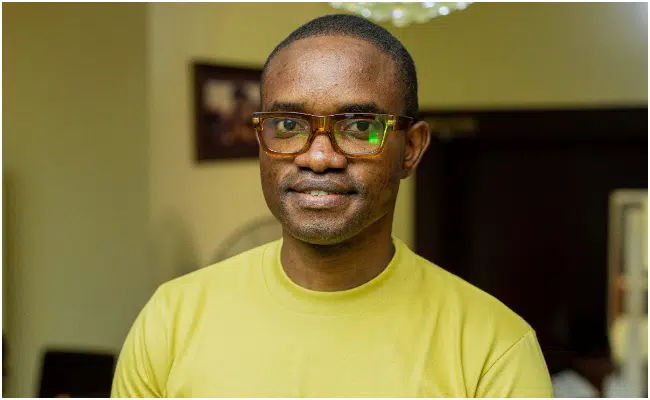



When people think about property management, they often think about bookings. A guest checks in, another checks out, payments are made, and business goes on. But for Moses Owhonda, Technical Co-Founder and CTO of NestFlow CRM, bookings are only one small part of what happens inside a property business.
Behind every booking are maintenance requests, inventory checks, staff activities, inspections, payments, and dozens of operational decisions that determine whether the business runs efficiently or quietly loses money.
That is the goal behind NestFlow CRM. It’s not just about digitising those activities but also about consolidating them into a single system where owners can see everything happening without being physically present.
“To summarise it in one phrase,” he says, “NestFlow CRM is an AI-powered management system.”
Owhonda describes NestFlow CRM as a management layer for property businesses. Instead of switching between spreadsheets, payment platforms, maintenance records, and booking software, NestFlow CRM integrates operational activities into a single dashboard. The goal is to give property owners direct visibility into their operations, even when they are not physically present.
From one single system, hotels, apartments, and other property businesses can monitor bookings, staff activities, inventory, inspections, payments, and maintenance. For him, that visibility is the real product.
Building a digital version of a physical business
Owhonda portrays NestFlow CRM as resting on three core pillars.
The first is infrastructure, creating a digital representation of the physical business. The second is data, connecting every operational activity taking place across that infrastructure. And then there is the AI, analysing that data to generate recommendations, identify unusual behaviour, and surface insights for business owners.
Together, those layers are designed to provide control, which Owhonda believes property operators need more than another management tool. Rather than asking owners to trust reports or wait until problems become visible, NestFlow CRM aims to make operational information accessible in real time.
Every business, he explains, already has a structure. There are rooms, staff, inventory, facilities, restaurants, maintenance teams, and operational processes. NestFlow CRM starts by recreating that entire structure digitally before any meaningful analysis can happen.
“The first thing we do is recreate the business inside the platform,” he explains. “We build a digital replica of your physical business.”
Once that digital infrastructure is in place, every activity within the business is recorded. A hotel may have rooms, restaurants, laundry services, maintenance teams, and hundreds of individual assets. A serviced-apartment company may operate multiple buildings, manage tenants, and coordinate different categories of staff. NestFlow configures the platform around the way each client’s business is organised.
Bookings are connected to rooms, rooms are connected to their inventory, and inspections are linked to staff members and guest stays. Damaged items can be connected to maintenance work, charges, and room availability. Payments, customer interactions, and operational decisions are recorded within the same environment. If a hotel guest checks out, for example, staff inspect the room before completing the checkout process. Any damaged or missing inventory is recorded and linked to that specific stay, making it easier to assign maintenance tasks or recover costs. The same applies across payments, inspections, and operational workflows.
On top of that operational data is NestFlow’s AI layer. Instead of simply displaying information, the system analyses activities, summarises data, and flags unusual patterns that may require attention.
Because NestFlow records activities across the business, its AI layer can work with connected operational data rather than producing generic recommendations that are detached from how the property functions. The system can summarise activity, highlight issues requiring attention, display positive and negative findings, and flag unusual patterns for further investigation.
NestFlow’s AI capabilities also extend to customer engagement. Through its communication tools, property businesses can manage WhatsApp conversations and use AI-assisted campaign calls to follow up on enquiries, reconnect with previous customers, or communicate offers at scale.
The engineer behind the system
Before NestFlow CRM existed, Owhonda was already drawn to systems and how they worked. He had studied Mechanical Engineering at Covenant University and was convinced at the time that engineering would shape the rest of his career.
“I loved engineering when I started out. I thought that would be the thing I’d do for life.”
However, that changed in 2022 when he began taking online courses in Data Analytics and Machine Learning through Udacity and Coursera. The more he learned, the more he realised he wanted to move into technology. He eventually left the engineering path he had imagined for himself and enrolled for a Master’s degree in Data Science at the University of South Wales, graduating with distinction.
Today, that background influences how he approaches product development. While many founders begin with a business problem, Owhonda instinctively thinks about systems, data, and how information moves through an organisation.
That technical perspective also became the missing piece when he met his co-founder, Jim Okonma. The two were introduced through a mutual acquaintance. Okonma already had the idea for a unified property management platform, but needed someone who could translate the concept into a technical product.
Initially, the concept resembled a booking platform, but Owhonda believed it could have a broader architecture.
“I proposed that instead of just building a booking system, we should mirror the entire business digitally, capture the operational data and then build AI on top of that.”
That eventually became the foundation of NestFlow CRM. While Okonma leads the commercial side of the business as CEO and Co-Founder, Owhonda leads its product development, engineering, AI integrations, testing, and deployment for its clients as Technical Co-Founder and CTO.
NestFlow CRM officially launched in February 2026. Within its first few months, the company secured two paying clients, Pearlsend Apartments and Betos Lounge and Apartments, and has generated ₦14 million from its initial deployments, without external investment or grants.
Beyond just building software
Despite the early commercial traction, Owhonda says one lesson that surprised him more than any technical challenge was that implementation proved to be far more difficult than writing code.
“Building the platform isn’t the whole job,” he says. “Starting out, you think, once the system works, the hard part is done, but the truth is, every property operates a bit differently.”
Each business has unique workflows, operational structures, and varying expectations for how software should fit into existing processes.
Rather than forcing businesses into one standard product, NestFlow CRM customises every deployment. Each client receives a dedicated white-labelled version of the platform tailored to its branding, operational structure, and requirements before the team trains staff and hands over the system.
“You have to get the technology to fit the way people actually work. You can build something that’s very capable of solving a problem,” Owhonda says, “but if the people that are supposed to use that system are confused, you haven’t really solved the problem.”
Before every deployment, NestFlow CRM allows staff to work through demo versions of the platform, ensuring they understand how the system works before it goes live. That process, he says, is just as important as developing new features. It’s also why he believes the company’s biggest challenges have little to do with engineering.
For Owhonda, the value of NestFlow CRM isn’t that it helps a hotel process bookings or manage inventory; it’s that it gives business owners confidence that what they’re seeing reflects what’s actually happening on the ground.