



Summary
- Chowdeck has introduced Vendor Badges to show customers whether a restaurant is verified, awaiting verification, or served through its shopper model.
- The update comes weeks after a Techpoint Africa investigation showed that a fake restaurant could be listed on Chowdeck and fulfil an order.
- Chowdeck says fully verified vendors must submit CAC, Tax Identification Number, ownership, address, and banking details before receiving full access.
- The move could increase pressure on Nigeria’s food delivery platforms to improve vendor transparency and consumer protection.
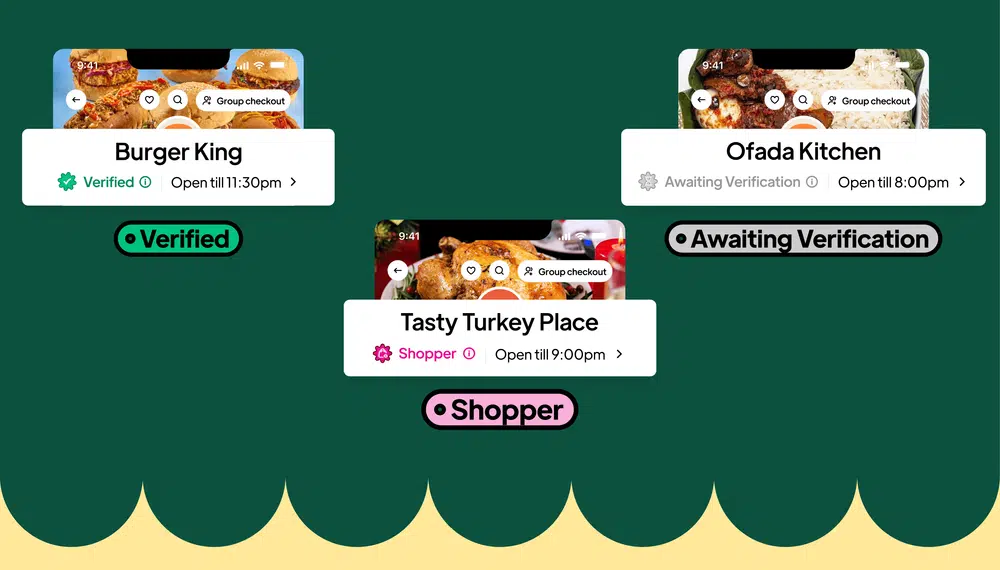
The company said the badges are designed to make it clearer whether a vendor is a fully verified Chowdeck partner, still awaiting verification, or being served through Chowdeck’s shopper model. The update comes at a time when food delivery platforms are facing questions about vendor impersonation, customer safety, and who should be held responsible when fake businesses appear on their apps.
Under the new system, a “Verified” badge will be given to official Chowdeck partners that have been fully vetted, documented, and directly integrated into the platform. An “Awaiting Verification” badge will apply to starter businesses whose verification is still ongoing. Chowdeck says these businesses cannot operate fully and are placed under stricter restrictions until they complete verification.
The third badge, “Shopper,” applies to businesses that are not direct Chowdeck vendors. In this model, a trained Chowdeck shopper stationed around the vendor’s location buys the item on the customer’s behalf and hands it over to a rider.
Chowdeck says direct partners go through deeper checks, including reviews of Corporate Affairs Commission (CAC) registration details, Tax Identification Numbers (TIN), ownership information, operational addresses, and banking details. The company also says it works with verification partners such as Mono and SmileID to validate submissions against official records.
The clarification follows Techpoint Africa’s May 2026 investigation into the onboarding process of Glovo and Chowdeck. In the investigation, Techpoint Africa created a fictitious restaurant on Chowdeck and successfully fulfilled an order without the platform flagging the store before it went live.
During the test, the registration was rejected because the submitted business name did not match the CAC number provided. However, the store was still allowed to proceed with registration and trade under restricted access until daily payouts reached ₦100,000.
Chowdeck later told Techpoint Africa that while its standard onboarding path is for fully registered businesses, it may give limited access to small businesses that are still formalising their registration.
That exception is now central to the trust question. While it can help informal or emerging food businesses sell online before completing full registration, Techpoint Africa’s investigation showed that the same route could be abused by bad actors impersonating legitimate restaurants.
Chowdeck’s latest update appears to address that risk by making vendor status visible to users. The company says it has also tightened verification escalation pathways, improved onboarding risk assessments, and expanded manual reviews to detect impersonation, policy abuse, and fraud earlier.
The broader issue is not limited to Chowdeck. Techpoint Africa previously reported that Nigeria’s food delivery sector does not have a clearly defined regulator responsible for monitoring platforms.
The Federal Competition and Consumer Protection Commission (FCCPC) has a consumer protection mandate, while the National Agency for Food and Drug Administration and Control (NAFDAC) oversees food hygiene regulations, but neither has clear platform-specific oversight.
This regulatory gap is becoming more important as more Nigerians rely on delivery platforms for daily meals.
In another Techpoint Africa report, a suit filed against Chowdeck before the Competition and Consumer Protection Tribunal raised questions about pricing transparency, markups, and consumer disclosure in Nigeria’s food delivery industry.
For Chowdeck, the new badges are a step towards rebuilding trust. But for Nigeria’s wider food delivery industry, they also point to a bigger problem: platforms can no longer treat vendor verification as an internal process customers do not need to see.