

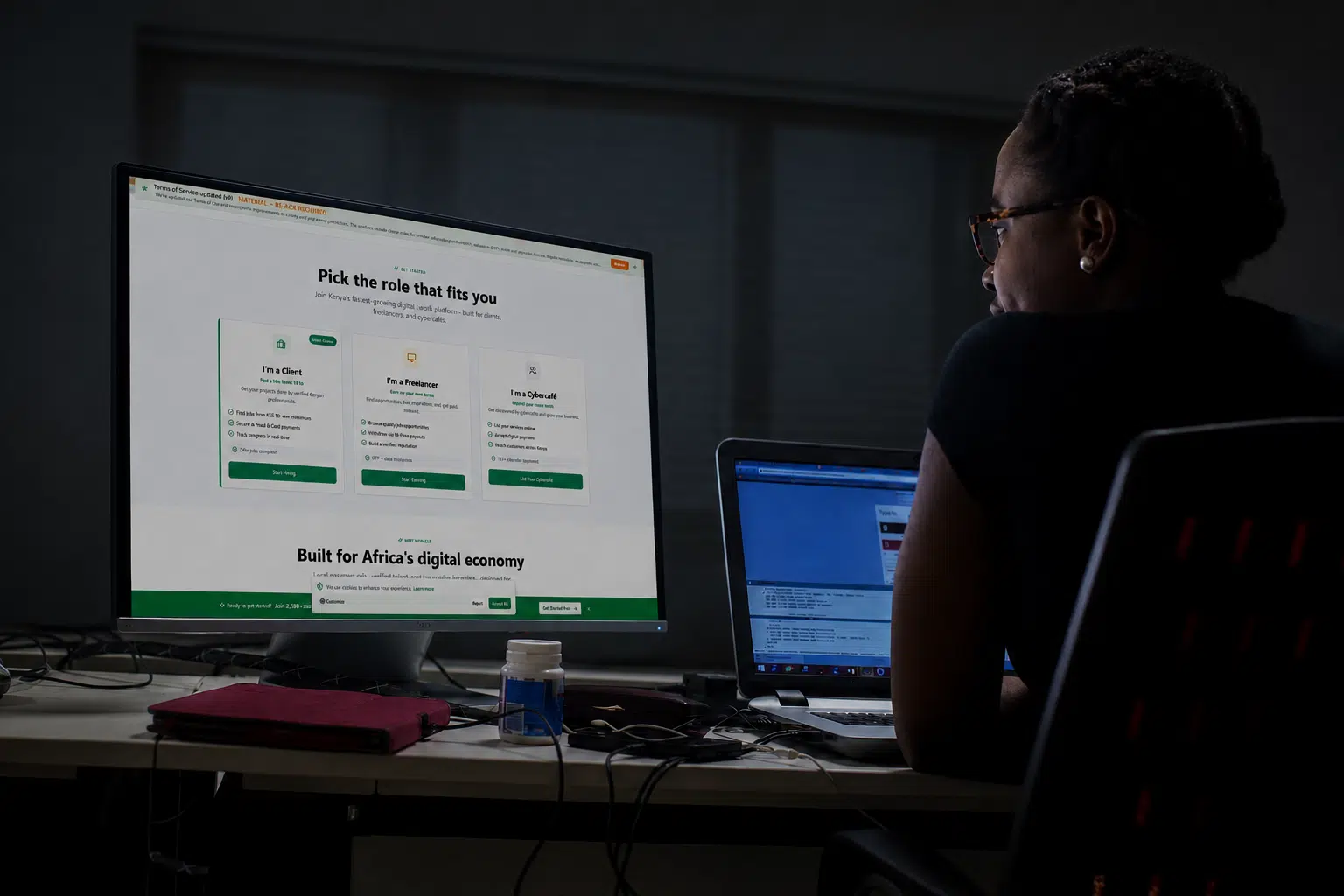


Freelancers in Africa have found a home in marketplaces like Upwork and Fiverr, but for many, participating in that global economy still comes with familiar hurdles: payment barriers, account restrictions, pricing built for dollar-based economies, and platforms that don’t reflect how business is done locally.
Although there are numerous alternatives, such as Growwr, built by Africans, that offer vetted job opportunities to address the persistent problems African freelancers face in getting hired and paid fairly, a Kenyan startup, WorkKE, believes a different approach is the way to go.
Kennedy Asiago, founder and CEO of WorkKE, says its ecosystem-bundling model is what sets it apart. He argues that Africa doesn’t have a shortage of talent or demand for digital work. The missing piece, he says, is infrastructure that enables freelancers and businesses to transact with confidence. He explains that WorkKE’s focus is on ensuring digital work is accessible to everyone, not just experienced freelancers.
Before founding WorkKE, Asiago spent a decade leading digital transformation and technology implementation projects in Kenya’s health sector. He also operated several small businesses, including a cybercafé, a digital services business, and photography services.
“These experiences gave me firsthand insight into the challenges small businesses, young professionals, and entrepreneurs face as they try to earn income in a rapidly changing digital economy.”
According to him, the idea for WorkKE came from repeatedly seeing two problems: businesses struggling to find trusted, affordable talent for short-term work, and many skilled professionals’ inability to find consistent opportunities despite having valuable skills. And having been on both ends of the divide, he decided to build a solution.
What sets WorkKE apart?
While international platforms have global reach, Asiago believes they were not designed with African realities in mind. Payment systems differ across countries, and because they are usually priced in dollars, making or receiving payments remains a challenge. African freelancers occasionally face account restrictions that can lock them out of their earnings.
On the demand side, many African small businesses also struggle to find a marketplace tailored to their hiring needs. Most job listings offer preference to individuals based in the US or UK; gig workers in Africa, though overqualified, can sometimes be at a disadvantage.
“With many of the big global platforms, there’s little protection for the African people. You can wake up in the morning and hear that a platform has closed accounts for African freelancers with unclaimed money within those accounts.”
WorkKE addresses these gaps by integrating local payment rails and payouts while supporting mobile money and a mobile-first experience. It is also building AI features that help freelancers prepare stronger job proposals and assist businesses in evaluating applicants through platform-generated trust signals.
For creators, the marketplace extends beyond freelance work, enabling them to sell digital products and create an additional income stream within the same ecosystem. The startup also plans to introduce an online learning academy and partner with cybercafés as community access points where users can receive support and access digital job opportunities.
Building WorkKE
The startup launched in 2025, funded by personal savings and the reinvestment of revenue generated from the platform. Asiago, however, declined to state how much of his personal funds have gone into building WorkKE or how much the platform has generated so far.
In less than a year, WorkKE claims to have attracted more than 6,800 registered users and facilitated the posting of over 240 jobs. Based on user feedback, its product roadmap continues to evolve, with new features prioritised to address recurring customer requests.
Interestingly, only four individuals make up the WorkKE team: Asiago and three others. Running KYC verification, manual job reviews, escrow, AI-powered tools, digital product sales, and a learning academy in the pipelines with just four people seems an enormous task. Asiago says it’s a deliberate design.
“Our team combines automation with human oversight, and we have deliberately taken a lean approach from day one, Asiago notes. “Rather than building a large organisation too early, we have focused on designing efficient processes, automating repetitive tasks, and investing in technology that allows a small team to operate effectively.”
He further explains that critical functions such as KYC verification, job moderation, and payment workflows are supported by internal processes and technology, while the team focuses on quality assurance and customer support. Asiago says there’s no intention to scale employees at the same rate as users, emphasising that the philosophy is to build a platform that scales through technology first and then people.
How does WorkKE make money?
Asiago explains that the startup has built multiple revenue streams into the platform and doesn’t rely solely on a traditional subscription.
Its primary monetisation model revolves around virtual work coins. Before applying for a job, freelancers spend coins to submit bids; the number of coins required is proportional to the value of the project. While this is commendable, the platform mirrors the model of another global freelance platform, Upwork, which requires users to purchase connects to bid for jobs and remain visible to clients.
Asiago argues that this mechanism discourages spam applications while helping employers identify more serious candidates. He insists that WorkKE coins are not designed to maximise revenue and that there’s a 100% automated coin-refund policy if a job expires without anyone being hired, but 50% refund applies once someone is hired.
Beyond work coins, the platform offers premium features that provide users with additional insights and charge commissions on sales made through its digital products marketplace.
Building a global marketplace from Africa
Building in Africa can be really challenging, and Asiago has had a fair taste of this. He explains that two things keep him awake at night.
First is the ever-changing user behaviour, as many SMEs still rely on informal hiring through personal networks. The other is trust, a component that takes time to build.
“The biggest challenge is not building the technology, it is building trust. A digital marketplace succeeds only when employers trust the quality of talent and professionals trust they will be paid fairly and consistently.”
Beyond trust and user behaviour, many freelance marketplaces battle with ghost job listings. Asked how WorkKE plans to combat the menace, Asiago explains that the startup has multiple layers of verification. Before new users are onboarded, they must complete a mandatory Know Your Customer (KYC) process by submitting identification documents before receiving a verification badge.
Beyond identity checks, the platform generates a reliability score based on several factors, including KYC status, completed projects, ratings, and feedback from previous engagements. These scores are visible to users, giving both freelancers and clients additional context before agreeing to work together.
Every job posting on WorkKE is manually reviewed before it goes live to reduce spam, misleading listings, and low-quality opportunities. According to Asiago, introducing human review significantly improved the quality of jobs appearing on the marketplace.
For disputes that inevitably arise during freelance engagements, a dedicated channel is available for either party to raise concerns about deliverables, payments, or other issues. Payments are protected through an escrow system that holds funds until the work is completed and approved, preventing either party from accessing them prematurely.
Future plans
For Asiago, the long-term ambition extends beyond creating another freelance website. The goal is to build infrastructure that reflects how Africans work, hire, learn, and get paid, one that is designed around local payment systems, local businesses, and the realities of Africa’s growing digital workforce.
He adds that the startup’s ambition is not limited to Kenya or the African market, while responding to questions about how he intends to serve Africans seeking to get foreign gigs on platforms to earn in dollars.
According to him, the startup also targets quality jobs or clients in the European markets and the US. He explains that this is a work in progress.
“We are not really interested in keeping this in Kenya alone. I think one of the biggest assumptions is that WorkKE is Kenyan and operates solely within Kenyan borders.”
While the idea behind WorkKE is commendable, it would take more than belief and offering users another marketplace with extra features to stand out and make a mark in a crowded space already dominated by trusted global players.