


Bonjour,
Victoria from Techpoint here,
Here’s what I’ve got for you today:
- Bolt denies claim it will shut down operations in Kenya
- Can AI exist without exploitation?
- Why Brass is disappearing into Paystack
Bolt denies claim it will shut down operations in Kenya

An alleged fake document claiming Bolt was shutting down its Kenyan operations managed to force a public response from the company itself. Yesterday, Bolt issued a statement denying reports that it would cease operations in Kenya on June 8, calling the notice fraudulent and confirming that its services remain fully operational. By the time the company responded, however, the document had already spread across WhatsApp groups and social media, leaving drivers and customers scrambling for answers.
The timing wasn’t accidental. Bolt is currently navigating one of the most challenging periods in its Kenyan business. In recent weeks, the company has raised fares, participated in a nationwide transport strike, and faced increasing regulatory scrutiny from government authorities. Against that backdrop, a story about Bolt quietly exiting the market sounded plausible enough for many people to believe. Whether the document was created as a deliberate attempt to damage the company’s reputation or simply as misinformation that spiralled out of control, it landed at a moment when uncertainty around the ride-hailing sector was already high.
For drivers, the panic was understandable. Thousands rely on Bolt as a major source of income, and many have few immediate alternatives if that income suddenly disappears. A message suggesting the platform would shut down within a week wasn’t just another social media rumour; it raised real concerns about livelihoods. At the same time, customers who depend on Bolt for daily transportation were left wondering whether they would lose access to a service they regularly use. The speed at which the claim spread highlights how closely people’s finances are tied to digital platforms today.
To be fair, Bolt moved quickly to contain the situation. The company publicly reassured users that operations remain unaffected and said it is investigating the source of the fake communication. It also urged the public to verify information through official channels rather than relying on screenshots and forwarded messages. But misinformation often moves faster than corrections, and once doubts take hold, simply issuing a denial does not immediately restore confidence.
The incident says as much about Kenya’s information ecosystem as it does about Bolt. False notices, edited documents, and viral rumours have become a recurring feature of economic and political conversations online, particularly when they touch on issues that directly affect people’s incomes. While Bolt appears to have weathered this particular storm, the episode shows how vulnerable businesses can be when trust is already under pressure. For Kenya’s ride-hailing sector, the bigger challenge remains creating a stable environment where claims of an imminent exit sound unbelievable rather than entirely possible.
Why Brass is disappearing into Paystack
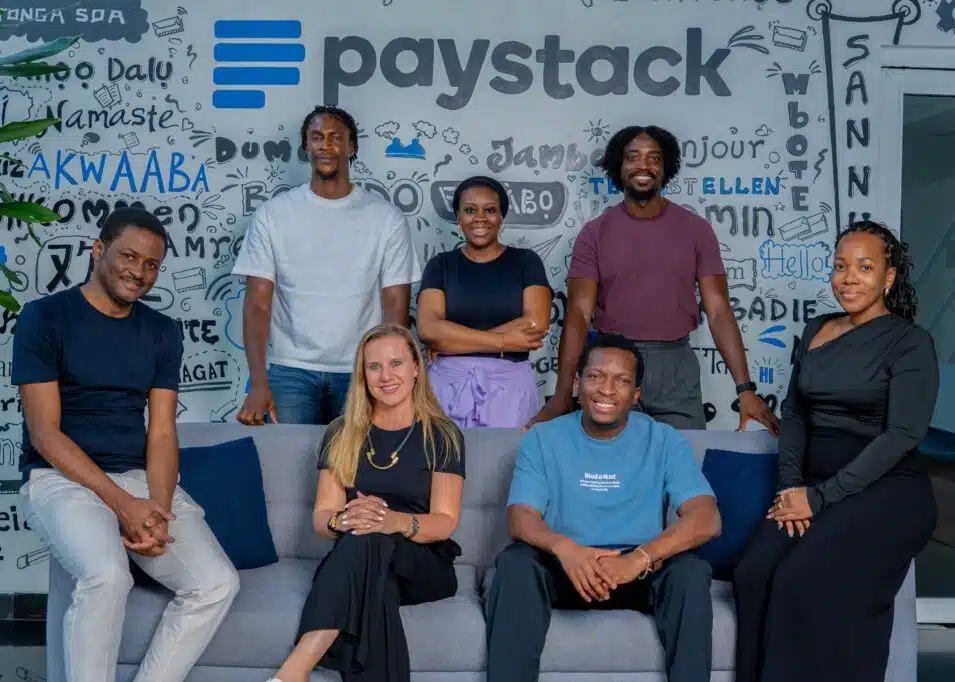
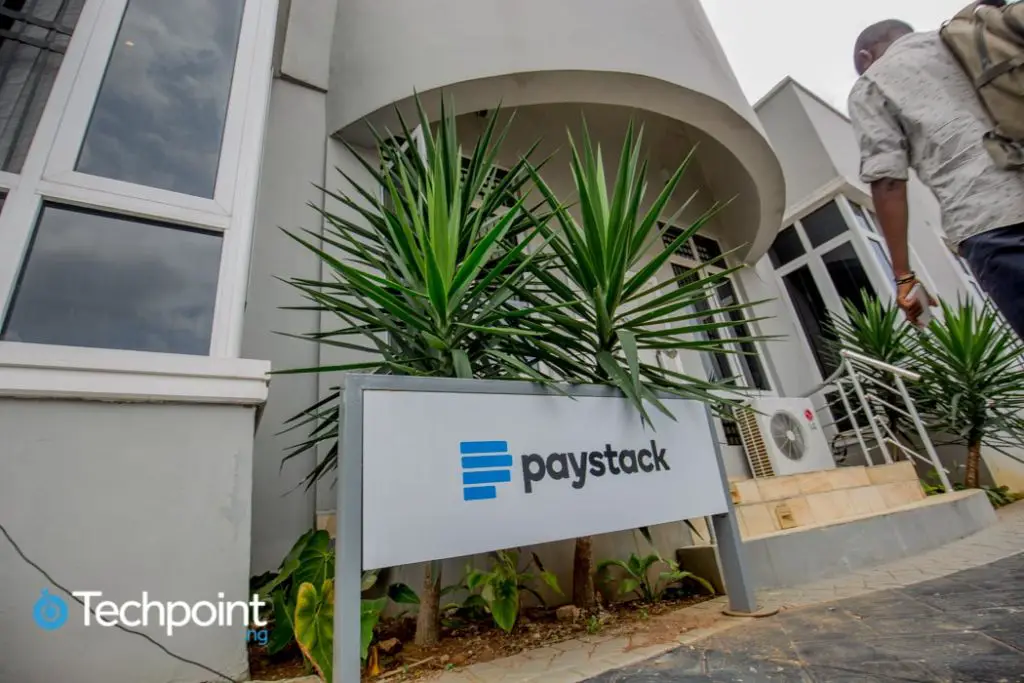
Brass is officially done as an independent company. The Nigerian business banking startup confirmed that all of its customers will be migrated to Paystack Microfinance Bank before July 31, per TechCabal. Once that process is completed, Brass will cease to exist as a standalone business. The announcement closes the chapter on a startup that was once one of Nigeria’s most promising fintech companies serving small businesses.
The move didn’t come out of nowhere. Brass has been fighting for survival since late 2023, when customers started reporting delays in accessing their funds. The crisis raised serious concerns across the fintech ecosystem, with many founders and business owners questioning whether digital-first banking platforms could be trusted with operational cash. In May 2024, a consortium led by Paystack, alongside PiggyVest, Ventures Platform, and P1 Ventures, stepped in to acquire and stabilise the company. What was initially presented as a rescue effort has now ended in a full absorption.
For Paystack, this is another step in a much bigger strategy. After entering Nigeria’s banking sector through the acquisition of a microfinance bank licence in early 2026, the company has been steadily expanding beyond payments into broader financial services. Bringing Brass customers and business banking operations into Paystack MFB gives the company a stronger foothold in SME banking while avoiding the cost and time required to build everything from scratch.
The significance of the Brass story goes beyond a single startup. At the height of the withdrawal crisis, there were fears that a major fintech collapse could damage trust in Nigeria’s growing digital banking sector. Instead, larger and better-capitalised players stepped in to prevent a wider confidence problem. Similar consolidation is happening across Africa, with fintech companies increasingly acquiring competitors or complementary businesses rather than competing in crowded markets.
Brass’s journey lasted just six years. Founded in 2020 by Sola Akindolu and Emmanuel Okeke, the startup rode the fintech boom by offering business accounts, payroll tools, and expense management services to SMEs. But like many startups built during the easy-money era, it struggled when funding conditions tightened. Its final destination inside Paystack MFB reflects a broader reality facing African fintech today: scale, regulatory licenses, and strong balance sheets matter more than growth stories. And with consolidation accelerating across the industry, Brass is unlikely to be the last startup to disappear into a larger player.
Can AI exist without exploitation?

Every time you ask ChatGPT a question, there’s a good chance you’re interacting with a system that was partly shaped by workers earning less than $2 an hour. Most of the platform’s hundreds of millions of users will never see the people behind the scenes who sift through some of the Internet’s darkest content, including child abuse, murder, self-harm, and other disturbing material, to help train AI models to behave safely. But without that work, today’s AI products might look very different.
That hidden labour is one of the clearest examples of a growing criticism of the AI industry: that its rapid progress depends on workers in lower-income countries doing emotionally taxing jobs for low pay. Across countries, including Kenya, Uganda, India, Ghana, and Nigeria, data annotators and content moderators help build and refine AI systems by reviewing and labelling huge volumes of content. Critics argue that while AI companies benefit from their work, many of these workers face poor conditions, psychological stress, and wages that don’t reflect the value they create.
The debate has gained fresh attention following a recent letter from Pope Leo XIV on artificial intelligence and human dignity. In the document, the Pope argues that technological advancement should not come at the expense of human beings. Instead, he says AI development should be guided by moral responsibility, with human dignity protected throughout the entire process, from design and development to deployment and use. It’s a direct challenge to an industry often focused on speed, scale, and growth.
At the same time, the money flowing through AI has never been bigger. OpenAI reportedly reached annualised revenue of $20 billion in 2025, while Meta and Microsoft generated hundreds of billions of dollars in revenue. Yet labour disputes, worker complaints, and concerns about compensation continue to emerge across the AI supply chain. Critics argue that if companies were forced to fully account for the human costs of AI development, the economics of the industry could look very different. OpenAI’s evolution from a nonprofit research lab into a company pursuing massive funding rounds is often cited as evidence of how commercial pressures have reshaped the sector.
And the questions don’t stop with labour. The data centres, chips, minerals, and energy infrastructure powering AI also depend on global supply chains with their own environmental and human costs. As governments, religious leaders, and civil society groups push for a more ethical approach to AI, the industry’s biggest challenge may not be building smarter systems, but figuring out whether those systems can be built without relying on the same forms of exploitation critics say are baked into the model. Check out Sarah’s latest piece for a deeper look at the human cost behind the AI boom.
In case you missed it
- Why protecting customer data can still leave your reporting broken
What I’m watching
- Why You Should Keep a List of What Makes You Laugh | Chris Duffy | TED
- Don’t Learn This Too Late: THIS Study Reveals the 4 Regrets That Haunt People Most
Opportunities
- Are you a female-led tech or tech-enabled business preparing for sustainable growth and opportunity to access capital? Apply for the Female Founders Growth Programme and grab up to $2 million. Apply here.
- Bamboo is hiring in Ghana and Nigeria. Apply here.
- Cowrywise is recruiting some engineers. Apply here.
- PiggyVest is looking for a Product Technical Manager. Apply here.
- Paystack is hiring for a few roles. Apply here.
- Qore is hiring for several roles. Apply here.
- Moniepoint is recruiting for several roles. Apply here.
- Flutterwave is hiring for several roles in Nigeria, the UK, and the US. Apply here.
- As one of Techpoint Africa’s most engaged readers, you have a direct hand in shaping what we publish next. Take our quick, 3-minute survey to tell us the stories and features you value most. Your responses are anonymous, and your feedback will help guide our editorial focus in the months ahead. Fill the survey here.
- Moniepoint is hiring for over 100 roles. Apply here.
- To pitch your startup or product to a live audience, check out this link.
- Follow Techpoint Africa’s WhatsApp channel to stay on top of the latest trends and news in the African tech space here.
Have a lovely Tuesday!
Victoria Fakiya for Techpoint Africa