



Hola,
Victoria from Techpoint here.
Here’s what I’ve got for you today:
- Paystack absorbs Allawee
- ChipMango raises $1.9M for Chip design
Paystack quietly acquired Allawee
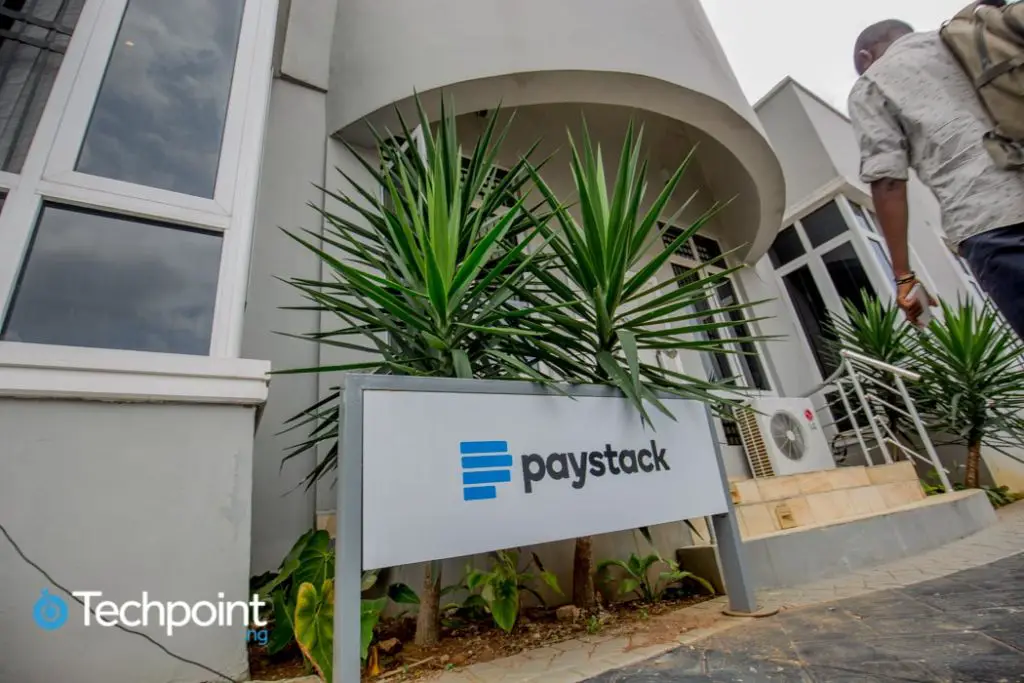
The big news is that Paystack quietly acquired Nigerian fintech Allawee in 2025, and we are only getting the full picture now because Allawee has told customers it will shut down its personal and business accounts on December 1, 2026. Customers have until November 30 to withdraw their money, replace saved card details and move to other services. But this isn’t really a story about Paystack killing off another fintech brand; it is about Paystack buying the technology and team behind Allawee and folding them into a much bigger financial-services operation.
Interestingly, Allawee had built some useful infrastructure underneath the products people saw. Founded in 2022 by Ikenna Enenwali and Oreofe Olurin, the company started with credit, moved into credit-risk technology and eventually focused on card infrastructure. By May 2025, it was issuing cards for fintechs, including PiggyVest, Nomba, and Carbon. Its platform handled things such as card programmes, authorisation, ledger management, spend controls and integrations with payment schemes. In other words, Paystack wasn’t necessarily buying another consumer fintech to compete with its existing products; it was buying technology that could save it years of building.
And the timing makes even more sense when you look at what Paystack has been building. In January 2026, it acquired Ladder Microfinance Bank, giving it the banking licence behind Paystack Microfinance Bank. Then in June 2026, it began moving Brass’s business-banking customers into Paystack MFB after the Paystack-led consortium acquired Brass in 2024. Now Allawee’s technology is joining that stack. Individual Allawee users are being directed to Zap, while businesses are being moved to Paystack MFB, although customers will have to create new accounts rather than having their balances and account histories automatically transferred.
For Allawee, the decision appears to have come down to scale. The company told Condia that it had reached an “inflection point”: continuing independently would require significant investment in distribution, regulatory capacity and capital, while Paystack already had much of that infrastructure. So instead of spending years trying to build the same machinery, Allawee chose to put what it had built inside a company that could take it further. The brand disappears, but the technology and team get a chance to reach a much larger market.
There is also a bigger lesson here for African fintech. Paystack’s Allawee deal, alongside its moves around Brass and Ladder, shows how the industry’s growth story is shifting from “build everything yourself” to “buy the pieces you need.” That could mean fewer standalone fintech brands, but it could also mean stronger, more integrated financial infrastructure as well-capitalised companies absorb specialised technology. Paystack itself has come a long way from the payments company founded in Lagos in 2015 and acquired by Stripe in 2020. The Allawee deal suggests its next chapter is less about simply processing payments and more about assembling the financial infrastructure around them.
ChipMango raises $1.9M for chip design

ChipMango has raised $1.9 million in seed funding to grow its engineering and product teams and expand its chip-design operations across Africa, Europe and the US. The round was led by Atlantica Ventures, with DFS Labs, Madica, Kaleo Ventures, Trilinear Technologies and Malta Ventures also participating. The startup is also planning a design centre in Malta, while part of its expansion will go towards semiconductor skills and AI infrastructure initiatives in Rwanda.
The funding is significant because ChipMango is tackling a part of the tech industry that Africa rarely gets associated with: semiconductor design. Rather than building chip factories, which require enormous amounts of capital, the four-year-old startup is focusing on the engineering and intellectual property side of chipmaking. Its model combines commercial chip-design work for global customers with training engineers in Nigeria, creating a pipeline of specialised talent while giving them exposure to real projects.
ChipMango was founded in 2022 by Ola Fadiran and Jovan Andjelich, who have backgrounds at companies including Tesla, Google, Intel and Boeing. The startup has built partnerships with Nigerian universities, including Miva Open University, Obafemi Awolowo University and the University of Lagos, to identify engineers with basic technical skills and train them further in chip design. The idea is pretty straightforward: Africa already has a large pool of engineering talent, but much of it has historically been disconnected from the higher-value parts of the global semiconductor industry.
Now, ChipMango wants to take that model beyond Nigeria. The Malta design centre is one of the clearest signs of this international push, while the company plans to continue expanding across Africa, Europe and the US. In Rwanda, it also wants to support initiatives around semiconductor capability, workforce development and AI infrastructure. That matters because the global AI boom is creating demand not just for AI software but for the chips and specialised hardware needed to run it.
For ChipMango, the bigger bet is that Africa can participate in the semiconductor value chain without waiting to build expensive fabrication plants. If it can train engineers, win global chip-design contracts and turn that talent into commercially valuable semiconductor IP, it could carve out a place for Africa in an industry dominated by companies and ecosystems in the US and Asia. The $1.9 million gives it more room to test that thesis, and potentially turn chip design into another African technology export.
TikTok wants you to talk in comments

TikTok is quietly changing the way people argue, react, and gist in its comment sections. The platform has started rolling out voice-note comments, with a microphone icon appearing beside the usual comment tools for some users. Hold the icon, record a short message, release it, and your voice note appears as a comment alongside the usual text and emoji replies. The rollout is gradual, so seeing the feature on one account doesn’t necessarily mean everyone has it yet.
The interesting part is that TikTok isn’t simply dropping audio into the comments and calling it a day. Voice comments are automatically transcribed, with the text appearing beneath the audio waveform after a few moments. That could make the feature more useful for people scrolling with their sound off and potentially more accessible, although TikTok hasn’t yet explained how accurate the transcription is, which languages it supports or whether users can edit or hide the generated text.
TikTok has also built some guardrails around the feature because, well, giving millions of people the ability to leave audio comments could get messy very quickly. Creators can switch voice comments off, limit them to followers or delete replies, while listeners can report or mute comments. TikTok says its systems can also detect harmful or infringing audio. Privacy questions remain, though, particularly around how long these recordings are stored and whether they are used for moderation or AI model training, things the company hasn’t publicly clarified yet.
This isn’t TikTok’s first move towards making the app feel more like a full-blown messaging platform. Voice notes arrived in TikTok DMs in 2025, with recordings capped at 60 seconds, and the platform has since added voice and video calling inside DMs. The new comment feature takes that idea into a much more public space, bringing a little more of the feel of WhatsApp, Instagram, and iMessage into TikTok’s already busy comment sections.
The feature has actually been building for a while. Users first spotted TikTok testing voice comments in May 2026, and the company confirmed a wider rollout by July, although it has continued to release the feature gradually. So if that microphone icon hasn’t appeared on your account yet, nothing is wrong with your app. TikTok simply hasn’t got to you yet. The bigger question is whether voice comments become a genuinely useful way to interact or just give TikTok users another way to leave very long replies nobody asked for.
In case you missed them
- Timon wants Africans to stop leaving their financial lives behind when they travel
- After relying on OpenAI and Anthropic, Decide is building some AI of its own
- Meta agrees to pay up to $18 billion over claims Facebook and Instagram harmed children
What I’m watching
- There is no such thing as human progress | John Gray, Jonny Thomson
- Literacy is dead. Consumerism is Forever.
Opportunities
- Flutterwave is hiring for several roles. Apply here.
- Moniepoint is hiring for over 100 roles. Apply here.
- Follow Techpoint Africa’s WhatsApp channel to stay on top of the latest trends and news in the African tech space here.
Have a wonderful Wednesday!
Victoria Fakiya for Techpoint Africa