



Artificial intelligence has gone from a novelty to an everyday workplace tool, making AI literacy less of a differentiator than it once was. This is why employers around the world are now paying more for workers with AI skills.
According to PwC’s 2025 Global AI Jobs Barometer, jobs requiring specialist AI skills now command a 56% wage premium on average globally. Research from Stanford University and Lightcast points to the same trend: workers who can demonstrate practical AI capabilities are commanding higher salaries, while companies are rewriting job descriptions to include AI requirements across roles that have little to do with software engineering.
More than half of AI-related job postings now sit outside traditional IT departments. Marketing teams, HR departments, finance professionals, operations managers, and product teams are now expected to use AI in their day-to-day work.
The reality is that these opportunities aren’t necessarily for people building large language models; instead, the demand is for people who understand how to leverage these models for everyday business operations.
Here are some of the AI skills employers are willing to pay for.
Specification precision
This is the ability to design detailed, structured instructions that enable AI systems to produce reliable, consistent outputs repeatedly. Instead of asking an AI model to complete a single task, professionals with this skill create instructions that can handle hundreds or even thousands of similar tasks with minimal variation.
Think of a company that receives thousands of customer support requests every day. A simple prompt asking ChatGPT to “reply politely to this customer” may work once, but it quickly fails when the requests become more complex or varied.
A professional skilled in specification precision would instead design a comprehensive instruction set that tells the AI how to classify requests, identify urgent complaints, extract key details, respond in the company’s preferred tone, avoid making unsupported claims, escalate sensitive cases to a human agent and return responses in a structured format that integrates with the company’s support software.
The distinction may seem subtle, but it shows the difference between using AI as a chatbot and using it as part of a business operation.

Victoria Fakiya – Senior Writer
Techpoint Digest
Stop struggling to find your tech career path
Discover in-demand tech skills and build a standout portfolio in this FREE 5-day email course
The same principle applies across several industries. For example, legal teams use structured AI specifications to review contracts consistently, financial institutions use them to analyse documents while complying with strict reporting requirements, and marketing teams rely on them to generate content that matches brand guidelines across multiple campaigns without starting from scratch each time.
Professionals who know how to create repeatable AI instructions help organisations reduce errors, standardise workflows and deploy AI at scale.
AI evaluation and output testing (Evals)
The quality of an AI model’s response may vary depending on context, model updates or even how the question is phrased. An AI system that occasionally invents information, overlooks important details or produces biased outputs may waste time at best and expose an organisation to legal, financial or reputational risks.
Rather than building AI models, professionals in AI evaluation focus on measuring how well those models perform. They develop testing frameworks that compare AI responses against expected outcomes, measure accuracy, identify hallucinations and monitor whether performance changes when a model is updated.
In practice, this could involve creating evaluation rubrics for an AI-powered customer service assistant, testing whether an internal coding assistant generates secure software or measuring whether a recruitment chatbot treats candidates fairly regardless of gender, age or background.
Some organisations also use automated evaluation systems where one AI model helps assess the quality of another. These “LLM-as-a-Judge” frameworks are becoming common as more companies deploy AI across larger parts of their operations.
Workflow automation and tool integration
For many businesses, the biggest promise of AI is that it can eliminate repetitive work covering small, routine tasks that keep a business running.
Instead of treating AI as a standalone tool, professionals with this skill connect it to the software businesses already use. Large language models (LLMs) are integrated with CRMs, enterprise resource planning (ERP) systems, communication platforms, databases and document management tools so information can move automatically from one system to another.
The rise of no-code and low-code automation platforms has made this skill more accessible. Rather than writing thousands of lines of code, businesses can create workflows in which AI extracts information from documents, updates databases, drafts emails, generates reports, or notifies team members when certain conditions are met.
According to the Stanford AI Index, mentions of workflow management in AI job postings have grown significantly over the past year. Reducing manual work lowers operating costs, speeds up decision-making and allows employees to focus on tasks that require human judgement rather than repetitive administration.
Ethical governance and human-in-the-loop
The more businesses rely on AI, the greater the consequences when it gets something wrong.
Ethical governance and human-in-the-loop refers to the policies, processes and oversight that ensure AI systems are used responsibly. It covers everything from data privacy and regulatory compliance to bias testing, intellectual property concerns and AI dependence.
This has become important as many governments have introduced AI regulations, and businesses now face scrutiny over how they collect data, train AI systems and use AI-generated content. Rather than allowing AI to make final decisions, human-in-the-loop systems ensure people remain involved at critical stages where judgement, accountability or legal responsibility is required.
For employers, this skill has become increasingly valuable because AI adoption is no longer just a technology issue. It is now a business risk issue. Organisations need professionals who understand both the capabilities and the limitations of AI, and who can help deploy it without exposing the business to unnecessary legal, ethical or reputational risks.
Python and system engineering
Despite the growing demand for non-technical AI skills, software engineering remains at the heart of the AI economy.
Among technical skills, Python continues to dominate AI hiring. It remains the programming language most commonly associated with building, deploying and maintaining AI applications because of its extensive ecosystem of machine learning libraries, data analysis tools and AI frameworks.
Today’s AI engineers are expected to build systems that connect language models to business applications through APIs, automate data pipelines, process large datasets and develop software that integrates AI into products customers use every day.
Rather than focusing solely on developing new AI models, many software engineers now spend their time orchestrating the interactions between existing models and databases, enterprise software, and customer-facing applications.
Stanford AI index report ranks Python among the most requested AI skills, reflecting its role as the foundation for everything from automation scripts and data engineering to machine learning development and API integration. For employers, these professionals bridge the gap between AI research and practical implementation.
Cloud infrastructure and model deployment
An AI model is only useful if people can access it reliably. Whether a company is deploying an internal chatbot, an AI-powered analytics platform or an automated customer support system, someone has to ensure that the technology can handle thousands or even millions of requests securely and efficiently. That responsibility falls under cloud infrastructure and model deployment.
Professionals with this skill manage the environments where AI systems run. They deploy models using cloud platforms such as Amazon Web Services (AWS), Microsoft Azure, and Google Cloud, allocate computing resources, optimise performance, and ensure systems remain available as demand grows.
Model deployment also involves monitoring performance after launch. AI models require regular updates, performance tracking, and resource optimisation to ensure they continue to deliver accurate results without driving up operational costs.
RAG and vector database engineering
Rather than relying solely on a model’s training data, Retrieval-Augmented Generation (RAG) allows AI systems to retrieve relevant information from a company’s private knowledge base before generating a response. Vector databases make that possible by storing and organising information in a way that enables AI to find the most relevant documents almost instantly.
To users, the experience is seamless. An employee can ask an internal AI assistant about the company, and the AI responds with up-to-date information from the organisation’s own documents rather than relying on outdated or generic knowledge.
Hospitals use it to help clinicians access medical guidelines more quickly. Law firms are also exploring RAG-powered systems that retrieve relevant case files before generating legal summaries. Customer service teams are using it to answer enquiries based on product manuals and company policies.
Domain-specific AI integration
Employers are looking for professionals who can apply AI within their area of expertise rather than become AI specialists.
For data and business analysts, AI is changing how information is processed. Instead of spending hours cleaning datasets or writing repetitive SQL queries, analysts are using AI to automate data preparation, identify trends, generate dashboards and produce executive summaries. There is a shift in role from manually producing insights to interpreting them.
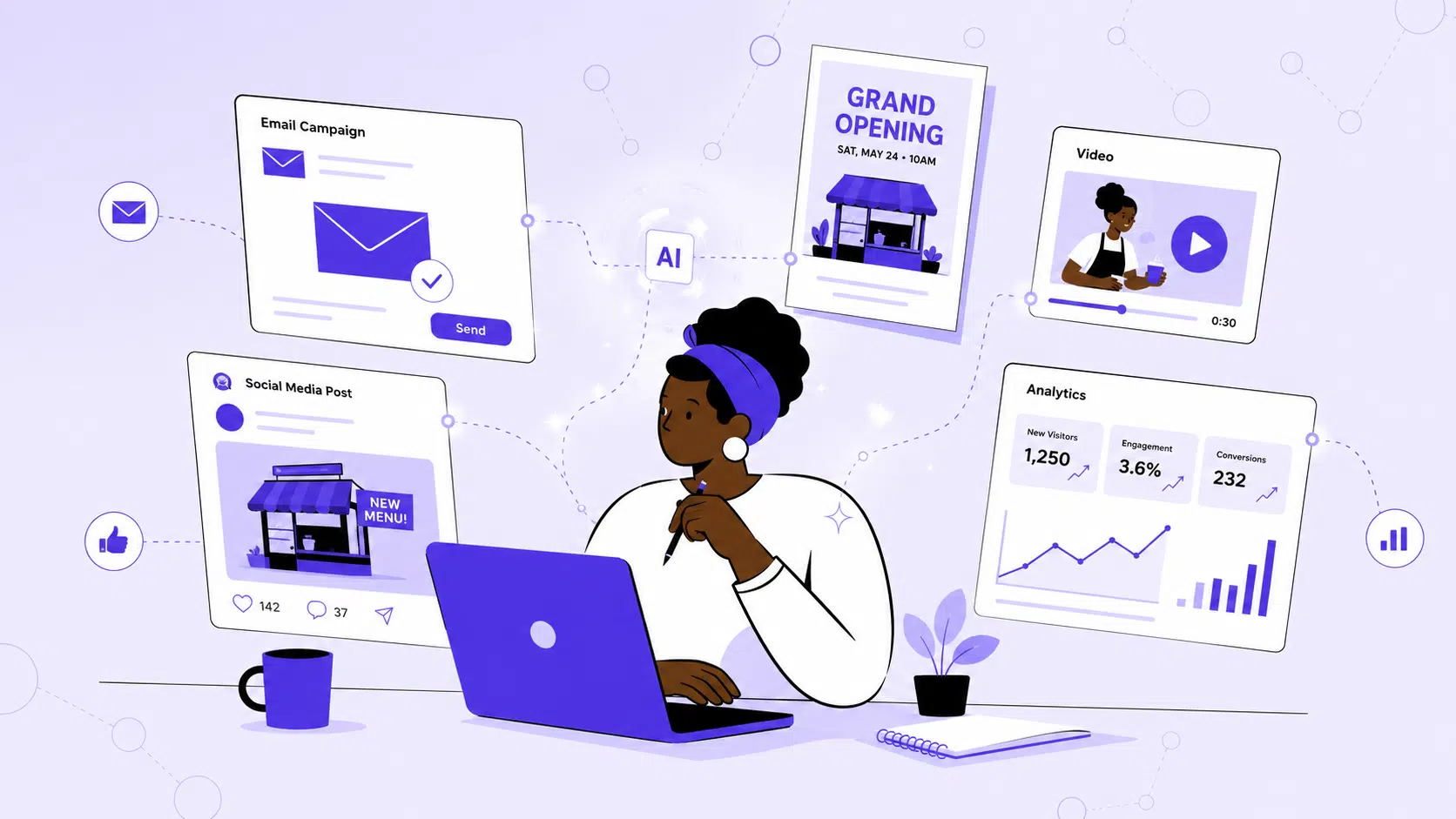
Marketing is undergoing a similar transition. AI is now used to personalise campaigns, segment audiences, optimise advertising performance, generate content across multiple formats and automate customer engagement. Rather than replacing marketers, it is changing the way campaigns are planned, executed and measured.
Recruiters are using AI to screen applications, identify candidates with specific skills, summarise interviews and analyse workforce trends. Some organisations are even deploying AI to identify internal skills gaps and recommend learning opportunities for employees. Operations teams are automating inventory management, logistics and scheduling, while finance departments are using AI to detect anomalies, reconcile invoices and generate financial forecasts.
The common thread is that AI is becoming embedded within existing professions rather than creating entirely new ones.