



Cześć,
Victoria from Techpoint here,
Here’s what I’ve got for you today:
- Kenya to fine telcos for bad network service
- Meta’s paid Internet era has officially begun
- Why Spiro bought a British engineering company
Kenya to fine telcos for bad network service

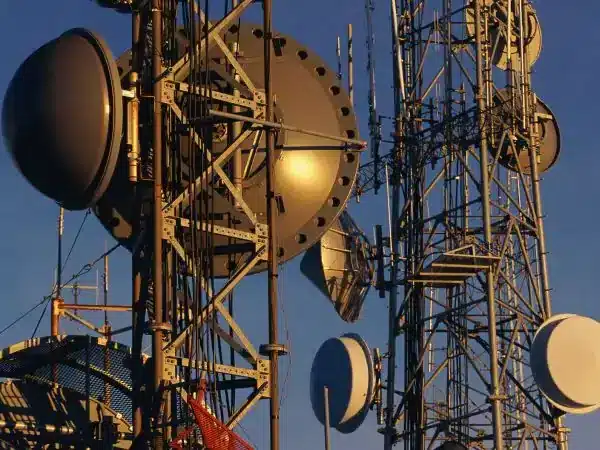
Kenya’s Communications Authority (CA) is done issuing warnings to telecom companies over poor network quality, and now it wants to start hitting them where it hurts: financially. In draft proposals published in May 2026, as reported by BusinessDaily, the regulator said telcos could soon face fines and business sanctions for dropped calls, weak Internet connections, and poor service delivery. It’s a major shift for the CA, which has spent years relying on compliance notices and improvement plans that haven’t done much to improve the customer experience.
The new rules would also raise the minimum service quality score from 80% to 90%, meaning operators will have to perform significantly better to stay compliant. And there’s another big change buried in the proposals: enforcement will now happen at the county level, not just nationally. That means a telco can no longer rely on strong performance in Nairobi or Mombasa to offset terrible service in places like Turkana or Mandera. If service quality drops in a specific county, the operator could be penalised there directly.
The proposal comes after another disappointing quality-of-service report from the regulator. For the year ending June 2025, Telkom Kenya scored just 52.76%, down sharply from 67.6% the previous year. Airtel Kenya also slipped to 81.14%, while Safaricom, still the strongest performer, scored 89.72%, just below the proposed 90% threshold. In other words, all three major operators would fail under the new rules if they were already in place today.
For consumers, especially outside Kenya’s major cities, this could be one of the most important telecom reforms in years. Millions of Kenyans now depend on mobile Internet for banking, online learning, remote work, streaming, and digital commerce, yet network quality remains deeply uneven. Rural and peri-urban areas have consistently suffered the worst service, with dropped calls, slow Internet, and unstable data connections becoming part of everyday life. The CA’s county-based enforcement model is designed to force operators to invest in those underserved areas instead of focusing almost entirely on profitable urban centres.
The regulator’s tougher stance also reflects a wider shift happening across Kenya’s digital economy. Alongside debates over mobile money taxes, AI surveillance budgets, social media regulation, and Safaricom’s long-term licence renewal, the government is trying to exert more control over a rapidly growing tech and telecom sector.
Telcos have long argued that maintaining nationwide network quality is expensive because of infrastructure costs, vandalism, electricity issues, and weak rural returns. But regulators increasingly seem unconvinced. The thinking now appears simple: if operators won’t improve service after years of warnings, maybe financial penalties will finally get their attention.

Victoria Fakiya – Senior Writer
Techpoint Digest
Stop struggling to find your tech career path
Discover in-demand tech skills and build a standout portfolio in this FREE 5-day email course
Meta’s paid Internet era has officially begun

Remember this? WhatsApp tests paid tier for the first time globally
Meta has officially entered its paid Internet era. On May 27, 2026, the company launched subscription plans for Facebook, Instagram, and WhatsApp globally under a new umbrella brand called “Meta One,” marking the biggest change to its business model since it went public. For years, billions of users across Africa and the rest of the world have used Meta’s apps for free. That is no longer the full story. While the apps themselves remain free, users can now pay monthly for extra features, better visibility, AI tools, and premium experiences.
The cheapest plans start at $2.99 a month for WhatsApp Plus and $3.99 for Instagram Plus and Facebook Plus. The features are mostly designed around personalisation, visibility, and engagement. Instagram users can pay to see who rewatched their Stories, extend Stories beyond 24 hours, quietly preview Stories without appearing as a viewer, and even push a Story for more reach once a week. WhatsApp Plus adds themes, custom ringtones, more pinned chats, and premium stickers. On the surface, the upgrades sound cosmetic. But underneath, Meta is monetising the small things users obsess over — attention, visibility, and status.
The more serious money, however, is in creators, businesses, and AI. Meta is also testing creator-focused plans that go as high as $49.99 a month. Those plans promise higher visibility in feeds and search results, stronger analytics, website traffic tools, and features designed to help creators grow faster. In practical terms, Meta is now selling algorithmic reach back to the creators and small businesses that depend on its platforms to survive. That matters in Africa, where Instagram, Facebook, and WhatsApp have become critical business infrastructure for millions of small traders, influencers, freelancers, and online vendors. For many businesses in Lagos, Nairobi, Accra, Johannesburg, and Kigali, social media is not just marketing anymore; it is the storefront itself.
The AI subscriptions may end up being even more important long-term. Meta One Plus and Meta One Premium, priced at $7.99 and $19.99, respectively, give users access to more advanced AI features, including stronger reasoning tools, image and video generation, and higher-capacity “thinking mode” queries. Meta is effectively copying the same subscription model already used by OpenAI, Google, and Anthropic, except it has something none of them have: more than 3 billion daily users already inside its ecosystem. Instead of relying entirely on advertising, Meta is trying to build recurring subscription revenue from users who are willing to pay for AI convenience, creator growth, or premium social features.
The bigger shift here is cultural. The Internet has quietly been moving away from the idea that everything online should be free, and Meta is now pushing that transition at massive scale. In many African countries, where data costs are already high and economic pressures are real, asking users and creators to pay monthly subscriptions for visibility or premium tools could reshape how people use social media altogether. Some creators will pay because they have to compete. Some businesses will see it as another operating cost. Others may simply be priced out. But Meta clearly believes people are now willing to pay for things they once expected for free, whether that is AI access, audience reach, or simply a better version of the apps they already use every day.
Why Spiro bought a British engineering company

Africa’s biggest electric motorcycle company is making a major shift from simply assembling bikes to actually building the technology behind them. Spiro has announced it had acquired UK-based engineering and design firm Coexlion for an undisclosed amount, with plans to launch its first African research and development centre in Nairobi. The move signals that Spiro no longer wants to depend entirely on imported technology from China and elsewhere to power its electric mobility business across Africa.
Right now, Spiro assembles its electric motorcycles in Nairobi using imported knockdown kits from China while sourcing some spare parts from India. But the company clearly wants more control over the engineering side of the business. By acquiring Coexlion, Spiro gains access to in-house design and product development expertise that can help it build electric motorcycles specifically designed for African roads, weather conditions, and rider behaviour, something most African EV companies still struggle to do because they rely heavily on foreign-made components and designs.
Nairobi is becoming central to that plan. Kenya is already Spiro’s largest and most important market, where the company reportedly controls more than half of the country’s electric motorcycle market. Setting up the R&D centre there gives engineers direct access to boda boda riders, road conditions, customer feedback, and real-world performance data. That matters because products designed for European or Asian markets often don’t fully match the realities of African transport systems. Kenya is also emerging as one of Africa’s fastest-growing EV markets, with thousands of electric motorcycles already on the roads.
The expansion comes after a massive fundraising run for Spiro over the past two years. The company has raised more than $200 million in recent funding from investors including Afreximbank, Société Générale, Nithio, and the Africa Go Green Fund. That money has helped Spiro rapidly expand across Kenya, Uganda, Rwanda, Nigeria, Benin, and Togo, while also testing operations in Cameroon and Tanzania. According to the company, it has already deployed over 80,000 electric motorcycles and built more than 2,500 battery swap stations across the continent, making it one of Africa’s most aggressive EV startups.
But the bigger story here is what this says about Africa’s EV industry overall. For years, most companies on the continent have operated more like distributors and assemblers than true manufacturers. Spiro appears to be trying to change that by bringing engineering and product development closer to Africa itself. The company’s investors have repeatedly talked about building African industrial capacity instead of relying on imports, and this acquisition is one of the clearest signs yet that they are serious about it. The question now is whether Nairobi can evolve into a genuine EV engineering hub, not just for Spiro, but for Africa’s wider electric mobility industry.
In case you missed it
- This startup is betting on tap-to-pay in a transfer-dominated market
What I’m watching
- Boundaries Expert: Handle Difficult People With Confidence and Clarity
- The Simple Habit for a Happier Social Life | Nicholas Epley | TED
Opportunities
- Qore is hiring for several roles. Apply here.
- Didii is recruiting for several roles. Apply here,
- Clarus Technologies, in partnership with Norrsken East Africa, has launched Scale Velocity, a go-to-market accelerator aimed at helping high-potential startups across East Africa refine growth, strengthen commercial systems, and scale faster. Applications for the first cohort are now open, and founders are encouraged to apply. Apply here.
- Moniepoint is recruiting for several roles. Apply here.
- Flutterwave is hiring for several roles in Nigeria, the UK, and the US. Apply here.
- As one of Techpoint Africa’s most engaged readers, you have a direct hand in shaping what we publish next. Take our quick, 3-minute survey to tell us the stories and features you value most. Your responses are anonymous, and your feedback will help guide our editorial focus in the months ahead. Fill the survey here.
- Moniepoint is hiring for over 100 roles. Apply here.
- Building a startup can feel isolating, but with Equity Merchants CommunityConnect? You can network with fellow founders, experts, and investors, gaining valuable insights and exclusive resources to help you grow your business. Click here to join.
- To pitch your startup or product to a live audience, check out this link.
- Follow Techpoint Africa’s WhatsApp channel to stay on top of the latest trends and news in the African tech space here.
Have a fun weekend!
Victoria Fakiya for Techpoint Africa