



G’day,
Victoria from Techpoint here,
Here’s what I’ve got for you today:
- Starlink is finally legal in Uganda after months of tension
- Cameroon-born consultant building AI and cloud systems today
- Kenya gives X 90 days to open Nairobi office
- Bharti Airtel is tightening its grip on Airtel Africa ahead of IPO
Starlink is finally legal in Uganda after months of tension

After five months of regulatory tension, customs restrictions, and election-season anxiety, Starlink is finally legal in Uganda. On May 15, 2026, officials from the Uganda Communications Commission and Starlink signed a Memorandum of Understanding and operational licence agreement at State House Entebbe, with President Yoweri Museveni personally witnessing the event. But Uganda didn’t just wave the company in casually. The licence comes with conditions: Starlink must establish a national gateway, maintain a physical office inside Uganda, and employ local technical and legal personnel. In other words, Kampala wants Starlink physically and institutionally tied into the country before fully switching the service on.
Museveni’s comments after the signing made the government’s priorities pretty clear. Security came first. Connectivity came second. Posting on X immediately after the deal, the president said Uganda’s interest was “security, revenue assurance, and proper accountability”, so authorities know exactly who is operating and who the customers are. That explains why the negotiations became so tense in the first place. Uganda wasn’t just negotiating Internet access. It was negotiating state oversight over a technology designed to operate independently of traditional telecom infrastructure.
The national gateway requirement especially matters because it means Internet traffic must pass through infrastructure physically located in Uganda, giving authorities greater visibility and control over data flows that satellite internet could otherwise bypass entirely.
For ordinary Ugandans, though, the commercial impact could be significant. Internet penetration in Uganda — 30% — a figure that sits well below neighbours like Kenya’s 85% and Rwanda’s 60%, especially in rural communities where traditional telecom operators have struggled to expand affordable coverage. Better satellite Internet could mean improved access for schools, hospitals, startups, mobile money users, and eCommerce businesses outside major cities like Kampala. And for telecom giants like MTN Group and Airtel Africa, Starlink introduces a type of competitive pressure they haven’t really faced before: high-speed Internet that doesn’t depend on building expensive terrestrial towers everywhere first.
Before Uganda officially approved Starlink, many terminals were entering the country unofficially from nearby countries like Kenya and Rwanda. In December 2025, Uganda’s customs authority blocked Starlink equipment imports unless military approval was obtained. Then, on January 1, 2026, Starlink disabled all active terminals in Uganda using geolocation controls, shortly before the country’s January 15 general elections. The government was likely concerned because satellite internet could bypass traditional internet shutdown measures during a politically sensitive period.
Uganda approved Starlink under conditions that prioritise government oversight and local accountability. This reflects a wider trend across Africa: governments want the benefits of satellite Internet for underserved areas, but also insist on regulatory control and local presence before granting licences. Uganda’s approach is becoming a model for other African countries, while places like South Africa remain tied up in political and regulatory disputes over ownership rules. Overall, Starlink’s main obstacle in Africa is often politics and regulation rather than technology.
Cameroon-born consultant building AI and cloud systems today
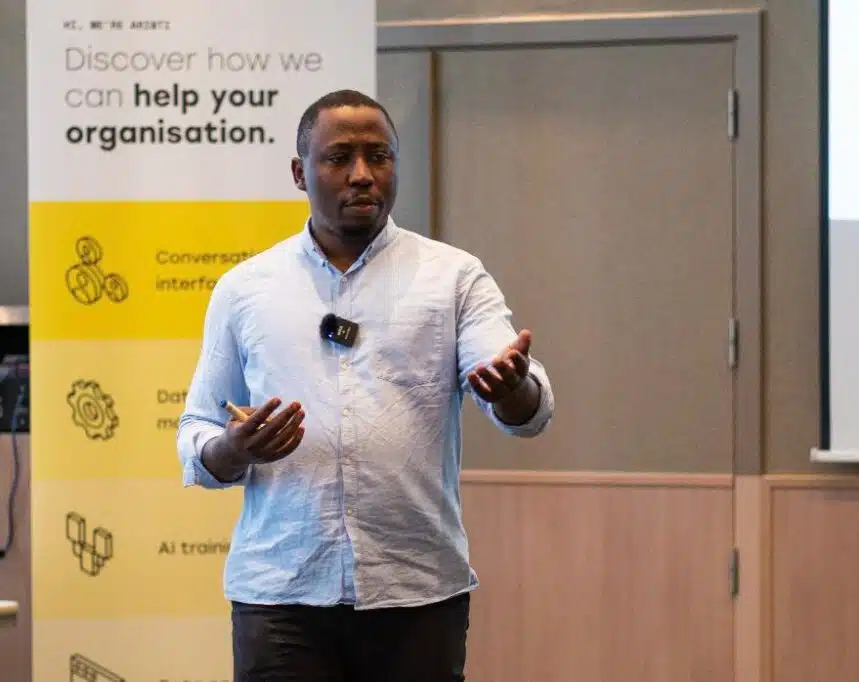
Sometimes, the thing that changes your life isn’t some dramatic breakthrough moment. It could just be stumbling across Google Forms for the first time. That’s basically how Jehpte Ioudom describes the beginning of his journey into tech. Growing up in Douala, Cameroon, technology initially just meant having access to a computer at home. But during an internship at Ericsson Cameroon as a student, he started seeing how digital tools could actually solve real-world problems inside businesses.
At the time, Ericsson was struggling with how employees managed travel expenses and receipts, especially engineers constantly moving between locations. Ioudom was asked to help conduct internal research around the issue, but there was one problem: manually distributing and sorting physical surveys would have been chaotic. Another intern introduced him to Google Forms and Google Sheets, and suddenly everything changed. Responses could be collected automatically, organised instantly, and analysed far faster than doing things manually.
For him, it was the first real moment where technology stopped feeling abstract and started feeling practical. Instead of spending weeks sorting paperwork, he could pull together insights quickly and present useful findings to management almost immediately.
Jehpte Ioudom originally studied management, focusing on operations and business research rather than engineering or computer science. His experience at Ericsson, especially during 3G deployment projects for MTN Group in Cameroon, sparked his interest in telecoms and digital infrastructure. Over time, this evolved into a career in AI consulting, data engineering, cloud systems, and digital transformation through his consulting firm, Foubslabs.
What started as a student trying to simplify survey collection inside a telecom company eventually became a much larger journey into how data and technology shape industries, decisions, and daily life. For more on Jehpte Ioudom’s story, his career journey, and how technology transformed the way he works and lives, check out Delight’s latest.
Kenya gives X 90 days to open Nairobi office

Kenya has officially put X, formerly known as Twitter, on the clock. On May 14, 2026, Kenya’s ICT Cabinet Secretary, William Kabogo, told senators that the Elon Musk-owned platform has 90 days to open a physical office in Nairobi or risk losing its operating approval in the country. The government says X is currently operating under temporary authorisation, and that arrangement now comes with conditions attached. TikTok, Facebook, and other major social media platforms are also being pulled into the same conversation. Kenya’s position is simple: if these platforms want access to millions of Kenyan users, they need people on the ground who can be held accountable when problems arise.
What Kenya is really pushing for here is jurisdiction. A local office means regulators can summon company representatives, enforce compliance orders, conduct audits, and apply Kenyan law directly rather than dealing with distant corporate headquarters abroad. The Communications Authority now also has the power to suspend platforms that fail to comply with local rules, giving this directive real enforcement weight behind it.
Officially, the government says the move is tied to child online safety and broader digital governance reforms. But it’s also impossible to separate this from the growing political power social media now holds in Kenya, especially after platforms like X, TikTok, and WhatsApp became central tools during the 2024 Finance Bill protests, where citizens livestreamed demonstrations, coordinated protests, and documented clashes with police in real time.
The numbers explain why the government is paying closer attention now. According to Kenya’s 2025 State of the Media report, 39% of Kenyans now get their news primarily from social media, ahead of television and radio. That shift has happened incredibly fast, and unlike traditional broadcasters, these platforms often operate without local executives, editors, or offices that regulators can directly engage with. Kenya has been trying to tighten oversight around social media for years, from the controversial “Social Media Bill” discussions back in 2019 to Telegram restrictions during national exams and new cybercrime proposals after the 2024 protests. Most of those earlier attempts faced backlash from civil society groups who argued they were less about safety and more about controlling online dissent. This latest move feels more serious because the legal framework around enforcement is now much clearer.
There’s also a broader pattern emerging here. Kenya’s Finance Bill 2026 is already targeting crypto platforms, mobile money providers, smartphone imports, and digital lending services. Adding social media companies to the list suggests the government has decided 2026 will be the year it asserts much stronger control over the country’s digital economy. The pressure is especially awkward for X because the platform has spent the last few years shrinking offices globally under Elon Musk, while simultaneously clashing with regulators across Europe, Brazil, and other markets. Kenya is now effectively asking the company to reverse that trend locally and establish a visible presence in Nairobi.
Whether X actually complies is the big question. Kenya now has the legal authority to suspend operations if the company ignores the directive, but using that power against a platform relied on by millions of Kenyans would be politically explosive. For now, Nairobi is making one thing clear: the era where global tech platforms could operate in Kenya without local accountability structures is starting to close.
Sunil Mittal wants to own 90% of Airtel Africa before the IPO

Sunil Bharti Mittal, the founder and chairman of Bharti Enterprise, just made one of the loudest votes of confidence in Africa’s telecom industry in years, and he backed it with a $2.9 billion move. On May 13, 2026, Bharti Airtel approved a cashless share swap deal that will increase its stake in Airtel Africa from 62.7% to roughly 79%. A day later, Mittal made it even clearer where his head is at: he wants to push that ownership closer to 90% before Airtel Africa’s mobile money business heads for its planned London IPO later this year.
The structure itself is pretty clever. Bharti Airtel will issue new shares to Indian Continent Investment Ltd., the Mittal family’s investment vehicle, and in return receive 595.2 million Airtel Africa shares. No fresh cash. No additional debt. No major disruption to Airtel Africa’s London Stock Exchange float. Just a founder quietly tightening his grip before what could become one of Africa’s biggest fintech listings.
And honestly, the timing explains everything. Airtel Africa’s numbers right now are difficult to ignore. The company reported an $813 million profit after tax for the financial year ending March 2026, more than double the previous year’s performance. Revenue climbed to $6.4 billion, subscribers crossed 185 million users across 14 African countries, and Airtel Money continues to explode. The mobile money business now has over 54 million customers, and the annualised transaction value has crossed $215 billion. That’s the real centre of gravity here.
The Airtel Money IPO, now expected in the second half of 2026 after geopolitical tensions delayed it from earlier plans, could reportedly raise between $1.5 billion and $2 billion at a valuation approaching $10 billion. Mittal clearly looked at those numbers and decided he wanted a much larger slice before global investors started pricing the business independently.
What makes the move even more interesting is the wider signal it sends about African tech and telecoms right now. For the last few years, the global conversation around Africa has been cautious: currency pressure, inflation, regulation, and startup funding slowdowns. But Mittal is doing the opposite of pulling back. He’s increasing exposure. And this is coming from someone who has spent 15 years learning the continent the hard way.
Airtel entered Africa in 2010 through a massive $10.7 billion acquisition of Zain Africa’s operations across 15 countries, a deal many analysts at the time thought was overpriced and reckless. The early years were rough. Currency volatility, infrastructure costs, and competition from MTN Group made profitability difficult for years. But today, that same bet is starting to look incredibly strategic.
The turnaround didn’t happen overnight. Airtel Africa was separately listed in London and Nigeria in 2019, giving the African business its own capital structure and room to grow independently. By 2021, Airtel Money had already attracted heavyweight investors like Mastercard, TPG, and a Qatar sovereign wealth fund affiliate, validating the fintech side of the business long before today’s IPO conversations. Then came the recent results: record EBITDA margins above 50%, data revenues overtaking voice revenues for the first time, and mobile money becoming one of the continent’s most important financial rails. Suddenly, the Africa expansion that once looked risky started looking like one of the smartest telecom infrastructure bets of the last two decades.
Sunil Bharti Mittal’s growing investments reflect a broader trend in Africa’s digital economy, where major companies are consolidating control over telecoms and digital infrastructure. Examples include Vodacom strengthening its hold on Safaricom, Canal+ acquiring MultiChoice, and fintech firms like OPay and Airtel Money pursuing major international listings. Mittal’s strategy goes beyond telecom networks into satellite and digital infrastructure, showing a long-term effort to deepen ownership in Africa’s expanding digital future rather than scale back investments.
In case you missed it
- The future of AI healthcare lies in a solid infrastructure backbone
What I’m watching
- The Thinking Game | Full documentary | Tribeca Film Festival official selection
- When Antibiotics Don’t Work (full documentary) | FRONTLINE
Opportunities
- Qore is hiring for several roles. Apply here.
- Didii is recruiting for several roles. Apply here,
- Clarus Technologies, in partnership with Norrsken East Africa, has launched Scale Velocity, a go-to-market accelerator aimed at helping high-potential startups across East Africa refine growth, strengthen commercial systems, and scale faster. Applications for the first cohort are now open, and founders are encouraged to apply. Apply here.
- Moniepoint is recruiting for several roles. Apply here.
- Flutterwave is hiring for several roles in Nigeria, the UK, and the US. Apply here.
- As one of Techpoint Africa’s most engaged readers, you have a direct hand in shaping what we publish next. Take our quick, 3-minute survey to tell us the stories and features you value most. Your responses are anonymous, and your feedback will help guide our editorial focus in the months ahead. Fill the survey here.
- Moniepoint is hiring for over 100 roles. Apply here.
- Building a startup can feel isolating, but with Equity Merchants CommunityConnect? You can network with fellow founders, experts, and investors, gaining valuable insights and exclusive resources to help you grow your business. Click here to join.
- To pitch your startup or product to a live audience, check out this link.
- Follow Techpoint Africa’s WhatsApp channel to stay on top of the latest trends and news in the African tech space here.
Have a productive week!
Victoria Fakiya for Techpoint Africa