



Despite strong growth in climate tech funding in 2025, fintech retained its position as Africa’s leading destination for venture capital. While a significant share of this capital flowed to more mature companies, the sector continues to offer compelling opportunities for investors, founders, and governments alike.
The year also delivered several notable wins. On the funding side, Moniepoint closed its Series C round, securing fresh capital to support its search for new growth levers and market expansion. Regulatory progress was equally significant. The fintech passporting agreement between Ghana and Rwanda stood out as a landmark development, raising hopes for deeper cross-border collaboration across the continent.
Regulators in Nigeria, Egypt, and Kenya intensified efforts to promote digital stock trading, a move that bodes well for wealthtech startups seeking to broaden retail participation in capital markets.
However, exit activity remained subdued, continuing a trend that has been evident over the past three years. Still, there were glimmers of optimism. South Africa and Egypt recorded high-profile public market activity with the IPOs of Optasia and valU, respectively. In North Africa, Moroccan fintech CashPlus raised $82.5 million through its listing on the Casablanca Stock Exchange.
As 2026 begins, fintech leaders who spoke with Techpoint Africa expressed cautious optimism. They highlighted regulatory evolution, cross-border expansion, and product diversification as key trends likely to shape fintech operations and growth in the year ahead.
What mattered in 2025 and what was largely noise
Industry leaders described 2025 as a year shaped more by regulatory and infrastructure maturity than by headline-grabbing innovation.
“The developments that mattered most were the structural ones: more active regulators, improving interoperability in some markets, and a stronger focus on risk by banks and mobile money operators. These changes are pushing the ecosystem toward higher standards and more reliable infrastructure,” Nikolai Barnwell, CEO of pawaPay, shared.
At the same time, popular narratives were widely seen as overhyped. Artificial intelligence, in particular, drew scepticism.
According to Ayotunde Alabi, CEO of Luno, “the most overinterpreted trends are hype cycles presented as defensibility, especially AI-first claims without measurable outcomes and super app ambitions without durable distribution, credible compliance, and trust.”
Ifelade Ayodele, CEO of Blaaiz, echoed this view, arguing that AI remains more of a buzzword than a breakthrough for much of the financial sector.
“In terms of moving the needle for a compliance officer or an operations lead at a tier-one bank, the practical, high-value use cases are still maturing,” he said.
On regulations
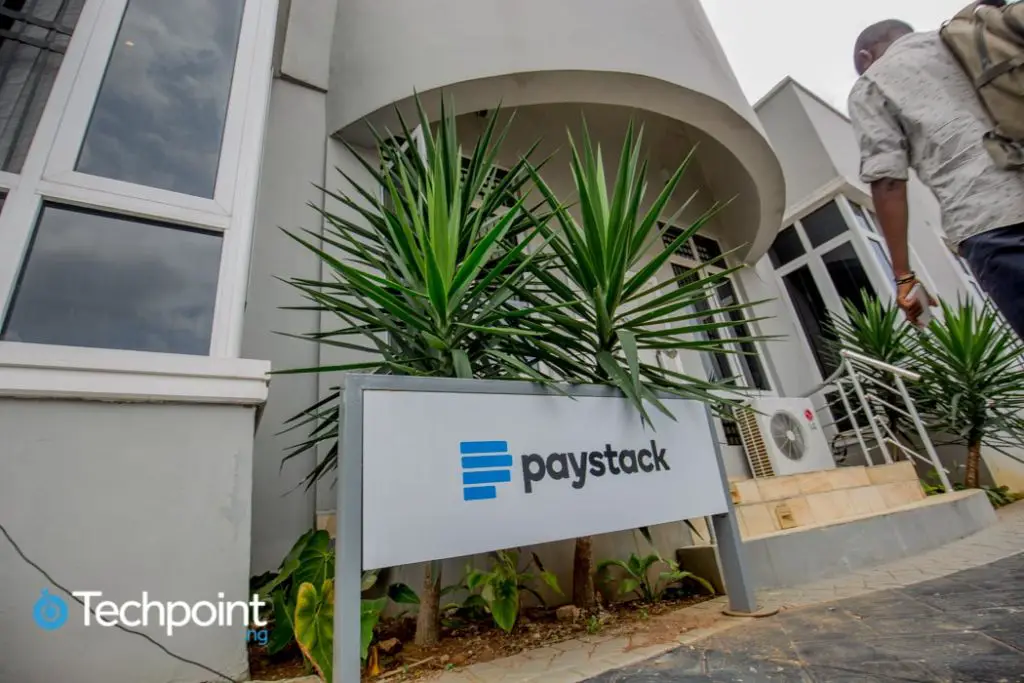
In March 2025, Paystack launched Zap, its first direct-to-consumer product, targeting visitors to Nigeria. By the following month, it was hit with a ₦250 million fine from the Central Bank of Nigeria (CBN) for launching without regulatory approval.
The episode reflected both the CBN’s regulatory posture and a familiar outcome in fintech: innovation outpaces regulation until regulators catch up, and there is a price to pay.
Against this backdrop, the industry appears to be moving away from the “move fast and break things” era. Austin Okpagu, Nigeria Country Manager at Verto, noted that startups are increasingly building regulatory compliance into their playbooks from day one.
“We are moving into an era of selective liberalisation, where regulatory access will be binary: firms positioned as partners in FX stability will gain entry, while those perceived as accelerants of leakage will face tightening constraints from the regulators,” he said.
For Adedeji Olowe, CEO of Lendsqr, increased regulatory activity does not change the reality that regulation continues to lag behind innovation. Olowe argued that the funding contraction of the past three years has forced startups with questionable operations to shut down, creating space for more mature companies that are better equipped to engage with regulators.
Ayodele, meanwhile, expects this environment to drive deeper private-sector collaboration and accelerate a shift toward what he describes as regulation-as-a-service.
On expansion, fintechs continue to push into new markets despite persistent doubts about their viability, even as Africa’s fragmented regulatory landscape remains a major constraint. Looking ahead to 2026, Ayodele noted that “the modular approach of going country by country is becoming too slow,” arguing that cross-border collaboration and passporting will be critical.
Okpagu added that banking-as-a-service partnerships and merchant-of-record models will play a central role in enabling expansion at scale.
Stablecoins to implode?
Artificial intelligence may have dominated startup conversations in 2025, but for African fintechs, particularly those operating across borders, stablecoins emerged as the more consequential trend.
As the industry looks toward 2026, however, fintech leaders remain divided on the role stablecoins will ultimately play.
Lendsqr’s Olowe stands out as the most vocal sceptic. He argued that stablecoins do not address the underlying structural issues that make them attractive in the first place.
“People have assumed that stablecoins solve the problem, but stablecoins require something backing [them] up. There’s going to be a big stablecoin burst soon,” he warned.
In a recent article, Olowe elaborated on this view, noting that foreign currency scarcity, often cited as the reason for stablecoin adoption, is fundamentally a trade problem.
“No amount of clever routing, faster settlement, or new payment technology changes that underlying problem, because the constraint sits in how much value the country earns relative to how much it spends,” he wrote.
The risk, he added, is that businesses and individuals could flock to stablecoin-powered fintechs only to be exposed to weak reserves or overleveraged operators.
Others are more optimistic. Ayodele believes stablecoins are here to stay because they solve real utility problems, although the narrative will likely evolve. He expects a shift from simple USD-pegged tokens toward commodity-backed stablecoins and region-specific digital assets tied to local economic realities.
Ayotunde Alabi, CEO of Luno, agrees, arguing that stablecoins are moving away from speculation and into financial plumbing powering cross-border settlement, treasury management, merchant payouts, and B2B payments, while regulated tokenisation and programmable money are beginning to emerge alongside them.
When global fintechs arrive
In 2025, Revolut appointed a CEO to lead its operations in Morocco, with plans to begin as a payment operator ahead of securing its full licences. Blockchain.com also opened its first physical office on the continent, while dLocal strengthened its African footprint through the acquisition of AZA Finance.
According to Ayodele, the growing presence of global fintechs is both a validation of Africa’s opportunity and a wake-up call for local startups, particularly as these players invest in building teams with local expertise. Still, he urged caution rather than panic.
“Local players shouldn’t panic, but they must be clear: are they building to sell or building to own a specific local niche? Success will depend on localising expertise in a way a global giant simply can’t.”
Luno CEO Alabi echoed this view, noting that local fintechs can still retain a competitive edge. He argues that proximity to the market gives them an advantage in securing partnerships, navigating regulatory relationships, and underwriting risk with a level of nuance that global entrants may struggle to replicate.
Combating fraud becomes even more critical
As fraud tactics grew more sophisticated in 2025, fintech leaders increasingly agreed that traditional security measures are no longer sufficient.
A natural consequence of the rapid growth in digital payments has been a corresponding rise in financial fraud, one that is set to intensify as artificial intelligence provides bad actors with more powerful tools. In this environment, basic KYC checks, one-time passwords, and static authentication methods are increasingly ineffective.
Okpagu argued that fraud prevention must now be treated as core infrastructure rather than a compliance add-on.
“If a fintech isn’t investing in real-time, AI-led risk scoring that looks at the whole picture of a transaction, losses from sophisticated fraud will likely outpace growth,” he said.
He added that capabilities such as behavioural biometrics and “Liveness 2.0” are becoming non-negotiable, allowing fintechs to analyse how users interact with their devices or use advanced facial mapping to detect bots and digital spoofs.
Olowe noted that while the technology to combat fraud already exists, what has often been missing is accountability.
That dynamic, he said, is beginning to change. Nigeria’s Central Bank is moving to hold financial institutions responsible for fraud occurring on their platforms, raising supervisory expectations across the ecosystem. One signal of this shift is the new reporting standards for push payment fraud released in December 2025.
Predictions for 2026
Stablecoin and crypto adoption will continue to spread — Nikolai Barnwell, CEO, pawaPay
As markets like Kenya, Ghana, Nigeria, and South Africa formalise digital asset frameworks, neighbouring countries will be pushed to follow suit to avoid inheriting unregulated flows by default. The pace will vary, but regulatory convergence is expected to accelerate.
Aggressive consolidation — Ifelade Ayodele, CEO, Blaaiz
We will see a significant wave of M&A as the market structure matures and smaller players realise they can’t win alone.
Little to no mergers and acquisitions — Adedeji Olowe, CEO, Lendsqr
I don’t think I can see any M&As happening, but I suspect a couple may occur. Some people may want to acquire smaller players to cover their bases and may prefer them to run independently, rather than folding them in.
The growth of embedded finance — Ayotunde Alabi, CEO, Luno
Market structure tilts toward embedded finance and infrastructure layers, where winners combine rails, risk engines, and partnerships that plug into banks, mobile money, and merchants.