
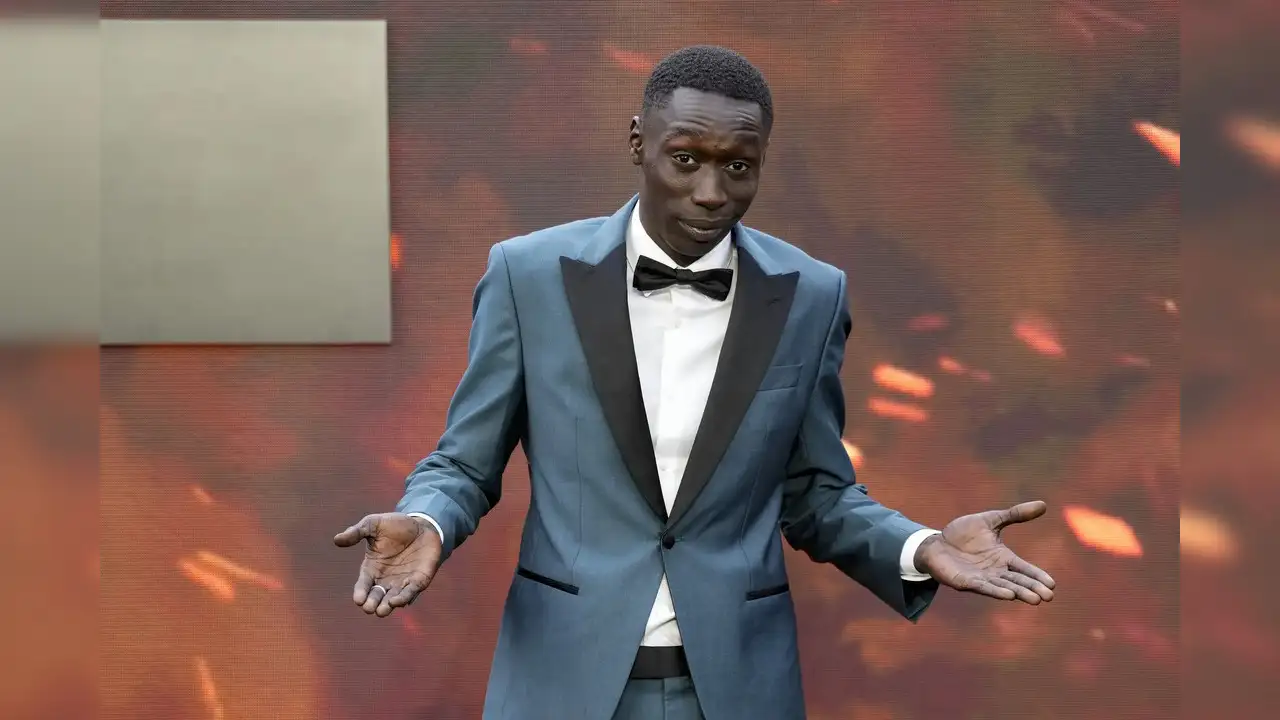

One of the more notable deals this year, at least within creator and digital media circles, involves TikToker Serigne Khabane Lame, popularly known as Khaby Lame.
The transaction places the world’s most-followed TikTok creator at the centre of a deal that could be valued at up to $975 million, with Step Distinctive Limited, a company associated with Lame, being acquired by Rich Sparkle Holdings Limited.
On the surface, that number alone is enough to spark attention. It has already led to endless speculation, with some reports going so far as to describe Lame as a newly minted billionaire. But once you move past the headline and into the actual structure of the deal, it becomes clear that this is neither a straightforward acquisition nor an instant windfall for any single individual.
For one thing, the transaction is an all-stock deal. Much like Flutterwave’s acquisition of Mono, Rich Sparkle is not paying cash. Instead, it is issuing 75 million new shares, which will be distributed to the sellers of Step Distinctive in proportion to their ownership.
The $975 million valuation is derived entirely from those shares being priced at $13 each. Whether that number ever translates into real value depends on what happens next.
So rather than treating this as a done deal or a simple success story, it’s worth slowing down and unpacking what is actually being sold, who owns what, and how the economics work.
Who are the parties involved?
At the centre of the transaction is Rich Sparkle Holdings Limited, referred to in the agreement as the purchaser or acquirer.
According to public filings, Rich Sparkle is incorporated in the British Virgin Islands, operates out of Hong Kong, and is principally engaged in financial printing and public relations. In plain terms, the company works with investment banks, law firms, and corporates to design and print financial documents, such as IPO prospectuses and shareholder circulars, and provides related PR services.
On the other side of the table are the sellers, legally referred to as the vendors. While Step Distinctive Limited is the entity being acquired, it is not owned by a single person. Instead, six separate shareholders collectively own 100% of Step Distinctive.
Victoria Fakiya – Senior Writer
Techpoint Digest
Stop struggling to find your tech career path
Discover in-demand tech skills and build a standout portfolio in this FREE 5-day email course
Those shareholders are Serigne Khabane Lame, who owns 5%; Dominant Action Limited, which owns 44%; Pink13 Group Inc., with 26%; Anhui Xiaoheiyang Network Technology Company Limited, with 13%; Develop Master Limited, with 4%; and Ace Fantasy Limited, with the remaining 8%.
Step Distinctive itself is a holding company. It owns 100% of Hong Kong Prosperous Sheep Corporation Limited, which is where the operating business sits.
Where does Khaby Lame fit into all of this?
Khaby Lame is both central to the business and not its sole owner, a distinction that is critical to understanding the deal. On paper, he owns 5% of Step Distinctive directly. He also controls Dominant Action Limited, which holds a 44% stake in Step Distinctive and is itself 95% owned by Lame.
When you combine those interests, Lame’s effective economic exposure is roughly 47% of Step Distinctive, making him the single largest individual influence in the company, but still short of an outright majority.
What makes his role even more significant is not just his equity stake but the fact that the entire business is built around his identity, audience, and ongoing participation.
Under the agreement, Lame grants rights related to his face ID, voice ID, and behavioural models to enable the creation of an AI-powered digital twin. The idea is that while the real Khaby Lame is limited by time, energy, and geography, a digital version of him can be deployed simultaneously across three markets — the United States, the Middle East, and Southeast Asia.
The deal materials suggest that fully leveraging Lame’s IP in this way could unlock up to $4 billion in annual eCommerce sales. Whether that happens is another question entirely, but it is a bold bet.
Behind the paperwork
Once you strip away the offshore entities and legal language, the underlying business model is relatively clear. This is a live-stream eCommerce operation designed to convert attention into real-time sales. It blends content production, influencer marketing, platform-native commerce such as TikTok Shop, and cross-border supply chain coordination into a single system.
Importantly, this is not a simple licensing arrangement where Lame simply lends his image in exchange for fees. His brand, IP, and audience are deeply embedded in the business itself. The agreement explicitly ties the company’s operations to livestream rights, content creation, brand collaborations, merchandising, and ongoing leadership by Lame after the transaction closes.
The role of Anhui Xiaoheiyang
One of the most interesting and critical aspects of the deal is the role of Anhui Xiaoheiyang Network Technology Company Limited. Anhui is a China-based livestream and content-commerce operator, and under the agreement, it is granted exclusive global full-chain operating rights for 36 months.
In practical terms, this means Anhui is responsible for executing the entire commercial strategy: brand endorsements, livestream operations, TikTok Shop execution, development of the AI digital twin, and coordination of cross-border supply chains. For three years, no competing operator can step in and run this business.
What makes this structure significant is that Anhui is not just a service provider. It also owns 13% of Step Distinctive and therefore receives its share of the 75 million newly issued Rich Sparkle shares. Its economic upside is tied directly to the success of the business it is now tasked with running.
By making Anhui both operator and shareholder, the deal aligns incentives in a way that pure outsourcing would not. If the business performs well, Anhui benefits both through operating revenue and equity appreciation. If execution falters, it bears the downside alongside the other shareholders. That makes it the second-most-important entity in this deal, after Lame. Lame provides the IP; they supply the legs to make it work.
So who’s making what?
The most persistent misconception surrounding this transaction is the idea that $975 million has somehow changed hands. It hasn’t. Every dollar of that figure exists only on paper, derived from the issuance of 75 million new Rich Sparkle shares.
For the vendors, including Khaby Lame, this means there is no immediate liquidity. Their payout depends entirely on the future performance of Rich Sparkle’s shares, market conditions, and regulatory approvals. If the stock performs poorly after the deal is completed, everyone’s potential holdings could drop; if it performs well, the upside could be significant.
Crucially, the deal is also conditional on an independent valuation of Step Distinctive of at least $900 million, to the satisfaction of Rich Sparkle. This gives Rich Sparkle a clear exit if the numbers do not support the narrative.
After completion, Khaby Lame does not walk away with cash, nor does he suddenly control Rich Sparkle. Instead, he becomes a shareholder in the purchasing company, holding his pro-rata share of the newly issued stock. His economic fate becomes tied to public market performance, governance decisions, and dilution over time.
A deal still in motion
Finally, it is important to emphasise that this transaction is not yet complete. It remains subject to valuation, due diligence, regulatory approvals, and shareholder sign-offs. Both sides have made extensive guarantees, and either party can walk away if those assurances prove untrue before completion.