


Bonjour,
Victoria from Techpoint Africa,
Here’s what I’ve got for you today,
- Kenya says AI works can’t be copyrighted
- Disney+ to launch new R49 app in South Africa in September
- Klump brings instalment payments to Jumia
Kenya says AI works can’t be copyrighted

Kenya has drawn a legal line in the sand on artificial intelligence and copyright. In a landmark ruling delivered on July 9, 2026, the country’s Copyright Tribunal ruled that works generated solely by AI cannot be protected under copyright law because only humans can legally be recognised as authors. The decision stemmed from a dispute over a collection of AI-assisted Bible Scripture Stories and is expected to shape how creators, businesses and publishers use generative AI in Kenya going forward.
The ruling doesn’t ban people from using AI. Instead, it says AI can be a creative tool, but it cannot replace human authorship. If someone wants to claim copyright over work created with AI, they’ll need to prove that they contributed enough original creativity, judgment, and intellectual effort to the final product. Simply prompting an AI chatbot or image generator won’t automatically make the output eligible for copyright protection. That raises the bar for creators hoping to commercialise AI-generated books, articles, music or artwork.
The case centred on Cynthia Beldina Akoth, who was contracted by the Aryeh Movement to produce a series of Bible Scripture Stories. She used AI tools to help generate the content, but after the working relationship broke down, she discovered the company had registered the works with the Kenya Copyright Board (KECOBO) under its own name. She challenged the registration, prompting the Tribunal to examine a much broader question: who, if anyone, owns copyright when AI is involved in creating a work? While the dispute continues, the Tribunal made it clear that AI itself cannot be recognised as an author because it lacks legal personality.
The decision comes as governments around the world wrestle with similar questions. Courts and copyright offices in countries such as the United States have also maintained that copyright protection requires human authorship, rejecting attempts to register works created entirely by AI. Kenya’s ruling now places the country among a growing list of jurisdictions insisting that while AI can assist the creative process, copyright ultimately belongs to humans, not machines.
The timing is significant. Kenya is currently reviewing reforms to its copyright laws while also debating broader AI regulation, with growing pressure to clarify issues such as AI training data, ownership of AI-assisted works and liability for infringement. As more writers, journalists, designers, and software developers integrate AI into their workflows, the Tribunal’s decision provides an early indication of how Kenyan law is likely to treat AI-generated content: creators can use AI, but they’ll need to show meaningful human creativity if they want copyright protection.
Klump brings instalment payments to Jumia

Klump is bringing instalment payments directly to Jumia’s checkout, making it easier for shoppers to spread the cost of purchases without leaving the platform. Announced on July 11, 2026, the partnership embeds Klump’s Buy Now, Pay Later (BNPL) technology into Jumia, allowing customers to compare instalment offers from multiple partner banks and complete their purchase in one seamless checkout flow. Instead of sourcing credit elsewhere before buying, eligible shoppers can now access financing at the point of sale.
The move could remove one of the biggest hurdles facing African eCommerce, which is affordability. Many shoppers abandon their carts because they can’t afford to pay the full amount upfront, even when they intend to buy. By letting customers split payments over time through participating banks, Klump hopes to increase completed purchases for merchants while giving consumers more flexible payment options. For Jumia, Africa’s largest eCommerce marketplace, the integration could boost conversion rates and average order values without taking on the lending risk itself.
This is also another sign that embedded finance is becoming mainstream across Africa. Rather than asking customers to visit a bank or download a separate lending app, financial services are increasingly being built directly into the apps and platforms people already use. Klump acts as the bridge between shoppers, merchants and multiple banks, enabling customers to compare financing options during checkout instead of after they’ve decided to buy. The multi-bank model also means the loans are funded by partner banks rather than relying solely on Klump’s balance sheet.
The partnership builds on years of growth for both companies. Jumia, founded in 2012, has spent more than a decade expanding online shopping across several African markets while experimenting with fintech services such as JumiaPay to simplify digital payments. Klump, meanwhile, entered Nigeria’s growing BNPL market to tackle the affordability gap by allowing consumers to spread payments over several months. As inflation, rising living costs and weaker purchasing power continue to squeeze household budgets across Africa, flexible credit has become increasingly attractive for both retailers and consumers.
For Africa’s eCommerce sector, the partnership signals a broader shift from simply selling products online to making them easier to afford. As retailers compete for shoppers, improving the checkout experience is becoming just as important as offering discounts or faster deliveries. If the Klump-Jumia integration gains traction, it could push more marketplaces to build financing directly into their checkout pages, making instalment payments a standard feature rather than an extra service.
It also brings Jumia into closer competition with platforms like CDCare, which have long focused on helping consumers overcome affordability challenges through flexible payment options. While CDCare has largely centred on helping customers save towards purchases, alongside some financing products, Jumia is taking a different approach by offering instant BNPL financing at checkout through Klump’s network of partner banks. Different models, but the same goal: making it easier for consumers to complete purchases despite rising living costs.
Disney+ to launch new R49 app in South Africa in September
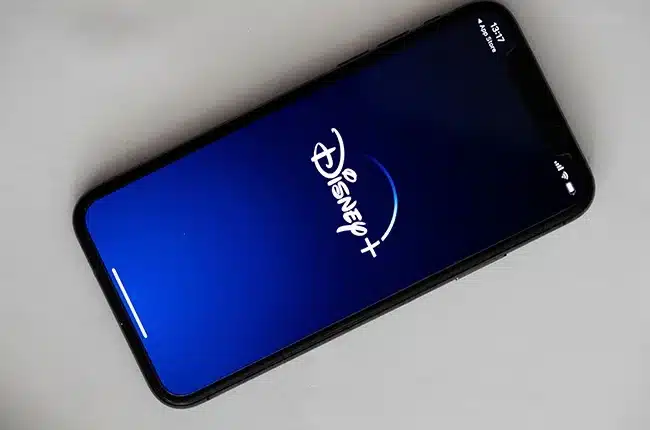
Starting September 9, 2026, Disney+ will roll out a brand-new app in South Africa, replacing the current version many users have used since launch. Alongside the app refresh, Disney is introducing a new R49-per-month Extra Mobile plan, giving mobile users a cheaper way to access its streaming library. Existing subscribers won’t need to do much, as their accounts, profiles, watchlists and viewing history will automatically carry over to the new app.
The update is more than just a new interface. South African users are finally getting many of the features available in Disney+’s more mature markets. The redesigned app promises faster performance, improved recommendations, better content discovery, enhanced parental controls and support for additional user profiles. Disney is also positioning the new mobile-only subscription to attract more price-conscious viewers in a market where affordability increasingly shapes streaming choices. At R49, the plan targets consumers who primarily watch content on smartphones.
The announcement comes only a few months after Disney raised the price of its Premium monthly subscription. In May 2026, the company confirmed that the Premium plan would increase from R159 to R179 per month, with the new pricing taking effect for existing subscribers from June 4, 2026. Notably, Disney left both its annual plan and the R49 mobile offering untouched, signalling that the company sees lower-cost mobile streaming as an important part of its growth strategy in South Africa.
The rollout has been years in the making. Disney+ officially launched in South Africa in May 2022, before partnering with MTN in August 2023 to introduce its first R49 mobile-only plan, making the service more accessible in a mobile-first market. Then, in October 2025, Disney revealed plans to replace the Hotstar-developed version of its app used in South Africa with the same unified global Disney+ experience available in markets like the US and Europe. Many users had criticised the older app for missing features found elsewhere, making this transition one of the platform’s biggest upgrades since launch.
For Disney, the revamp is about staying competitive in an increasingly crowded streaming market. As consumers become more selective about which subscriptions they keep, companies are under pressure to improve user experience while offering flexible pricing. By combining a refreshed app with an affordable mobile plan, Disney hopes to appeal to both existing subscribers and new customers who want premium entertainment without paying for a full television streaming package.
In case you missed it
- Layoffs abroad, opportunities back at home? What African tech talent should do next
What I’m watching
- You don’t need a degree to live an intellectual life | Zena Hitz: Full Interview
- The System of Money | Documentary | Money Creation Explained
Opportunities
- Visa is hiring for several roles across many countries. Apply here.
- Qore is hiring for several positions. Apply here.
- inDrive is hiring to fill several vacancies in different countries. Apply here.
- Are you a female-led tech or tech-enabled business preparing for sustainable growth and opportunity to access capital? Apply for the Female Founders Growth Programme and grab up to $2 million. Apply here.
- Bamboo is hiring in Ghana and Nigeria. Apply here.
- Cowrywise is recruiting some engineers. Apply here.
- PiggyVest is looking for a Product Technical Manager. Apply here.
- Paystack is hiring for a few roles. Apply here.
- Moniepoint is recruiting for several roles. Apply here.
- Flutterwave is hiring for several roles in Nigeria, the UK, and the US. Apply here.
- As one of Techpoint Africa’s most engaged readers, you have a direct hand in shaping what we publish next. Take our quick, 3-minute survey to tell us the stories and features you value most. Your responses are anonymous, and your feedback will help guide our editorial focus in the months ahead. Fill the survey here.
- Moniepoint is hiring for over 100 roles. Apply here.
- To pitch your startup or product to a live audience, check out this link.
- Follow Techpoint Africa’s WhatsApp channel to stay on top of the latest trends and news in the African tech space here.
Have a productive week!
Victoria Fakiya for Techpoint Africa