



Africa’s artificial intelligence story is mostly told from four cities. Lagos, Nairobi, Cairo, and Cape Town dominate the coverage, commanding the bulk of venture capital, media attention, and startup activity. The concentration is not arbitrary. These cities have the infrastructure, the capital networks, and the institutional density to justify the focus.
But the framing has a blind spot.
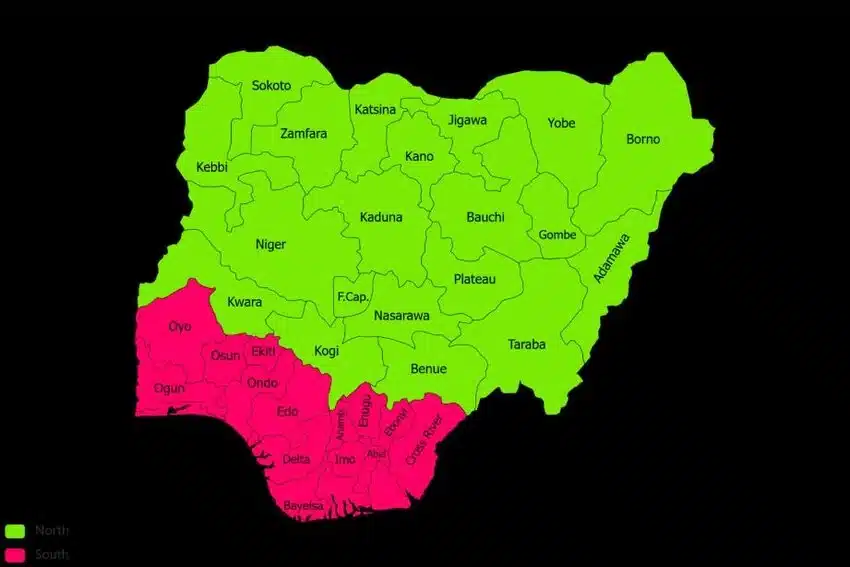
Across Northern Nigeria, a different kind of ecosystem is taking shape, without the headlines, without the high-profile accelerators, and largely without outside investment. What it does have are universities producing large cohorts of engineering graduates, active developer communities, and a generation of young technologists who are building with AI tools rather than merely observing from the sidelines.
The argument here is straightforward: the conditions for a serious AI talent cluster in Northern Nigeria already exist. Continuing to measure the region’s potential solely by its current capital flows will cause analysts, investors, and policymakers to miss what is actually developing on the ground.
The Current Landscape
Nigeria’s technology ecosystem remains heavily centred on Lagos. The city accounts for the overwhelming majority of the country’s venture capital, startup registrations, and developer talent. Recent reporting has also highlighted structural shifts in the ecosystem, with Nigeria’s share of continental funding hitting a record low in 2025, a signal that the limitations of a single-city concentration are becoming harder to ignore.
Capital follows familiarity. Founders in Kano, Kaduna, or Jos face an immediate credibility gap when engaging investors who have no frame of reference for startup activity in these cities. The most ambitious developers from the North face persistent pressure to relocate to Lagos or abroad, accelerating the talent drain that prevents regional ecosystems from compounding over time.
This is not only a geography problem. It reflects a broader assumption baked into how Africa’s technology narrative is constructed: that meaningful innovation concentrates in commercial megacities, and that everywhere else exists primarily as a feeder system for those centres.
The Case for Northern Nigeria
That assumption is worth challenging, especially now.
AI adoption, unlike earlier technology cycles, does not require proximity to a data centre or a coastal internet exchange. A developer in Jos with a functional laptop, mobile data, and access to open-source models or affordable API tools can build and ship AI-powered products. The democratisation of tooling over the past three years has quietly lowered the cost of participation in ways that matter most to regions like Northern Nigeria.

Victoria Fakiya – Senior Writer
Techpoint Digest
Stop struggling to find your tech career path
Discover in-demand tech skills and build a standout portfolio in this FREE 5-day email course
The structural advantages are also frequently overlooked. The region hosts a significant cluster of federal universities, including Ahmadu Bello University in Zaria, one of Nigeria’s largest, with substantial enrolment in engineering and computer science. It has a demonstrable community culture around technology events and peer-to-peer developer education. And it has something harder to quantify but historically important for ecosystem formation: a local identity around technology as a credible path to economic agency. These are not the ingredients of a polished, investor-ready startup scene. They are the ingredients of something earlier and, arguably, more durable, a genuine talent pipeline, shaped by local necessity and community motivation rather than imported startup culture.
Why the Geography of AI Talent Matters
Africa’s AI future will be determined largely by the depth of its talent infrastructure, not just by the volume of capital deployed. A competitive continental AI economy will require hundreds of thousands of engineers, data scientists, product builders, and domain specialists. Lagos, Nairobi, and Cairo cannot produce that workforce at the required scale.
There is also a problem-relevance argument. When AI development clusters in a handful of cities, the problems being solved reflect those cities’ contexts. The agricultural realities of Nigeria’s Middle Belt, the logistics challenges of Northern trade corridors, and the healthcare access gaps in remote communities are best understood and most likely to be meaningfully addressed by people who live within them.
A more geographically distributed AI talent base is not just an equity goal; it is a practical precondition for building AI applications that are genuinely relevant to most of the continent’s population. Ignoring these ecosystems compounds the loss over time. Today’s developer community in Jos or Kaduna, without investor attention or institutional support, is tomorrow’s relocated talent, in Lagos, London, or Toronto.
What is Already Being Built?
Two events from late 2025 offer concrete evidence of the activity underway in Jos, the Plateau State capital that has emerged as a focal point for Northern Nigeria’s tech community.
In November, the city hosted HackJos 2025, a three-day hackathon that also marked the tenth anniversary of nHub, Jos’s longest-running innovation hub. The event drew more than 500 participants, developers, founders, investors, and policymakers, and produced over 100 prototypes in 48 hours across four tracks: e-commerce, financial inclusion, productivity tools, and logistics.
The standout projects reflected substantive technical engagement. One team built an AI and blockchain-based credit facility for smallholder farmers, using real-time inventory data as collateral. Another developed an AI scheduling tool targeting small business operators. Institutional partners, including GIZ and the Digital Bridge Institute, were present, a signal that HackJos has moved beyond purely grassroots status.
A month later, Jos Tech Fest 2025 drew creatives, AI practitioners, startup founders, and students under the theme “Where Innovation Meets Intelligence.” Live product showcases featured locally built tools, including an AI platform designed specifically for women entrepreneurs and an AI-assisted mobility system built with African urban contexts in mind. Panels examined AI’s practical application in education, fintech, and developer workflows.
Community-level reporting noted a 40% increase in developer engagement across Northern Nigeria’s tech communities over the previous year. Taken together, these events describe an active ecosystem that hosts events, iterates on products, and builds community infrastructure, even in the absence of the institutional support that has accelerated growth elsewhere.
The Conditions for Acceleration
Several factors could move this ecosystem from active to consequential.
University partnerships anchored in practical AI education, not just computer science curricula, but hands-on, tool-focused training, would allow existing student populations to convert academic interest into applied capability at scale. The raw enrolment numbers are already there; the pipeline just needs more effective routing.
The informal developer networks sustaining community culture in Jos, Kaduna, and Kano are valuable but fragile. Sustained operational support from foundations, development finance institutions, or state governments could make these networks more durable. An event-based community that disappears between hackathons cannot function as a talent pipeline.
Even modest investor attention would matter. Seed-stage capital for Northern Nigeria-based startups, paired with mentorship structures that do not require founders to relocate, would begin to demonstrate that building locally is viable. That signal, once established, tends to compound.
Final Thoughts
Nigeria’s technology ecosystem will not look the same in ten years. Ecosystems shift, talent clusters migrate, and capital eventually follows demonstrated capability, even when the lag is long.
The developer communities in Northern Nigeria are not waiting for permission to participate in Africa’s AI moment. They are building products, running events, training peers, and tackling local problems with the tools available to them. What they lack is visibility, structured support, and the investor attention that converts grassroots momentum into scalable ventures.
For analysts, investors, and policymakers seriously considering Africa’s AI trajectory, the relevant question is no longer whether Northern Nigeria has the conditions for meaningful ecosystem growth. The evidence from 2025 alone suggests it does. The question is whether the people with capital and influence will pay attention early enough for it to matter.
About the Author
Samuel Dabit is a Nigerian technology writer and SEO specialist covering artificial intelligence, emerging African tech ecosystems, and digital transformation. He writes for Creative Tech Africa, where he analyses AI innovation and developer communities across the continent. His work focuses on under-reported regional ecosystems and the grassroots developer culture shaping Africa’s technology future.