


Artificial intelligence has been the most popular technology conversation of 2025 and has remained so for the past three years.
From fears of AI stealing jobs to debates over regulation and safety, AI has remained the topic of choice, making headlines and gracing the panel sessions at tech conferences.
However, beneath the noise, one reality has remained constant: African hobbyists, enthusiasts, and entrepreneurs are harnessing the technology to build businesses and solve problems.
From developer tools and customer support automation to creative software and enterprise infrastructure, AI has quietly moved from experimentation to execution.
Across Africa, founders, developers, and solo builders are finding ways to participate in the AI boom by applying existing AI capabilities to local problems.
In this article, we have put together a list of AI products that impressed us in 2025. The selection is based on editorial judgement, and it spans both simple and technically ambitious ideas.
Africa’s AI scene and the products that impressed
Africa’s AI scene in 2025 saw builders leveraging AI in mostly small, but interesting ways. Essentially, it was defined less by scale and more by intent.
The year saw a mix of early-stage experiments, public betas, and fully launched products that were built by small teams or even solo founders.
These products mirrored global trends, from customer support automation, developer tooling, and creative assistance, but with a more local-first approach, utilising AI to solve problems often overlooked by global platforms.

Victoria Fakiya – Senior Writer
Techpoint Digest
Stop struggling to find your tech career path
Discover in-demand tech skills and build a standout portfolio in this FREE 5-day email course
With that context, here are some of the African AI products that impressed in 2025.
1. Terp 360

Terp 360 is an app that translates speech into sign language. Elly Savatia, the Kenyan entrepreneur who built it, described it as “Google Translate for sign language.”
The app landed Savatia a $67,000 prize, which was awarded to him by the UK’s Royal Academy of Engineering after he won the Africa Prize for Engineering Innovation in October 2025. A prestigious award given to people who have built solutions for Africa.
The technology behind Terp 360 combines motion-capture data and machine learning. Using artificial intelligence and 3D avatars, the app translates spoken or written English and Swahili into Kenyan Sign Language in real time.
2. Xara
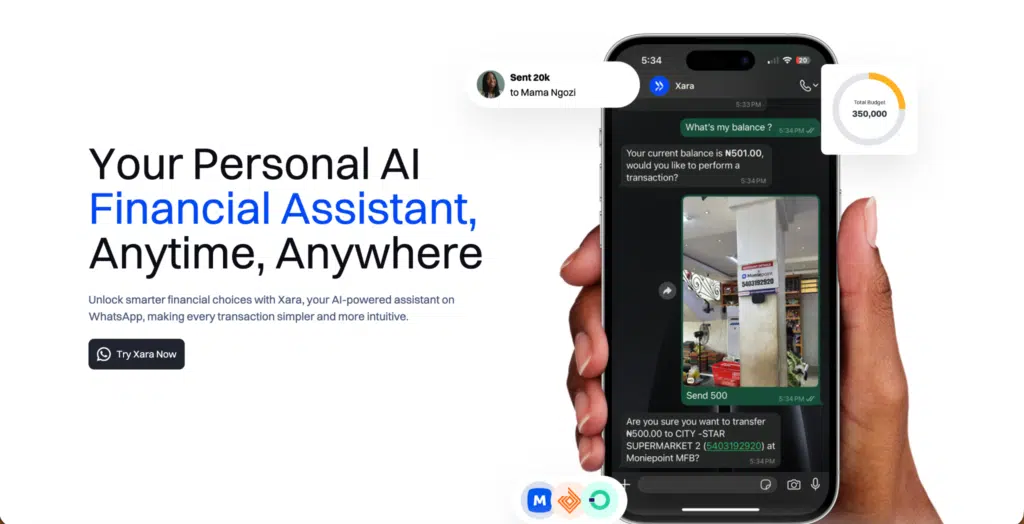
Xara is a WhatsApp-based AI banking assistant that enables users to carry out financial transactions using natural language. Launched in June 2025 by Sulaiman Adewale, the product allows users to send money, pay bills, track spending, and schedule payments directly within WhatsApp.
A user can simply type or say, “Send ₦2,000 to Chioma,” and Xara handles the rest. The idea is to reduce the friction that comes with navigating traditional banking apps by embedding financial services directly into a familiar messaging interface.
Xara understands Nigerian speech patterns, Pidgin, and English, with plans to add Hausa and Yoruba. It can also process voice notes and images. This means users can upload screenshots of bank details and give the AI instructions.
3. Gebeya Dala
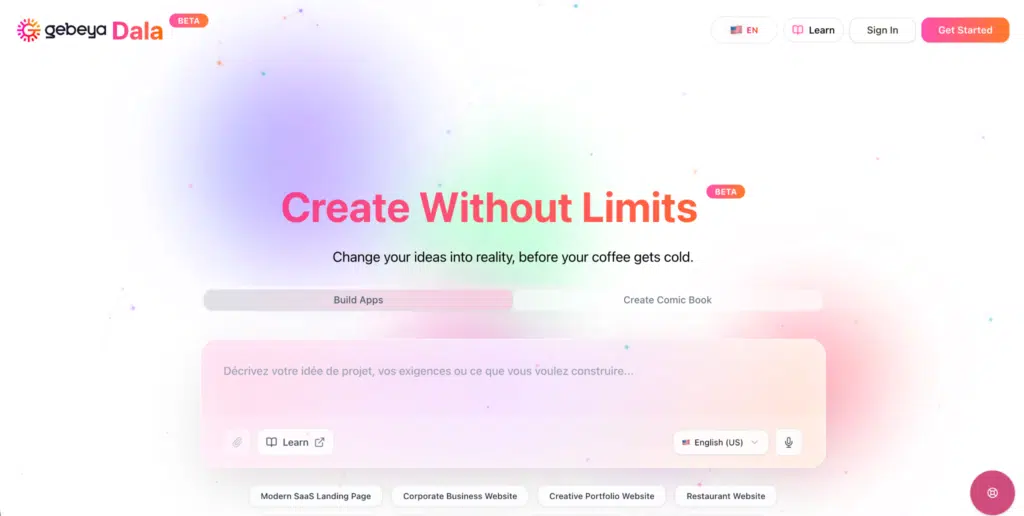
Gebeya Dala is an AI-powered app builder designed for the African context. Launched in October 2025, Gebeya was founded by Amadou Daffe to make app creation more accessible to developers beyond those with formal training.
Daffe said Gebeya Dala was created to address the real challenges Africans face with global “vibe coding” tools — from language barriers and a lack of credit cards to foreign exchange hurdles and access to devices.
The platform utilises artificial intelligence to interpret user prompts in languages such as Amharic, Swahili, Hausa, Arabic, English, French, and others, and then automatically generates full-stack code for websites and apps. It is mobile-first, enabling creators to build products directly from their phones without writing a single line of code.
What makes Gebeya Dala notable in 2025 is its multilingual, context-aware approach to app creation — a step toward democratising software development for aspiring builders, students, and small business owners across Africa.
4. Decide
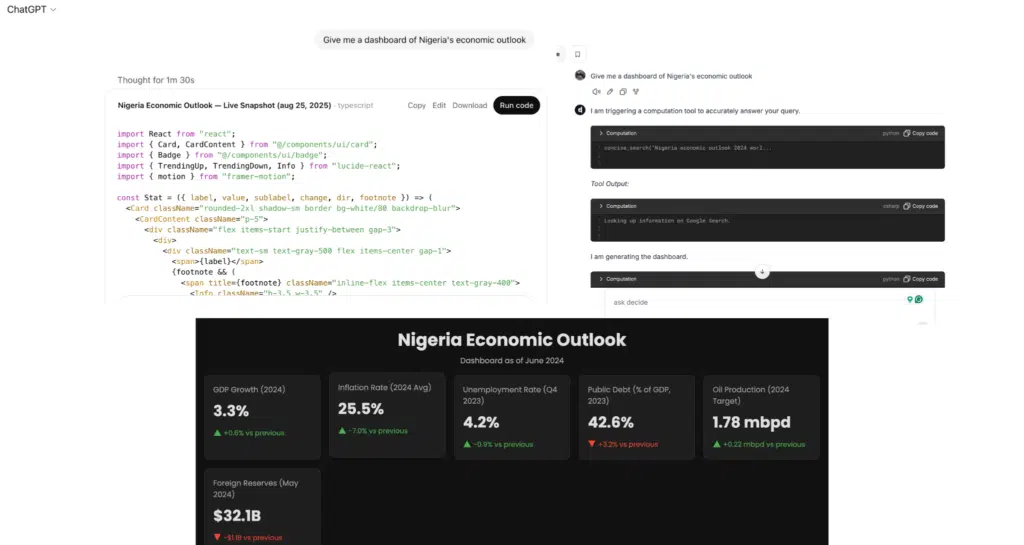
Decide AI is a web‑based AI data analyst tool designed to simplify data analysis for users dealing with spreadsheets and raw datasets.
Built by Abiodun Adetona, a former Flutterwave developer, Decide gained traction quickly after its launch, attracting around a thousand users in its first 24 days — a notable achievement for a niche productivity tool with zero marketing efforts.
Whether it’s cleaning up Excel or CSV files, running statistics, generating charts, or building interactive dashboards, Decide lets users do it all via plain-English prompts.
5. YarnGPT

YarnGPT is an AI-powered speech and dubbing tool that converts text and video content into natural-sounding African accents and languages.
In simple terms, it allows creators to dub videos recorded in English into languages such as Igbo, Yoruba, and Hausa, making them sound as though the subjects originally spoke those languages.
Built by recent UNILAG graduate and AI engineer Saheed Azeez, the product gained viral attention on social media through demo videos showing English clips seamlessly dubbed into African languages.
YarnGPT works by training text-to-speech models on locally sourced voice data, producing voice-overs that sound familiar rather than generic, with clear use cases in media, education and accessibility.
6. Curation AI
Curation AI is a real-time content authentication and opinion-intelligence platform that helps users verify the truthfulness of digital media before they share or act on it.
Built by Nigerian AI firm MYai Robotics under the leadership of CEO Kayode Aladesuyi, the tool gained attention in late 2025 for tackling the growing problem of misinformation, deepfakes, and AI-generated content online.
Curation AI scans news, images, videos, audio, and social posts in seconds to detect manipulation and provide authenticity scores, while also tracking live public sentiment, making it useful for journalists, brands, regulators, and everyday users seeking reliable digital truth.
7. Thunders
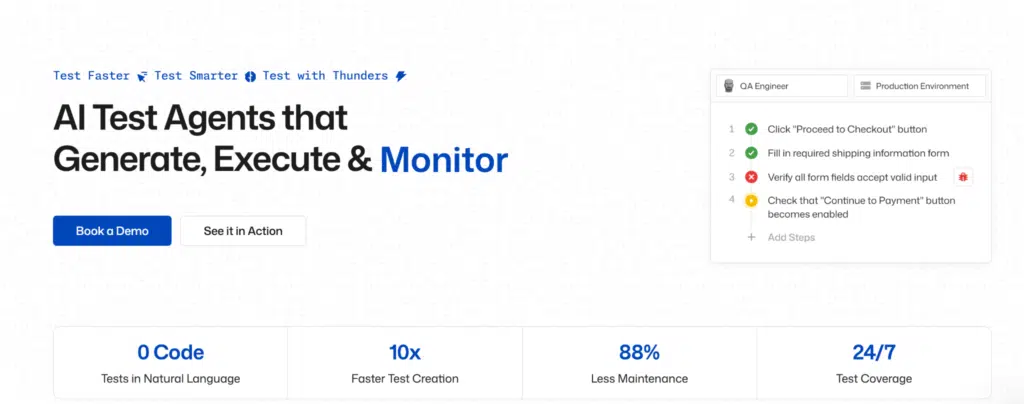
Thunders is an AI-powered software testing platform that automates how teams create, run and maintain quality assurance tests without writing code.
Built by Tunisian-French founders Karim Jouini and Jihed Othmani in 2025, the tool quickly stood out for using natural language prompts to generate intelligent test cases that adapt as apps change.
Thunders’ AI agents simulate real user behaviour, debug issues, and update tests automatically, helping developers and QA teams ship higher-quality software faster while reducing manual effort, a big win for product teams struggling with brittle legacy testing workflows.
8. AI Examiner

AI Examiner is an AI-powered study assistant that turns uploaded learning materials into practice tests, flashcards, summaries, and exam prep tools to help students revise more effectively.
Built by Nigerian founder Richard Eradiri with co-founders Nengi Sagbe and Duke Miller, the idea started as a weekend project to help a friend prepare for medical exams and quickly gained traction among learners globally.
AI Examiner works by analysing uploaded PDFs, docs and notes, then generating customised quizzes and explanations to strengthen understanding and recall — a simple but powerful solution for students facing information overload.
9. Indigenius AI
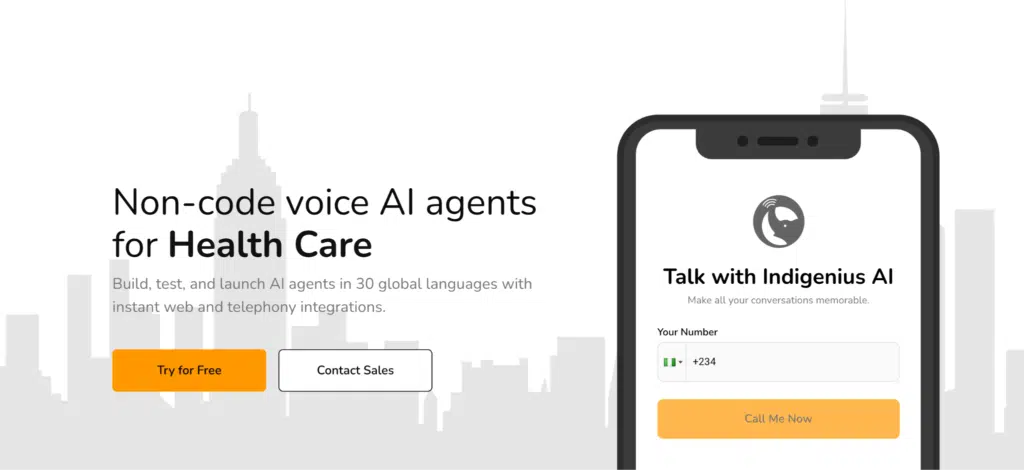
Indigenius AI is a multilingual AI platform that helps people and businesses communicate in African languages through smart keyboards, conversational assistants and voice-enabled agents.
Built by Nigerian startup CDIAL AI, led by founder Yinka Iyinolakan, the product aims to bridge language barriers by supporting over 180 African languages and dialects, including Hausa, Igbo, Yoruba, Pidgin, and more.
Indigenius works via AI-powered tools — from predictive multilingual typing and speech-to-text to no-code voice agent APIs — so users can chat, translate or automate phone support in the languages they actually speak, expanding digital access and inclusion across Africa.
10. ChatATP
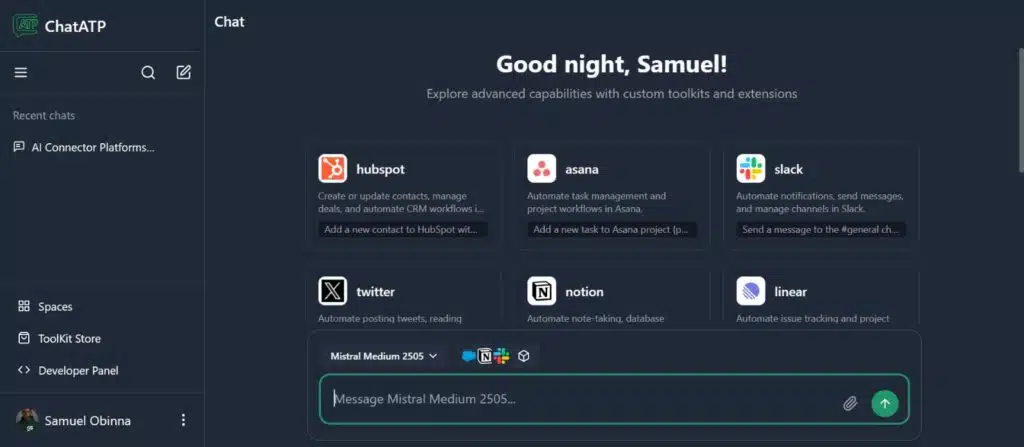
ChatATP is an AI agent platform that transforms ordinary websites into interactive, AI-enabled spaces where users can chat and perform real-world actions, such as booking flights or filling out forms.
Built by Obinna Chimdi, an 18-year-old mathematics and computer science student at the University of Port Harcourt, the tool gained attention in 2025 as a creative way to give large language models practical capabilities.
ChatATP works by acting as a bridge between language models (like ChatGPT) and a site’s functionality, using purpose-built connectors so prompts lead to actual tasks — not just suggestions, helping AI go from conversation to execution.