



Nigeria officially scrapped company income tax for small businesses in 2026, but most business owners don’t yet know whether they qualify or what they still need to do.
Key takeaways
- Small businesses with an annual turnover of ₦100 million or less and fixed assets below ₦250 million now pay 0% Company Income Tax (CIT) under the Nigeria Tax Act 2025, with exemptions from Capital Gains Tax and the 4% Development Levy.
- The exemption is not automatic, as you still need a Tax Identification Number (TIN), proper financial records, and must file annual returns even if your liability is zero.
- Professional services, such as Law firms, medical practices, accounting firms, and consultancies, do not qualify, regardless of the business’s size.
- Nigeria has consolidated over 60 taxes into fewer than 10 laws, replacing a tangle of overlapping levies with a single Development Levy for non-exempt companies.
- Filing penalties have increased sharply, from ₦25,000 to ₦100,000 in the first month, plus ₦50,000 every month thereafter, making non-compliance significantly more expensive than it was before.
The new Nigeria Tax Reform Acts are the most ambitious restructuring of Nigeria’s tax system in decades. Signed into law on June 26, 2025, and effective from January 1, 2026, it consolidates the country’s fragmented tax architecture under four new Acts:
- The Nigeria Tax Act (NTA).
- The Nigeria Tax Administration Act (NTAA).
- The Nigeria Revenue Service (Establishment) Act (NRSA).
- The Joint Revenue Board (Establishment) Act (JRBA).
It effectively replaces a system that had accumulated more than 60 overlapping taxes, levies, and charges with something considerably leaner. For small businesses, it means zero company income tax if you qualify.
In this guide, I’ll walk you through who qualifies for the small business exemption, what you’re exempt from, and other things.
Nigeria Tax Reform summary
| Tax/obligation | Before 2026 | From January 2026 |
| CIT (small businesses) | 0% (≤ ₦25 million turnover) | 0% (≤ ₦100 million turnover) |
| CIT (others) | 30% | 25% |
| VAT threshold | ₦25 million | ₦50 million |
| Development levy | Multiple taxes | Single 4% levy (small biz exempt) |
| Filing penalty (first month) | ₦25,000 | ₦100,000 |
| Professional services | Not exempt | Still not exempt |
| TIN requirement | Limited | Mandatory for all |
Do you qualify as a “small business” under the new law?
The Nigeria Tax Act 2025 defines a small company under Section 56 with two conditions that must both be true at the same time.
- Your annual turnover must be ₦100 million or less.
- Your total fixed assets must fall below ₦250 million.
Both must apply simultaneously. Meeting one without the other doesn’t get you the exemption.
NOTE: The moment your business crosses either threshold, even marginally, you move immediately into the 25% CIT bracket.
Who is excluded, no matter what
Even if your business earns ₦5 million a year and has virtually no fixed assets, you do not qualify if your primary activity falls into any of these categories:
- Legal services.
- Accounting and auditing.
- Medical services.
- Consulting and advisory work.
The exclusion is categorical, based on what your business does, not how big it is.
What you get if you qualify
For businesses that clear both thresholds and aren’t in an excluded category, the relief is genuinely substantial.
- Pay 0% Company Income Tax.
- Pay 0% Capital Gains Tax.
- Exempted from the 4% Development Levy.
What the exemption doesn’t remove
Zero tax liability does not mean zero compliance obligation.
- You need a TIN, which is mandatory for all businesses under the reformed system.
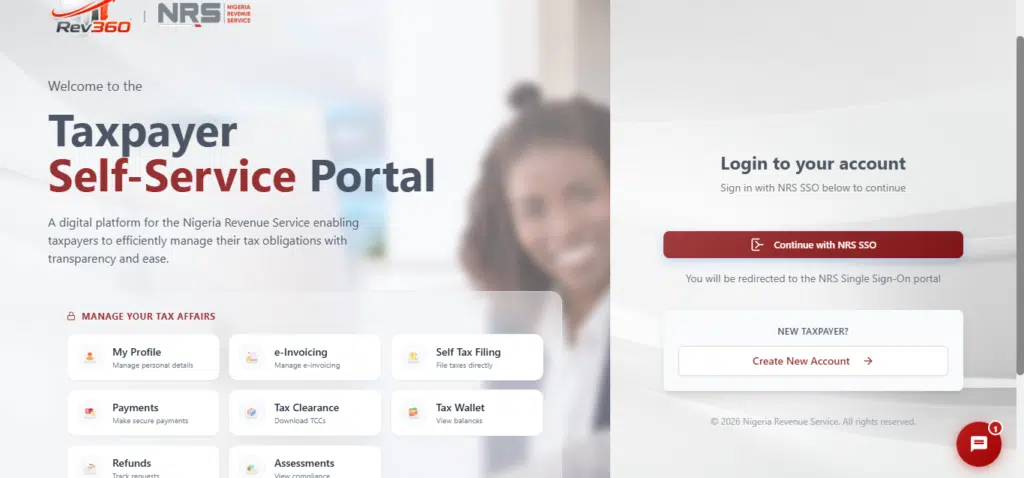
- You have to file annual returns with the NRS.
- You must maintain proper financial records that substantiate your turnover and fixed asset figures. The filing requirement exists independently of whether you owe anything.
What small businesses must still do, even if exempt
First of all, your business must be registered with the Corporate Affairs Commission (CAC), complete with a business name and an RC number.
Here are the other things you’re still required to do regardless of your exemption status.
1. Retrieve your TIN
From 2026, every taxable person and business entity must have a Tax Identification Number. As with individuals, you can retrieve a TIN for your business on the Tax ID portal.
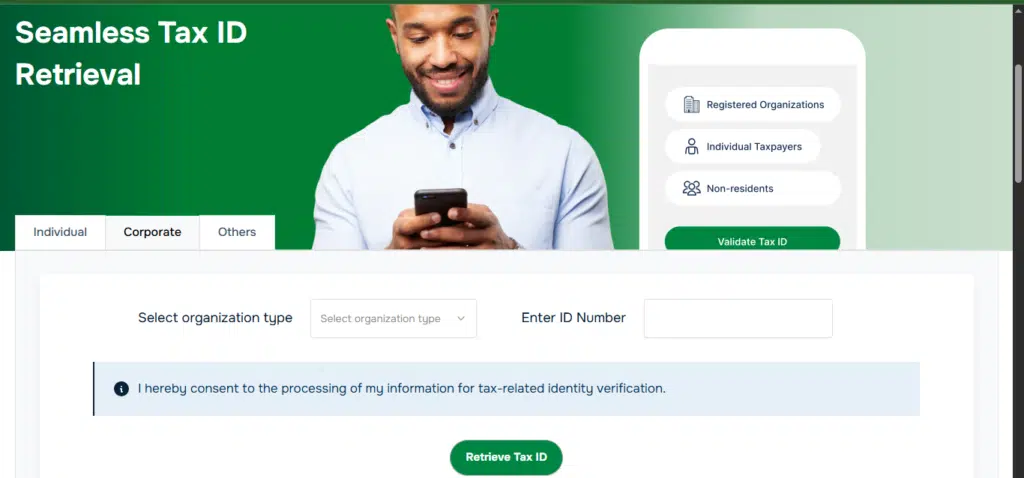
Operating without one creates friction across your entire business, not just with the tax authority.
2. File annual returns even if you owe nothing
The filing obligation exists independently of your tax liability. Zero CIT owed does not mean zero filing required.
Miss the deadline and the penalties hit immediately: ₦100,000 in the first month, followed by ₦50,000 for every additional month of default.
3. Withholding tax still applies (with conditions)
You’re exempt from Withholding Tax obligations only when two conditions are simultaneously true:
- The transaction value is ₦2 million or less per month.
- Your supplier has a valid TIN on record.
If either condition isn’t met, standard WHT rules apply in full.
4. Record-keeping is now mandatory
The numbers that determine your exemption status must be tracked, documented, and defensible. If the NRS determines through its data systems that your business crossed the turnover or asset thresholds and you didn’t declare it, penalties apply retroactively.
Your records are your proof of eligibility, and without them, you have no defense.
Other changes that affect small businesses
The CIT exemption gets all the attention, but three quieter changes in the 2026 reform have real implications for how small businesses operate day-to-day.
1. VAT is now more flexible
The VAT rate stays at 7.5%. What has changed is the registration threshold, which has doubled from ₦25 million to ₦50 million in annual turnover. If your business falls below that line, you don’t charge customers VAT and don’t file VAT returns.
If you’re above the threshold, the reform allows you to claim input VAT on services, capital expenses, and general business purchases, not just on goods as before.
2. The development levy simplifies things
Nigeria’s previous system layered multiple levies on businesses simultaneously. The Tertiary Education Tax, the NASENI Levy, the IT Levy, and the Police Trust Fund Levy all existed as separate obligations with separate filing requirements.
The 2026 reform consolidates all of them into a single 4% Development Levy. And qualifying small businesses are exempt from it entirely.
3. That ₦50 bank charge now has a formal name
The Electronic Money Transfer Levy (EMTL), the charge you’ve seen on transfers of ₦10,000 and above, is now formally classified as Stamp Duty under the reformed framework. Nothing about how it hits your account has changed, but its legal classification has been clarified.
4. There’s now an independent tax dispute body
The reform introduces a Tax Ombudsman, an independent office that small businesses can approach when they believe they’ve been treated unfairly or inconsistently by tax authorities.
For business owners who’ve historically faced unpredictable enforcement with no clear recourse, this is a structural protection that didn’t exist before.
What you should do right now
Understanding the reform is step one. Acting on it is what actually protects your business. Here’s your practical action plan.
- Confirm your eligibility first. If you’re in legal, medical, accounting, or consulting services, you’re ineligible. Otherwise, pull your last twelve months of revenue and your current fixed asset value and verify.
- Get your TIN if you don’t have one.
- File your annual returns, even if you owe nothing.
- Track your revenue every month, not at year-end.
- Clarify your VAT position. Below ₦50 million in turnover, VAT is not your concern.
- Review your WHT obligations with suppliers. If your monthly transactions with any single supplier exceed ₦2 million, or if they can’t produce a valid TIN, standard Withholding Tax rules apply.
FAQs
My business earns below ₦100 million. Do I still need to file?
Regardless of where your revenue sits, filing annual returns is mandatory.
I run a small consulting business. Am I exempt?
No. Professional services are categorically excluded from the small company definition; turnover and asset size are irrelevant.
What happens if I exceed the threshold mid-year?
You become immediately liable for 25% CIT for that entire tax year. There’s no partial exemption, no grace period, and no graduated transition.
Is VAT changing for small businesses?
Yes. The registration threshold has doubled to ₦50 million. Below that, you don’t register, charge, or file VAT. Above it, you can now claim input VAT credits on services, capital expenses, and business purchases.
Conclusion
The latest Nigeria Tax Reform Act genuinely reduces the burden on the businesses that need relief most. Zero CIT, a consolidated levy system, and a doubled VAT threshold create real financial breathing room for qualifying small businesses.
But the system running underneath that relief is stricter. Compliance obligations remain firm, enforcement infrastructure is sharper than ever, and the penalties for getting it wrong have gone up.
Going forward, know your numbers, file on time, keep your records clean, and treat this reform as an opportunity to build on a lighter tax burden.
Citations
- https://www.nrs.gov.ng/uploads/NIGERIA_TAX_ACT_2025_ef6bb812a5.pdf
- https://businessday.ng/markets/article/14-changes-made-in-the-new-tax-laws-to-support-capital-market-growth/
- https://businessday.ng/news/article/herere-six-common-tax-filing-errors-their-penalties/
- https://statehouse.gov.ng/new-tax-laws-will-commence-on-january-1-2026-as-planned/
- https://selfservice.nrs.gov.ng/
- https://taxid.nrs.gov.ng/
- https://keepam.ng/vat-guide-nigeria
Disclaimer!
This publication, review, or article (“Content”) is based on our independent evaluation and is subjective, reflecting our opinions, which may differ from others’ perspectives or experiences. We do not guarantee the accuracy or completeness of the Content and disclaim responsibility for any errors or omissions it may contain.
The information provided is not investment advice and should not be treated as such, as products or services may change after publication. By engaging with our Content, you acknowledge its subjective nature and agree not to hold us liable for any losses or damages arising from your reliance on the information provided.
Always conduct your research and consult professionals where necessary.