



On his LinkedIn profile, Itai Azogui has the phrase “Talent is distributed evenly; opportunity isn’t” boldly displayed.
It’s a line that has become almost axiomatic in global tech circles, but nowhere does it ring truer than in Africa, a continent long framed as an emerging market, yet brimming with underutilised potential.
Between 2020 and 2022, Azogui lived and worked as a product manager in Ghana, collaborating closely with software developers, product designers, and other technology professionals across the country.
What stood out to him was not a lack of skill but a talent pool grappling with a narrow local job market. Highly capable professionals were vying for a limited number of roles, often with salaries and growth prospects that failed to reflect their abilities.
According to the International Labour Organization, between 10 and 12 million young Africans enter the job market every year, yet only about three million formal jobs are created annually. The resulting gap has become more pronounced over the past decade, intensifying economic pressure on young people and forcing many to rethink traditional career paths.
For some, this has meant physically leaving their home countries in search of opportunity elsewhere. For many others, however, the bet has been on skills, particularly in technology.
The rise of remote work, accelerated dramatically by COVID-19, has cracked open a door that once seemed firmly shut. African developers, designers, and product managers are increasingly contributing to companies based in Europe, North America, and Latin America without ever leaving home.
Still, access to these roles remains uneven. Structural barriers ranging from visibility and hiring bias to payment systems and legal complexity continue to keep vast numbers of qualified professionals on the sidelines. It is in this gap that Savannah, the company Azogui founded in 2022, plays.
Distributing African tech talent globally
When Savannah first launched, Azogui was the company’s sole employee. In those early days, growth was driven almost entirely by personal networks. He began by working with developers he already knew, taking time to understand their individual skill sets and match them with the needs of organisations in Israel, where Savannah initially placed its talent.

Victoria Fakiya – Senior Writer
Techpoint Digest
Make your startup impossible to overlook
Discover the proven system to pitch your startup to the media, and finally get noticed.
“In the beginning I used to do everything on my own,” Azogui says. “I searched for engineers, I did marketing for Savannah, I got CVs, and I looked over CVs. Gradually, you start to delegate some of the responsibilities.”
As the company scaled, its process became more structured. Today, Savannah starts by engaging directly with potential clients to gain a clear understanding of their technical and organisational needs. From there, the company develops a detailed job description that guides its search. Employers are presented with a shortlist of vetted developers, whom they can assess for fit before making a final decision.
Savannah operates more like a tech talent staffing solution than a traditional outsourcing firm. Developers placed through the platform are effectively Savannah employees, with the company responsible for payments, support, and career development. Azogui says this structure gives Savannah greater oversight into how developers are treated and ensures a more consistent experience for its talent.
While Savannah began by placing engineers in Israeli companies, its reach has since expanded across Europe. The company has recruited developers from Ghana, Nigeria, Kenya, and Rwanda, and more than 150 engineers have secured roles through the platform to date.
Artificial intelligence and the future of developers
The rapid adoption of artificial intelligence is reshaping the global developer job market, with junior engineers bearing the brunt of the disruption.
As more companies integrate AI tools into their workflows, demand for entry-level developers has softened, contributing to layoffs and a more cautious hiring environment. A sector once viewed as a reliable pathway to economic mobility now presents a far more uncertain outlook for those just starting their careers.
That shift is reflected in recent research. According to a 2025 Digital Economy study, employment in roles with the highest exposure to AI, particularly IT and software engineering, has declined by 6% among workers aged 22 to 25. By contrast, employment for more experienced professionals aged 35 to 49 has increased by 9%.
Savannah has taken a proactive stance in response to these changes. Recognising that AI is becoming a baseline expectation rather than a differentiator, the company is investing in tools and support systems to help its developers adapt.
Through a dedicated developer success team, Savannah focuses on ensuring engineers are not only placed in roles but are thriving within them. This includes providing subscriptions to relevant AI-powered coding tools and ongoing guidance on how to use them effectively, positioning developers to remain competitive in an evolving industry.
Committing to an exit
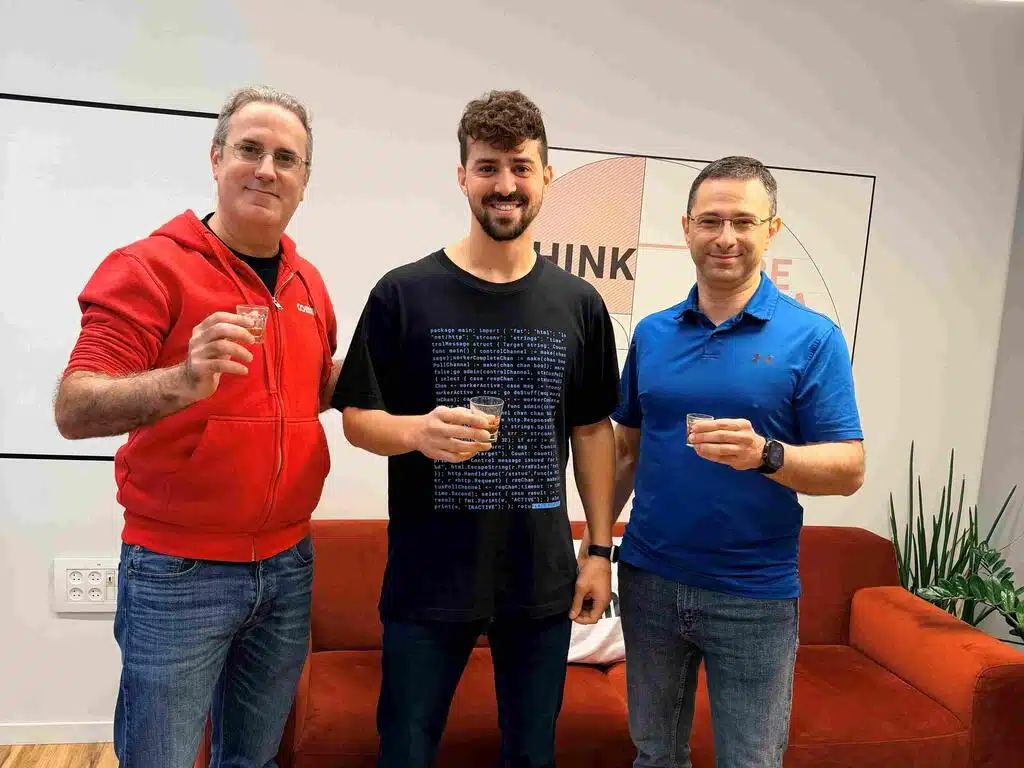
Last month, Savannah was acquired by Israeli technology company Commit, which provides a wide range of technical solutions to organisations across Europe and parts of the United States. As part of the transaction, Savannah founder Azogui joined Commit as a senior vice president, alongside several other Savannah employees.
While the value of the deal was not publicly disclosed, multiple media reports estimate the acquisition at a few million dollars. That figure would represent a notable exit for Azogui, who bootstrapped the company from its early days.
Prior to the sale, Savannah deliberately chose not to raise outside capital, a decision Azogui says was driven by a desire to retain control over the company’s strategic direction rather than pursue growth at any cost.
The acquisition followed several months of collaboration between the two companies, though it was not Savannah’s first encounter with acquisition interest. According to Azogui, Commit’s offer stood out in part because of the benefits it offered Savannah’s employees, including long-term growth opportunities.
Commit’s established relationships with large enterprises were also a key factor, giving Savannah access to customers and markets that would have been difficult to reach independently and providing it with added credibility, especially with large enterprises.
“I think the right opportunity came,” Azogui says. “We’ve had offers in the past for different types of acquisitions, but it was really important for us to work with a company that has deep experience in outsourcing and outstaffing and that can teach us things we don’t yet know.”
Building Savannah’s future
Following its acquisition by Commit, Savannah is positioning itself for its next phase of growth with a broader platform, deeper resources, and expanded reach into global enterprise markets. The company plans to scale its operations while remaining focused on its original mission: connecting skilled talent with meaningful opportunities, regardless of geography.
Azogui sees the acquisition as a catalyst rather than a conclusion. With Commit’s experience in outsourcing and its relationships with large organisations, Savannah is expected to accelerate its expansion across Africa and into new markets.
“I believe many countries in Africa, when it comes to outsourcing, are where parts of Europe were so many years ago,” Azogui says. “The opportunity is huge.”
That perspective underpins Savannah’s long-term strategy, which centres on building sustainable talent pipelines in regions that have historically been overlooked by global employers.
Importantly, Savannah intends to preserve its people-first culture as it scales within Commit’s ecosystem. Azogui emphasises that growth will not come at the expense of the company’s values. One of Savannah’s long-term goals, he says, is to build a training centre focused on upskilling junior and mid-level developers, helping them progress into senior roles.
“Savannah’s vision at the end of the day is that people that deserve the opportunity would get it, and no one will miss out on opportunities because of where they were born or raised,” he says.