



Nigeria’s fast-moving consumer goods (FMCG) sector has been built on informal relationships. A distributor builds a relationship with the manufacturer, and the retailer does the same with the distributor, who delivers goods to them weekly. On June 19, Omni used its seventh anniversary to argue that the status quo is changing, and that the company is building the infrastructure for that change.
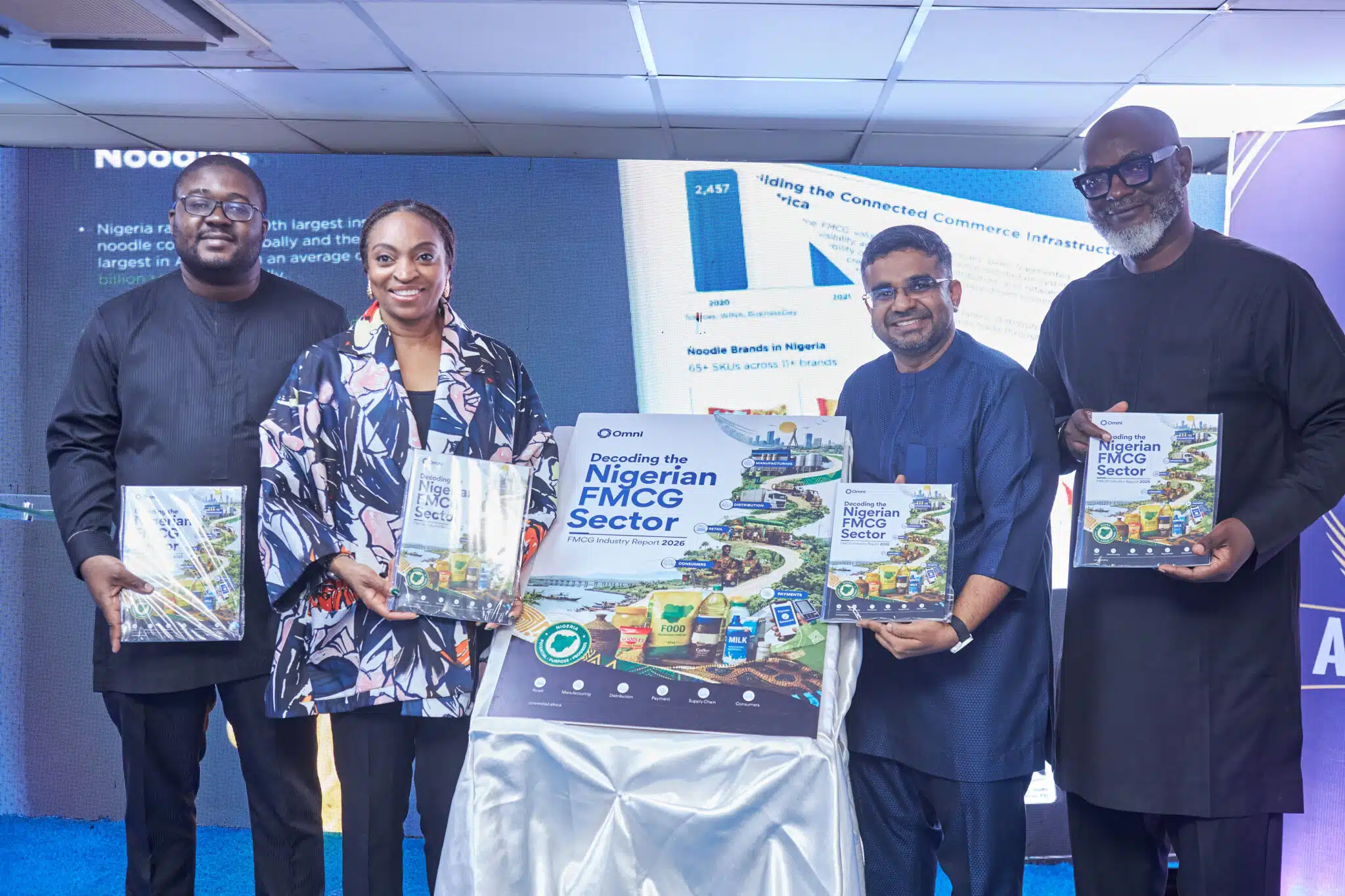
At the Omni Insights Forum in Lagos, Omni launched its FMCG Industry Report 2026, a study it describes as one of the most comprehensive deep dives into how goods, capital and data move through Nigeria’s consumer goods value chain. The event doubled as the company’s anniversary celebration, and the room was filled with a mix of manufacturers, distributors, retailers, investors, policymakers and development partners. The Honourable Minister of Industry, Trade and Investment, Dr Jumoke Oduwole, formally inaugurated the report.
Mayowa Alli, Omni’s Chief Operating Officer for Financial Services, framed the report as an attempt to get the industry to pay closer attention to the shift happening within the industry.
“The reason we published the report was to shed light on what’s happening within the sector, importantly, how capital flows,” Alli said. “A lot of the time, industry players don’t appreciate how rapidly technology is changing, and goods and services get distributed. We hope that by publishing this report, we start to galvanise a lot more interest from industry players to pay attention to how technology can impact capital flow within the ecosystem.”
The report highlights that Nigeria’s FMCG market is worth an estimated $25 billion, serving a population of roughly 238 million, of whom more than half live in urban areas. Despite this market worth, 74% of retailers say access to credit is critical to keeping their operations running day to day, yet only 18% have ever accessed a formal loan and more than half report regular working-capital shortfalls.

This difficulty in accessing capital is a bottleneck that has shaped the industry for decades, leading to informal credit and cash-based trading, which provides an unclear picture of a retailer’s business.
This is the gap that Omni is positioning its platform to close. The report notes that digital payment adoption among retailers has crossed 75%, and 78% now use POS systems, infrastructure that, Omni argues, generates exactly the kind of transaction data that can be used to assess creditworthiness in real time.
“I don’t think it’s one company that can fill the requirement of the entire country, but I think we are equipped to take a large share at the bottom of the pyramid. At the top of the pyramid, there are large companies, and they have been getting credit and will continue to get credit. But as you go lower, these small companies don’t have access to collateral; all they have is their business,” Deepankar Rustagi, Founder and CEO, Omni, said at a press briefing.
Speaking at the inauguration, Minister Oduwole tied the report’s findings to the government’s priorities for the trade ecosystem, stressing that visibility and collaboration across the value chain would be central to unlocking the sector’s potential.
Rustagi added that the report is Omni’s attempt to contribute to the industry rather than a purely marketing exercise.
The most crucial test of the report’s usefulness is how much it impacts players in the ecosystem and whether the credit gap it emphasises narrows as embedded finance tools spread beyond Omni’s network of retailers and distributors. Nevertheless, the report adds an important data point to a conversation about Nigerian commerce that has often been limited due to a lack of evidence.