

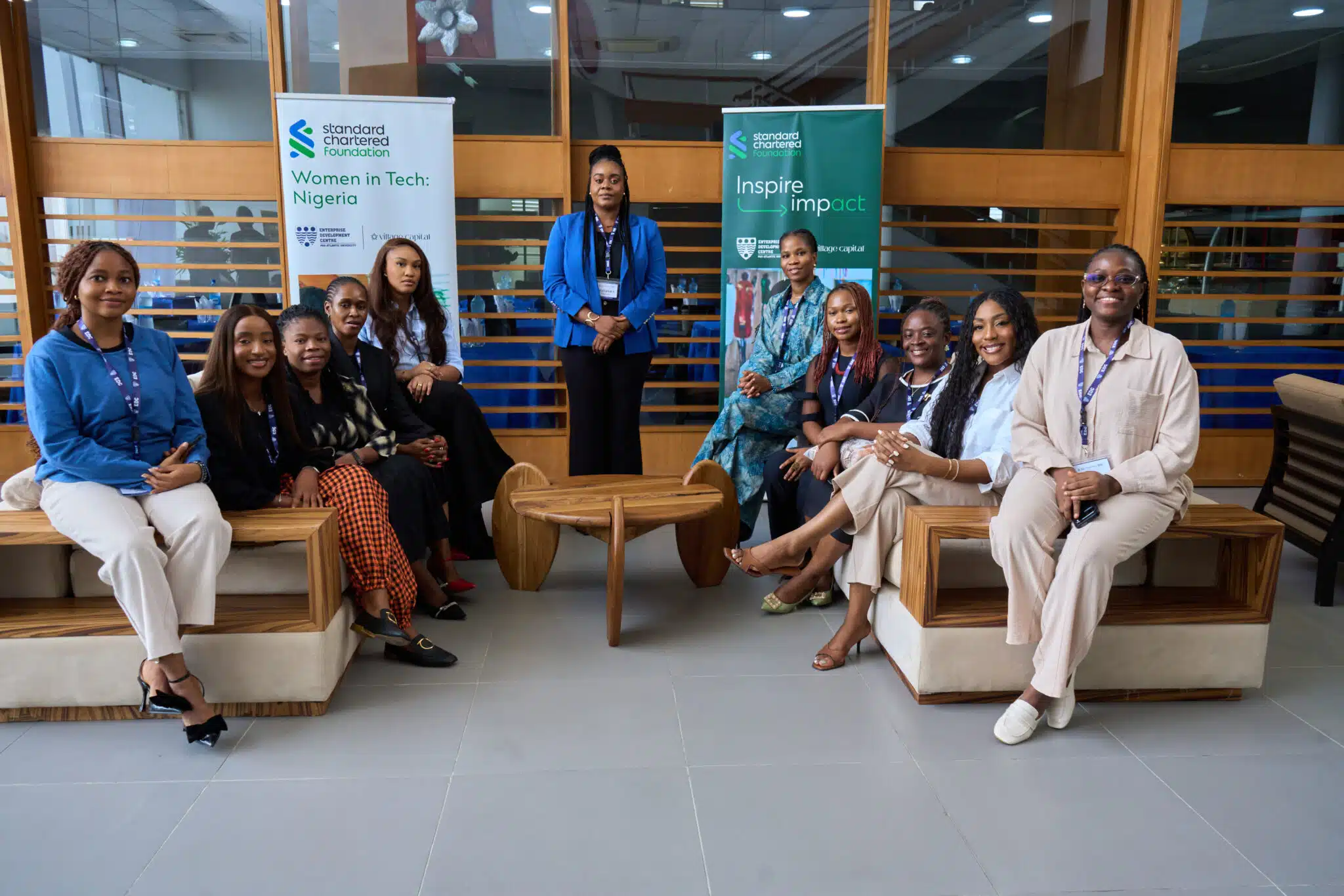
…Eleven women-led, tech-enabled startups advance to a 12-week accelerator of capacity building and mentorship
The Standard Chartered Foundation, in partnership with the Enterprise Development Centre (EDC), Pan-Atlantic University, and Village Capital, has announced the top 11 finalists selected for the Accelerator Phase of the Women in Tech Accelerator Nigeria programme.
The annual philanthropic initiative supports young women-led, tech-enabled startups to scale their businesses while driving positive social and economic impact across their communities.
The selected founders were chosen from a competitive pool of applicants following an intensive selection process.
The 11 finalists for the Women in Tech Accelerator Nigeria seventh cycle are:
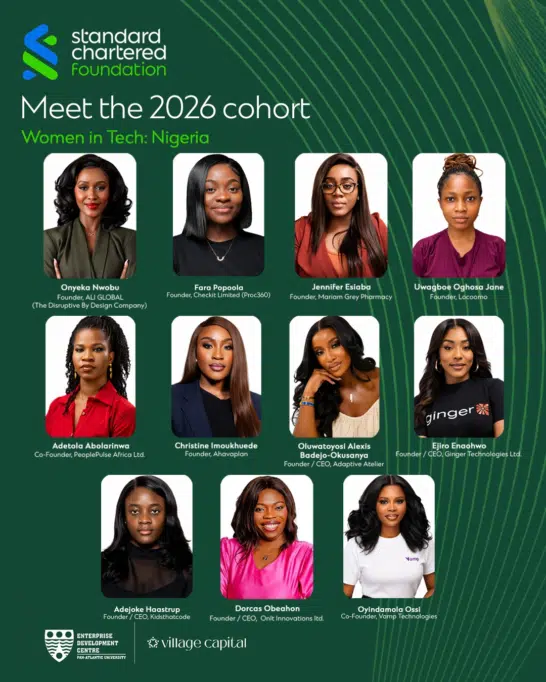
Jennifer Esiaba (Mariam Grey Pharmacy): Building an AI-powered telepharmacy platform that delivers verified medications and chronic care support across Nigeria, accessible on any phone, in over 30 local languages, without requiring internet access.
Ejiro Enaohwo (Ginger Technologies): Addressing the trade and credit infrastructure gap within Africa’s fast-growing, women-led beauty sector.
Dorcas Obeahon (OnIt Innovations Limited): A managed home services platform that trains, vets, and deploys skilled domestic and technical professionals, ensuring safe service delivery and dignified employment.
Abolarinwa Adetola (PeoplePulse Africa): Providing affordable, localised HR solutions that help African businesses, particularly MSMEs, manage and scale their workforce effectively.
Toyosi Badejo-Okusanya (Adaptive Atelier): Expanding digital accessibility through AI-driven tools, audits, and a marketplace of vetted disabled professionals, targeting the global population living with disabilities.
Jane Uwagboe (Locoomo): Improving logistics for small businesses by converting underutilised spaces into pickup stations, mini-warehouses, and fulfilment hubs.
Christine Imoukhuede (Ahavaplan): Developing an AI-powered CRM tailored for event planners to streamline client, event, and business management.
Fara Popoola (Proc360): Building trusted trade infrastructure by integrating supplier verification, quality control, and secure payments into a single platform for SMEs.
Adejoke Haastrup (Kidsthatcode): Equipping children and teenagers across Africa with coding and digital skills through live instruction, mentorship, and project-based learning.
Oyindamola Ossi (VampAI): Transforming recruitment across Africa by combining AI-driven tools with human expertise to help companies hire more effectively.
Onyeka Nwobu (Ali Global): A digital-first leadership academy empowering African women with access to quality education, career advancement opportunities, and increased earning potential.
Dorcas Obeahon (Ali Global): A digital-first leadership academy empowering African women with access to quality education, career advancement opportunities, and increased earning potential.
Over the course of 12 weeks, the finalists will participate in an intensive accelerator programme designed to strengthen their investment readiness. This includes tailored business growth training, mentorship, hands-on advisory support, and access to catalytic grant funding.
Participants will also gain entry into a global network of peers, investors, industry leaders, and ecosystem partners, positioning them for long-term growth and scale.
Why the Women in Tech Accelerator Exists
Entrepreneurship among women is rising globally. Historically, Africa has led the world in the number of women business owners, particularly in countries like Uganda and Ghana.
Nigeria reflects this trend at scale: women make up roughly half the country’s population, and an estimated 23 million female entrepreneurs account for around 41 per cent of the nation’s micro-businesses, with women-owned businesses contributing an estimated 37 per cent to GDP. While growth has been slower in the Middle East, it is now accelerating in Saudi Arabia, more women are engaged in entrepreneurial activity than men.
Entrepreneurial interest is rising rapidly too. A recent study3 on Eastern Europe, the Middle East, and Africa found that 78 per cent of women indicated an aspiration to start a business.
Training, business networks, and mentorship are vital resources for entrepreneurs, yet women too often lack access to them. Young entrepreneurs face particular challenges, with a steep early-career learning curve in business concepts — from finance and marketing to operations and regulation that can make it harder to grow a business.
Funding remains the greatest barrier for women entrepreneurs. In Africa, there is a US$42 billion funding gap for women entrepreneurs. In the Middle East and North Africa, women-founded startups received just 1.2 per cent of total funding raised in 2024. In Pakistan, the share of funding going to women-led startups fell from 34 per cent in 2021 to 8 per cent in 2022.
The Women in Tech Accelerator was designed to help close these gaps, acting as an enabler of economic empowerment for young women through training, mentorship, and seed funding in the form of grants.
About the Women in Tech Accelerator
The Women in Tech Accelerator is an annual philanthropic programme for young, women entrepreneurs, led by the Standard Chartered Foundation and delivered in collaboration with Village Capital and local implementing partners.
Globally, the programme targets women entrepreneurs across 14 Standard Chartered markets, 12 of which are in the Africa, Middle East, and Pakistan region. The programme empowers young women-led, tech-enabled startups to scale and create positive impact in their communities, forming an important part of the Standard Chartered Foundation’s work to tackle inequality and promote economic inclusion.