

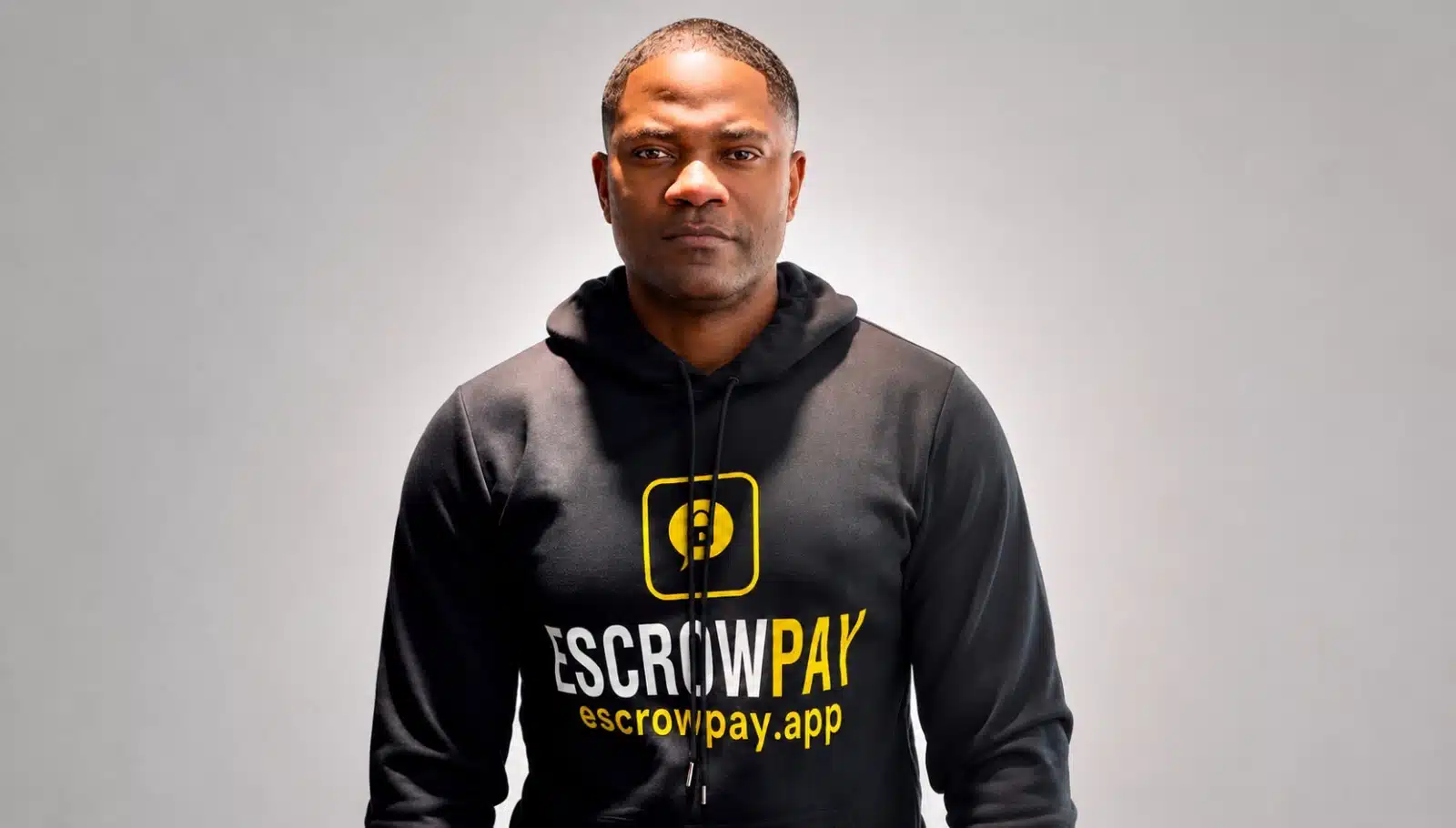
In Nigerian e-commerce, most deals run into the same standoff: the buyer is reluctant to pay a stranger, and the seller is reluctant to ship without payment. It is a deadlock that quietly kills countless transactions before they happen, and it is the problem EscrowPay, which launches on 26 June 2026, has been built to solve.
EscrowPay is a WhatsApp-native escrow service for Nigerian buyers and sellers. It holds a buyer’s payment securely until an order is delivered, then releases the funds to the seller, removing the need for either party to trust the other upfront.
Its founder and CEO, Toye Akinwale, describes the purpose plainly: “EscrowPay doesn’t process goods, and it doesn’t process payments. It processes trust.”
The idea became concrete after a personal experience. Toye ordered an item from an online vendor as a gift for his mother. Two weeks passed with no word; when he eventually asked her about it, it had never arrived, and the seller was unresponsive. Toye was shocked to learn how common this is in Nigeria. “That was the moment a long-held idea turned into something I had to build,” he says.
The startup goes live on 26 June 2026, open to anyone in Nigeria. It holds buyers’ funds with a CBN-licensed bank until goods are delivered, and verifies every user by NIN. More than 300 sellers signed up ahead of launch.
Why trust is the bottleneck
Toye’s experience reflects a wider pattern. Online shopping still accounts for only a small fraction of total retail in Nigeria, and trust is among the biggest reasons. Cash-on-delivery became the default precisely because buyers were wary of paying upfront, but it does not remove the risk so much as shift it. Sellers absorb failed deliveries, rejected parcels and the cost of chasing payment, while buyers still gamble on whether what arrives matches what they ordered. Industry observers increasingly argue that this dependence on pay-on-delivery is itself holding the sector back.
The gap, Toye argues, is that there has never been a neutral party sitting between buyer and seller to confirm identity, hold the money, and ensure neither side can be cheated. That, he says, is the role EscrowPay is built to fill.
From Canada to Nigeria to the UK
Toye was born in Canada and has spent most of his adult life in the UK. He attended secondary school in Nigeria and, although he spent only five years in Nigeria in total, considers himself “101% Nigerian”. Nigeria, he says, is home.
He studied Financial Services and Business Studies in the UK, but technology was a constant interest. He taught himself to build web applications alongside a career in finance that included director-level roles at various investment banks in the UK, with time at Meta and Google. He had long wanted to build something for Nigeria, and finally committed to the idea this year.
How EscrowPay works
Toye designed the service around a few core principles.
It meets users where they already are. Rather than requiring a download or a new account, EscrowPay operates through WhatsApp and is built on the WhatsApp Business API, the channel where Nigerian buyers and sellers already trade every day. Anyone with WhatsApp can use it.
It makes users accountable. Every buyer and seller verifies their identity by NIN through Prembly, a leader in Africa’s trust infrastructure, removing the anonymity that scams rely on.
It holds funds with a bank, not the company. Buyer payments sit in a designated account with Rubies Microfinance Bank, a CBN-licensed Nigerian bank, rather than on EscrowPay’s own books, and remain there until the transaction is complete. Both parties can follow each step in real time within WhatsApp.
It releases funds automatically on delivery. Once an order is delivered, the buyer has 48 hours to confirm receipt or flag a problem. Confirming pays the seller immediately; taking no action releases the funds to the seller automatically, so sellers are paid without having to chase, and no transaction is left in limbo.
It offers flexible, trackable delivery. A seller can dispatch with the buyer’s own rider, a third-party courier with tracking, or EscrowPay’s own rider delivery feature. The EscrowPay option is recommended because it records both pickup and delivery, giving both sides, and any dispute, the clearest proof of what happened. In one of EscrowPay’s more distinctive touches, any rider with WhatsApp can be onboarded in a few clicks, so sellers are never tied to a single courier.
It resolves disputes on evidence. If a buyer raises an issue, for example an item did not arrive or is not as described, the money is held while EscrowPay reviews verifiable facts such as delivery records, verified identities and the transaction trail, rather than one side’s word against the other’s. EscrowPay releases payment to the seller, or refunds the buyer, only after that review.
The governing principle, Toye says, is that no party should ever hold both the goods and the cash.
Launch and what comes next
EscrowPay goes live on 26 June 2026, open to all buyers and sellers across Nigeria. There is no waitlist or cohort to join: verification with NIN takes about a minute and can be done whenever a seller is ready to make their first sale via EscrowPay.
A second version of the product is already planned. Its headline feature is a free EscrowPay storefront, which a seller can set up in a few clicks, with their own branding, to get their business online almost instantly and EscrowPay’s protection built in from the first sale. Also on the v2 roadmap are milestone escrow for service-based agreements such as freelance work, where payment is released in stages as work is delivered, and cross-border payments, extending
that same protection to trade beyond Nigeria, where the trust gap is widest and hardest to close. Several other features sit alongside these, but the free storefront and milestone escrow are central to the plan: lowering the barrier to selling online, and extending the same protection to service work, all on the same trusted guardrails.
Toye’s ambition extends beyond launch day. He wants EscrowPay to become the default trust layer for online trade in Nigeria, the stage buyers and sellers reach for whenever they do not already know each other. Social commerce, much of it already happening in WhatsApp chats and Instagram DMs, is the area he sees as the biggest opportunity for growth.
“If we get this right,” he says, “‘send it through EscrowPay’ becomes a normal part of how Nigerians trade, and lack of trust stops being the thing that kills the deal. Sellers never ship into silence. Buyers never pay into nothing.”
We don’t process goods. We don’t process payments. We process trust.