




Salaam,
Victoria from Techpoint here,
Here’s what I’ve got for you today:
- Moniepoint winds down MonieWorld
- MTN eyes banking licences
- Starlink moves closer to South Africa
Moniepoint winds down MonieWorld
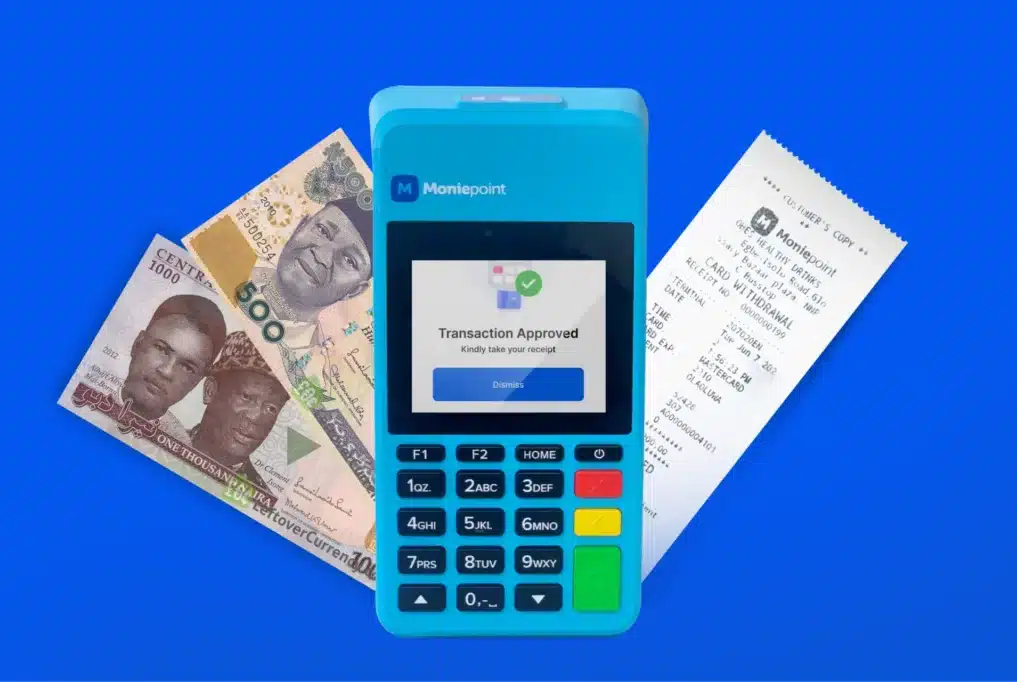
As of August 25, 2026, Moniepoint is winding down MonieWorld, its UK-to-Nigeria remittance product, less than 18 months after launching it. TechCabal reports that the fintech has told users the service will be phased out, marking a surprisingly quick retreat from a market it had presented as an important part of its international expansion.
The interesting bit is how short the experiment was. Moniepoint officially launched MonieWorld on April 16, 2025, through its UK subsidiary, Moniepoint GB. The product was designed not just as a money-transfer app but as the starting point for a broader financial-services platform for Africans in the diaspora. Users in the UK could send pounds directly to Nigerian bank accounts, generally within seconds, with Moniepoint initially charging no transfer fees.
That makes the shutdown notable because Moniepoint entered the market with some serious ambitions. In its launch announcement, the company pointed to Nigeria’s huge remittance market, saying remittances had reached more than $20 billion in 2023. It also said it wanted to build a “one-stop solution” for the African diaspora rather than simply compete as another remittance app. The company had also just raised a Series C round in October 2025, followed by Visa’s investment in January 2025, giving it more firepower for expansion.
The product itself appears to have had a fairly substantial build behind it. Moniepoint says the idea began in February 2024 and took about a year to reach launch. A team that grew to roughly 60 people by the end of Q3 worked on the product, while the company secured UK banking, payments and regulatory partners. Within weeks of launch, Moniepoint said more than £1 million had already moved through MonieWorld. Yet the competitive reality is tougher than simply having a fast product. The UK-Nigeria corridor already has established remittance players, and customers have plenty of ways to send money home. That makes customer acquisition, pricing, FX rates, trust and scale especially important.
For Moniepoint, then, this looks less like a retreat from cross-border payments altogether and more like a reminder that international expansion can be very different from dominating its home market. The company has built enormous scale in Nigeria: it says it now serves 20 million businesses and individuals each month and processes more than $250 billion in annual digital payments through its subsidiaries. The bigger question is what happens next: whether Moniepoint reallocates the resources behind MonieWorld to its core Nigerian business, pursues cross-border payments through another model, or eventually returns to diaspora banking with a different strategy.
MTN eyes banking licences

MTN is looking beyond being the company that connects Africans to the Internet and is now seriously eyeing a bigger role in their wallets. On August 25, 2026, CEO Ralph Mupita told Reuters that Africa’s biggest telecom operator is exploring banking licences in selected markets, which could allow it to take deposits and eventually lend directly from its own balance sheet. For now, MTN provides many of its mobile-money loans through partnerships with banks, but Mupita says lending is becoming one of the biggest growth opportunities in the business.
With a banking licence, MTN would have more control over the money flowing through its wallets and could potentially turn that customer activity into a much bigger lending business. But the company isn’t planning to suddenly become a bank across all its markets. Mupita said it will be selective, looking at countries where it has large customer bases and significant amounts of money sitting in mobile wallets. And because lending directly exposes MTN to credit risk, the shift would happen gradually, alongside its existing partnerships with banks.
This is really the latest chapter in MTN’s attempt to reduce its dependence on traditional telecoms revenue. Payments, e-commerce, remittances and lending are increasingly being treated as the next growth engines, with Mupita describing lending as “the big growth now”. The strategy is already taking shape: during its August 24, 2026, half-year results, MTN highlighted fintech as a major priority and said it was working on structural separations and a new fintech platform in Nigeria, with an MVP expected within weeks.
Nigeria is particularly interesting in this story because MTN has an enormous distribution network and an established mobile-money operation. The company has also been working to rebuild its fintech platform in Nigeria after acknowledging technology and latency problems that had slowed progress. That gives it something traditional banks don’t necessarily have at the same scale: millions of customers already using its ecosystem for everyday transactions. If MTN can turn that usage and wallet data into responsible credit; the opportunity is much bigger than simply selling airtime and data.
And MTN isn’t stopping at finance. Alongside the banking-licence plans, it is preparing to invest in AI-ready data centres in South Africa and Nigeria through Africa Data Hub Holding, a venture with a UAE-backed investor. The first phase is expected to deliver about 150MW of capacity, with the partner providing most of the capital and technical expertise while MTN remains a minority investor. Put together, the moves show where MTN thinks its future lies: not just as a telecom operator, but as a platform sitting across connectivity, financial services and the infrastructure powering Africa’s digital economy.
Starlink moves closer to South Africa

Starlink is taking another step towards entering South Africa after years of regulatory wrangling. On August 25, 2026, SpaceX executives appeared before South Africa’s communications regulator, ICASA, to get clarity on how the country’s licensing, ownership, and spectrum rules apply to satellite operators. That is important because Starlink has spent nearly four years stuck outside one of Africa’s biggest telecom markets, while it has expanded rapidly elsewhere on the continent. By mid-2026, the service was already operating in more than two dozen African countries.
The immediate significance is that Starlink now appears to be engaging with the regulator on the practical question of how it can enter, rather than simply arguing that South Africa’s rules are blocking it. But there is still no licence or launch date. In fact, as recently as June 2026, Communications Minister Solly Malatsi said ICASA had not received applications from Starlink for spectrum, electronic communications network or electronic communications service licences. So this is movement, but it is not yet the same thing as Starlink getting the green light.
The big sticking point remains South Africa’s Black economic empowerment framework. Under the Electronic Communications Act, individual telecom licence holders must have at least 30% ownership by historically disadvantaged South Africans. Starlink has argued that it cannot simply sell part of its South African operation because SpaceX wants to retain full ownership of its subsidiaries globally. It has instead pushed for an equity equivalent investment programme (EEIP), where a company makes approved investments that support economic empowerment rather than handing over 30% equity.
That approach produced a messy regulatory and political back-and-forth in 2025 and 2026. In December 2025, Malatsi issued a policy direction seeking to make EEIPs an alternative route, but Parliament objected, arguing that the minister could not simply override the 30% requirement in the Electronic Communications Act. Then, on May 13, 2026, ICASA said it could not recognise EEIPs as an alternative to the statutory ownership requirement without an amendment to the law. Parliament backed the regulator the following day.
There is also a political layer that makes the story bigger than a licensing dispute. Musk, who was born in South Africa, has publicly criticised the country’s policies, while his relationship with Pretoria has become entangled with wider US-South Africa tensions, including the Trump administration’s 30% tariff on South African imports in 2025. At the same time, South Africa risks falling behind in the satellite-internet race as competitors such as Amazon’s Project Kuiper move closer to the market. And the business case for Starlink is not just about urban consumers: satellite broadband could be particularly useful for rural and underserved communities where traditional broadband infrastructure is expensive to deploy.
In case you missed them
- Cross-border payments in Africa take seven days. Bani is betting on direct bank integrations to fix this
- MTN Nigeria’s enterprise customers are shrinking just as it bets its next decade on them
What I’m watching
- You’re Naturally Shy… So Here’s How to Actually Be Confident
- Are graduates prepared for the AI era? | FT Working It
Opportunities
- Flutterwave is hiring for several roles. Apply here.
- Moniepoint is hiring for over 100 roles. Apply here.
- Follow Techpoint Africa’s WhatsApp channel to stay on top of the latest trends and news in the African tech space here.
Have a wonderful Wednesday!
Victoria Fakiya for Techpoint Africa