



Shalom,
Victoria from Techpoint here,
Here’s what I’ve got for you today:
- MTN’s $2.2B IHS deal clears Nigerian regulators
- Verascient raises $1.2M to build AI infrastructure
- MTN creates new company for AI infrastructure
MTN’s $2.2B IHS deal clears Nigerian regulators
MTN’s proposed $2.2 billion acquisition of IHS Towers has cleared a major hurdle in Nigeria, with regulators including the Nigerian Communications Commission (NCC) and the Federal Competition and Consumer Protection Commission (FCCPC) approving the transaction. MTN disclosed the development in its H1 2026 results released on August 24, 2026, saying the approvals move it closer to taking control of the infrastructure supporting connectivity for its more than 300 million customers across its markets. But Nigeria has attached an important condition: MTN cannot simply take full control of IHS Nigeria and walk away.
The deal will require MTN to sell a 30% stake in IHS Nigeria to local Nigerian investors at a fair market price and on an arm’s-length commercial basis. That condition is significant because the acquisition has raised concerns about what happens when one of Nigeria’s biggest mobile operators also controls a huge chunk of the infrastructure used by other operators. IHS Towers provides tower infrastructure to several telecom companies, meaning MTN’s ownership could potentially put competitors such as Airtel Nigeria and T2mobile in a difficult position. The local sell-down appears designed to reduce those concerns while also putting some ownership of critical telecom infrastructure in Nigerian hands.
The concerns aren’t new. When MTN announced the proposed deal in February 2026, the Nigerian government said it would scrutinise the transaction to understand its potential impact on the telecom sector. Communications Minister Bosun Tijani said the review was about protecting the industry’s long-term sustainability, investor confidence and performance. The concern was fairly straightforward: if MTN became the dominant owner of tower infrastructure, could it use that position to disadvantage competitors that depend on those same towers? The regulatory approval suggests the authorities believe the transaction can proceed without damaging competition, but the 30% sell-down gives them an additional safeguard.
The acquisition itself is part of a much longer relationship between MTN and IHS. MTN has already been a major customer and shareholder in IHS, while IHS has operated thousands of telecom towers across Africa and other emerging markets. The proposed transaction would see MTN acquire the remaining 75% stake in IHS Holdings, effectively taking the company private. IHS shareholders have since approved the transaction, bringing the deal closer to completion. For MTN, owning more of the infrastructure behind its networks fits neatly into its Ambition 2030 strategy, which is increasingly focused not just on selling connectivity but on controlling and monetising the infrastructure, fintech and digital services around it.
There was another big announcement in MTN’s results: the group plans to spend $375.5 million to buy back up to 31 billion of its own shares from the market and cancel them. The idea is to return more value to shareholders by reducing the number of shares in circulation, which can increase earnings per share even without additional revenue growth. Taken together, the IHS acquisition and share buyback show MTN trying to reshape both sides of its business: own more of the infrastructure that powers its networks while making its remaining shares more valuable to investors. The bigger question in Nigeria will be whether the 30% local ownership condition is enough to preserve competition while still allowing MTN to get the infrastructure benefits it wants from the IHS deal.
Verascient raises $1.2M to build AI infrastructure

South African AI startup Verascient has raised $1.2 million (about R19.5 million) in an oversubscribed seed round, giving the young company fresh capital to tackle a problem many businesses are discovering as they rush into AI: their information is a complete mess. The round, announced on August 24, 2026, attracted international and local investors, including Founder Collective, Andrena Ventures, Cambridge Enterprise and Summit Ventures, alongside angel investors Alan Knott-Craig and Shayne Mann.
So what exactly is Verascient building? The startup wants to organise all the knowledge buried inside a company. Think documents, emails, spreadsheets, meetings, and internal systems, and turn them into usable context for AI agents. Its platform is built on a temporal knowledge graph that tracks not only what information is saying now, but also its history, permissions and source. The idea is to enable AI agents to work from a company’s real institutional knowledge, rather than starting from square one every time someone prompts them.
That is particularly useful for the industries Verascient is targeting, such as financial services, insurance, and logistics. These businesses often have years of processes and institutional knowledge scattered across different systems and sitting inside employees’ heads. Verascient combines its software with AI engineers who work directly with companies to identify inefficient processes and build AI workflows and agents around them. Its pitch is essentially that giving employees access to ChatGPT or another AI tool isn’t enough; companies need the infrastructure and context to actually make AI useful across the organisation.
The funding also arrives at an interesting point for Africa’s startup ecosystem. African startups raised about $1.36 billion in the first half of 2026, roughly in line with the $1.44 billion raised during the same period in 2025, but the money is becoming increasingly concentrated in fewer companies. Against that backdrop, a South African AI startup attracting an oversubscribed round from international investors is notable. It also reflects the growing investor interest in African companies that are building AI infrastructure rather than simply wrapping existing models in another consumer application.
Verascient plans to use the new money to expand its engineering team and technology as it takes on more enterprise deployments. The founders, Keagan Stokoe and Emile Ferreira, are specifically looking to recruit what they describe as the top 1% of AI talent in South Africa. That ambition says a lot about where the company sees itself going: not just building another African startup for the local market, but creating AI infrastructure that can be sold to companies anywhere. If it can solve the messy “where is all our company knowledge?” problem effectively, Verascient could have a much bigger market ahead of it than its South African roots suggest.
MTN creates new company for AI infrastructure
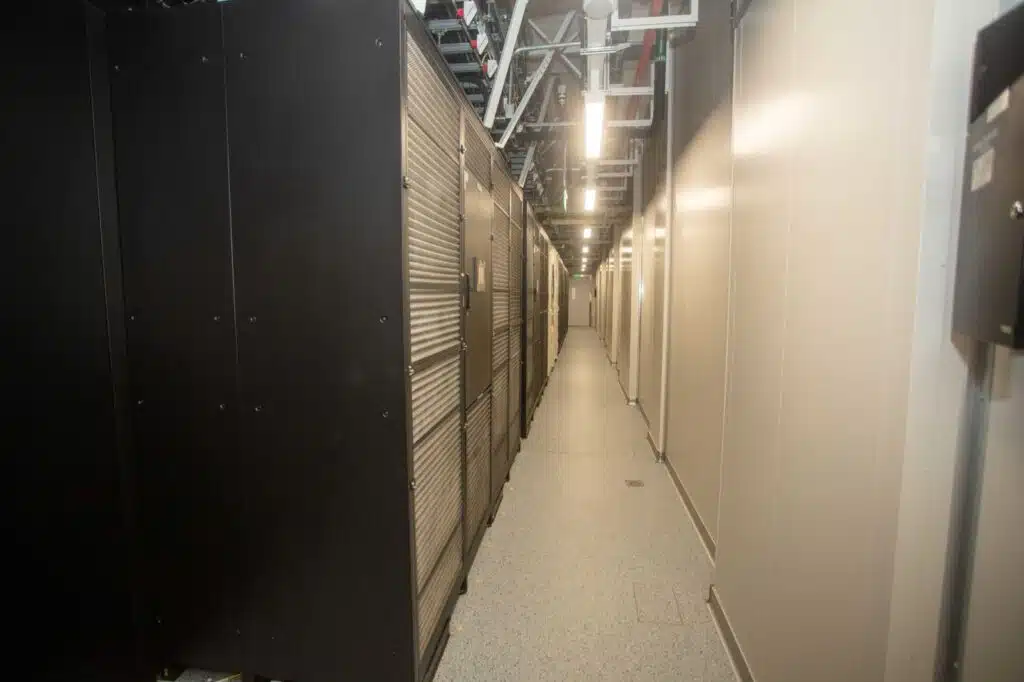
MTN has created a new company, Africa Data Hub Holding Limited, as it doubles down on its plans to build data centres and AI infrastructure across Africa. The telecom giant disclosed the new company in its interim results for the six months to June 30, 2026, saying it was formed through a strategic partnership with a UAE-backed data-centre investment platform. The idea is to combine MTN’s African footprint and infrastructure with international capital and specialist data-centre expertise, creating a platform for developing and scaling digital infrastructure across key African markets.
The timing is important because MTN is betting that Africa’s next big digital opportunity won’t just be connecting people to the Internet; it will be powering the AI and cloud services they use. The group has identified Nigeria and South Africa as priority markets for its AI data centre push. In Nigeria, MTN launched the first phase of its Sifiso Dabengwa Data Centre in Lagos in mid-2025, which was described at the time as the largest data centre in West Africa. In South Africa, MTN already operates several facilities, including major infrastructure in Centurion and other locations.
This has been building for months. When MTN released its 2025 full-year results in March 2026, it said its Digital Infrastructure business was laying the groundwork for an expanded AI-enabled data-centre rollout, with negotiations underway with potential strategic partners. The company has also been looking at how its existing network infrastructure could become part of the AI economy. In June, MTN said it was targeting between 420,000 km and 560,000 km of fibre by 2030, while expecting data consumption across its markets to double before the end of the decade.
And MTN isn’t stopping at conventional data centres. During the first half of 2026, its Digital Infrastructure arm also invested in ORAN Development Corporation, which is developing what it calls a “Distributed Compute Grid” that could turn telecom sites into high-performance computing hubs. MTN says this could support everything from agentic AI and generative AI inference to physical AI applications. The investment was part of a funding round involving global technology players, including NVIDIA, Cisco Investments, Nokia, AT&T and Telecom Italia, showing just how seriously MTN is taking the shift from telecoms infrastructure to computing infrastructure.
The bigger story is that companies like MTN are starting to see compute as the next infrastructure battle. As governments, banks, startups and enterprises adopt AI and cloud services, they will need data centres, fibre, reliable power and local computing capacity to run them. MTN already has something many infrastructure players don’t: a presence across multiple African markets and hundreds of millions of customers. The new Africa Data Hub could therefore give it a vehicle to turn that footprint into a much bigger AI infrastructure business. The question now is whether MTN can move quickly enough and secure enough investment, power and customers to compete in a market where global cloud and data-centre giants are also pouring billions into Africa.
In case you missed them
- MTN Nigeria’s enterprise customers are shrinking just as it bets its next decade on them
- MTN at 25: How much has Nigeria changed with it?
- CBN’s second sandbox cohort quietly opens a testing ground for permission-based data sharing
What I’m watching
- Why Depression Isn’t What You Think | Lisa Monteggia | TED
- Are graduates prepared for the AI era? | FT Working It
Opportunities
- Flutterwave is hiring for several roles. Apply here.
- Moniepoint is hiring for over 100 roles. Apply here.
- Follow Techpoint Africa’s WhatsApp channel to stay on top of the latest trends and news in the African tech space here.
Have a lovely Tuesday!
Victoria Fakiya for Techpoint Africa