




MTN Nigeria Communications Plc earned ₦293.9 billion ($213 million) from enterprise customers in the first half of 2026, down from ₦337.2 billion ($244.4 million) a year earlier. Its wholesale business, which sells telecom products in bulk to partners who resell them, more than halved, falling from ₦93.5 billion ($67.8 million) to ₦46.4 billion ($33.6 million).
Both declines happened in the same six months that the company posted record revenue of ₦2.99 trillion ($2.17 billion) and a ₦707.5 billion ($512.8 million) profit. Every naira of that growth came from ordinary subscribers. Consumer revenue rose 36.2% to ₦2.65 trillion ($1.92 billion).
The result is a business considerably more concentrated than it was a year ago. Individual consumers now account for 88.6% of MTN Nigeria’s revenue, up from 81.9%. Enterprise has fallen to 9.8% of the total from 14.2%, and wholesale to 1.5% from 3.9%.
The segment being invested in is the one contracting
This matters because business customers are precisely where MTN Nigeria has been directing its capital.
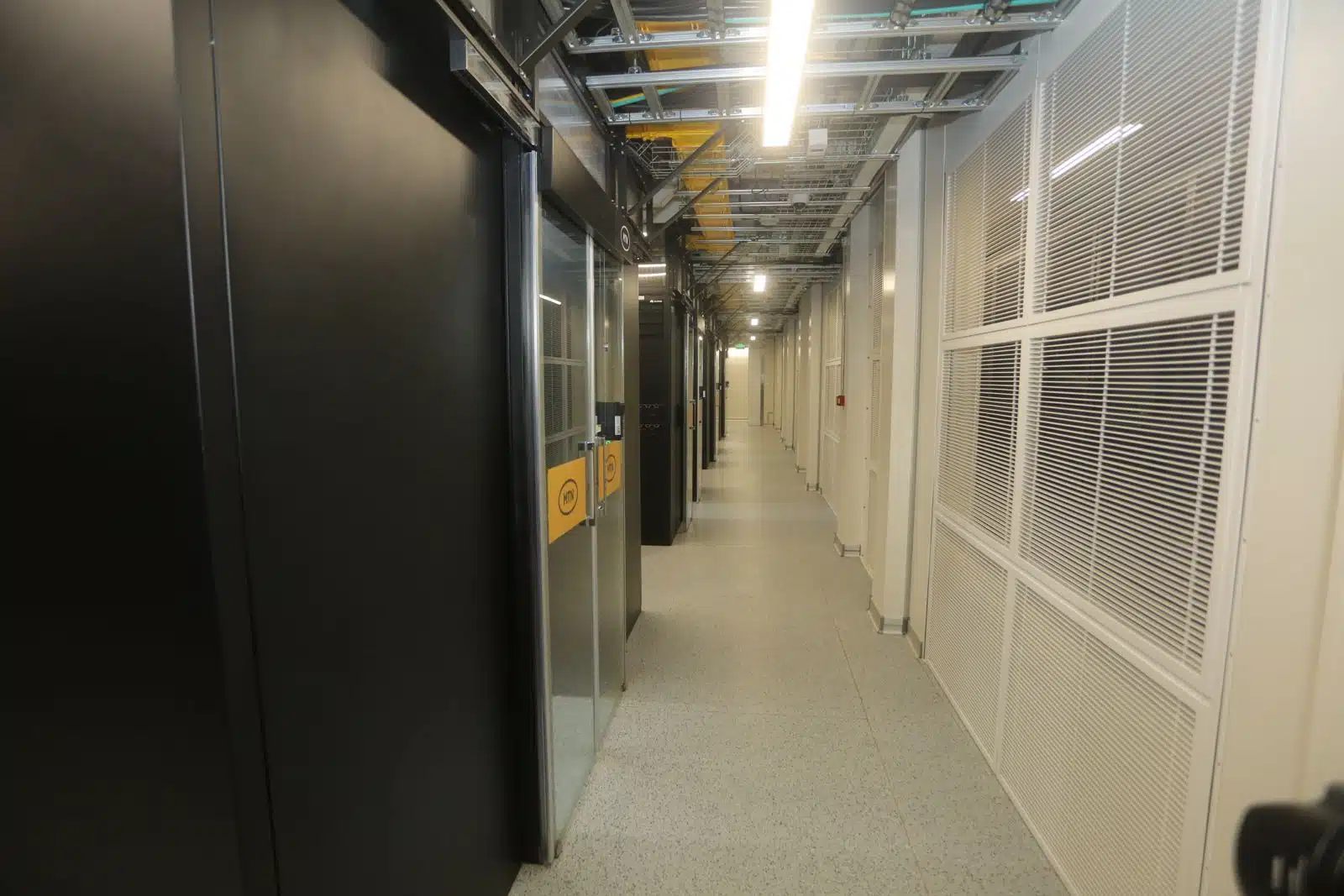
In July 2025 it opened the Sifiso Dabengwa Data Centre, a nine-megawatt facility it described as West Africa’s largest Tier III site, valued at $235 million across both phases. MTN Group followed with a reported $240 million commitment to an artificial intelligence (AI) focused data centre in Nigeria under a new unit called Genova.
Those facilities sell to enterprises, not to people buying data bundles. In the financial statements, that revenue sits mostly in a line labelled other revenues, covering cloud and infrastructure services alongside information and communications technology (ICT) sales. It came to ₦23.9 billion ($17.3 million) for the half year, up 8.6%, and represents eight-tenths of one per cent of group revenue.
The company’s own disclosures put its data processing capacity at 702 racks, roughly a quarter of it outsourced, and its data storage at 48.9 petabytes.
Enterprise costs rose while enterprise revenue fell
The segment numbers are worse underneath the top line. Direct costs attributable to enterprise customers rose 21.8% to ₦21.7 billion ($15.7 million) even as revenue from them fell, pushing the segment’s gross margin down to 92.6% from 94.7%.
Wholesale margins moved the other way, improving to 65.4% from 54.4%, but on revenue that had halved. In cash terms, wholesale gross margin fell from ₦50.9 billion ($36.9 million) to ₦30.4 billion ($22 million).
Interconnect and roaming revenue, another largely business-to-business line, also slipped, from ₦114.4 billion ($82.9 million) to ₦112.2 billion ($81.3 million).
The filing does not explain either decline. There is no commentary in the segment note attributing the enterprise fall to churn, pricing, contract timing, or competition, and none attached to the wholesale collapse.
A heavier bet on a frustrated customer base
Concentration would be less concerning if the consumer relationship were comfortable. It is not. MTN Nigeria’s own Net Promoter Score, recorded in its interim sustainability disclosures, slipped from first position in the Nigerian market to second during the period. The company agreed to compensate subscribers for service shortfalls between November 2025 and January 2026 under a Nigerian Communications Commission (NCC) directive, and spent much of the first half publicly defending its data billing to angry customers.
Nigeria’s broader digital economy conversation has been moving towards local hosting, data centres, and enterprise cloud as the next growth layer, a theme that dominated industry discussion earlier this year. MTN Nigeria has built for that layer. For now, the layer is not buying.
Whether the enterprise decline is a timing artefact or the start of something structural will not be clear until the third quarter numbers. But a company deriving nearly nine in every ten naira from retail subscribers, in a market where those subscribers are vocally unhappy and the regulator is actively ordering refunds, is carrying a different risk profile than its headline growth suggests.