



Salve,
Victoria from Techpoint here,
Here’s what I’ve got for you today:
- Africa’s telecoms hit by rising diesel costs
- How TaxInfo is simplifying Nigeria’s tax debate
- IQSTEL bets big on Ghana’s hidden telco Ultranet
Africa’s telecoms hit by rising diesel costs
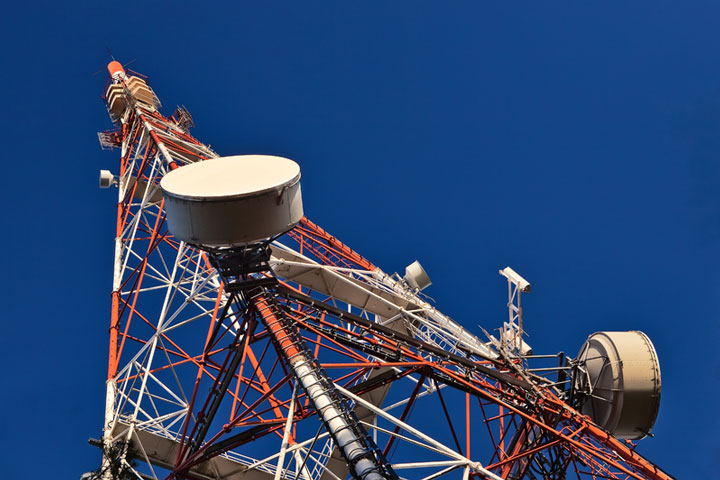
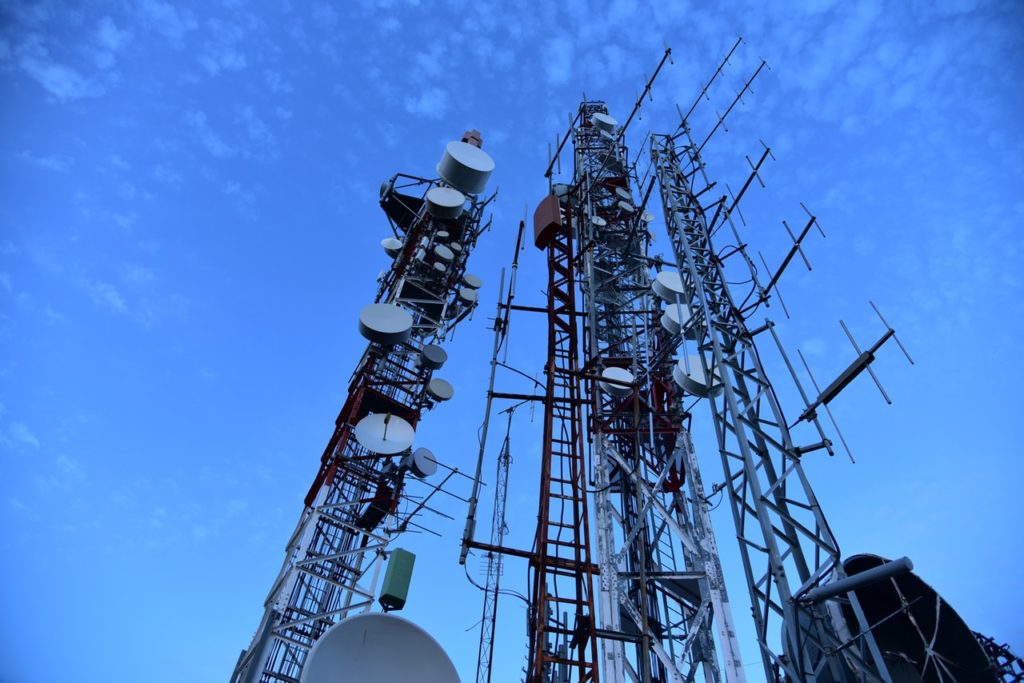
Africa’s telecom operators are facing a new problem from an unlikely source: the war in the Middle East. According to industry body GSMA, rising fuel prices and supply pressures linked to the conflict are making it more difficult and expensive for mobile operators across Africa to keep their networks running. Why? Most of the continent’s roughly 500,000 telecom towers still rely heavily on diesel generators, especially in rural areas where electricity grids are unreliable or nonexistent. As global fuel prices climb, so do the costs of keeping millions of people connected.
For consumers, higher diesel prices could eventually mean more expensive mobile services, slower network rollouts, and occasional connectivity issues in rural areas. For telcos, it’s a direct hit to the bottom line. Many towers still run on diesel generators, so every fuel price increase makes networks more expensive to operate, putting pressure on profits and accelerating the push toward solar-powered infrastructure.
The financial impact is already showing up across the industry. MTN Nigeria has warned that persistently high diesel prices could reduce its EBITDA margin by about 1.8–2.0 percentage points, while Airtel Africa has identified fuel inflation as a major risk to profitability. Safaricom and other operators continue to burn large volumes of diesel to keep networks running in areas with unreliable electricity, and Vodacom, which used more than 73 million litres of diesel in FY2025, has introduced fuel hedging and other measures to manage rising energy costs. These highlight how dependent African telecom operators remain on diesel-powered infrastructure and how vulnerable they are to fuel price swings.
The industry doesn’t have to imagine what a severe diesel shock looks like; it has already happened. Nigeria’s fuel subsidy removal in 2023 sent diesel prices soaring by as much as 200%, dramatically increasing the cost of operating telecom infrastructure. Operators now spend hundreds of millions of dollars annually just to keep towers powered. The difference this time is that the pressure is being felt across multiple African countries at once. Instead of a local policy issue, operators are dealing with a global fuel shock that is hitting fuel-importing economies from East Africa to West Africa simultaneously.
The current squeeze traces back to the escalation of the US-Israel conflict with Iran in early 2026, which tightened global oil markets and pushed fuel prices higher worldwide. African countries are particularly exposed because many rely heavily on imported fuel and have limited strategic reserves. The telecom sector’s dependence on diesel means the effects show up quickly. In response, operators are accelerating efforts to reduce their reliance on fuel-powered generators. Solar-powered telecom sites, once viewed mainly as sustainability projects, are increasingly being seen as essential business infrastructure.
In many ways, the crisis is speeding up a transition that was already underway. MTN has reported significant fuel savings at solar-powered sites in South Sudan, while Airtel Africa has cut diesel consumption sharply at some locations through renewable energy partnerships. Safaricom has also raised more than $150 million through green bonds to support its energy transition. The challenge now is scale. With hundreds of thousands of towers across Africa still dependent on diesel, shifting to solar and hybrid power systems will require billions of dollars in investment. The Middle East conflict didn’t create Africa’s telecom energy problem, but it has made solving it far more urgent.

Victoria Fakiya – Senior Writer
Techpoint Digest
Stop struggling to find your tech career path
Discover in-demand tech skills and build a standout portfolio in this FREE 5-day email course
How TaxInfo is simplifying Nigeria’s tax debate

When Nigeria’s tax reform conversations started taking over social media, things got messy fast. Opinions flew everywhere, rumours spread even faster, and even the “expert” explanations weren’t always easy to follow. For software engineer Abidemi Adetula, that confusion wasn’t just noise but a signal. It sparked the idea for TaxInfo, a platform built to break down tax policies into plain, everyday language and even translate them into multiple Nigerian languages so more people could actually understand what was going on.
But Adetula’s journey to that point didn’t start with taxes. It started with curiosity. From being fascinated by early tech like infrared file sharing and Bluetooth to spending time in cybercafés learning how the internet worked, he slowly grew into someone who wanted to build things himself. That curiosity eventually led him to study Computer Engineering, experiment with web development during his school years, and later launch his first blog in 2015, inspired by platforms like Nairaland and Linda Ikeji’s blog.
Things really shifted for him in 2019 when he landed his first international client. Despite his own doubts about his skills, the client saw enough potential to trust him with real work, and he delivered. That experience changed his confidence completely and opened the door to more projects in e-commerce, web development, and digital services. Over time, he wasn’t just building websites anymore; he was solving real problems for real clients.
That problem-solving mindset eventually led to TaxInfo, which launched in November 2025. The platform doesn’t just explain tax policies; it simplifies them, translates them into English, Pidgin, Hausa, Yoruba, and Igbo, and adds tools like calculators, FAQs, and even an AI assistant to help users make sense of complex reforms. Now used by thousands of people, it’s quietly becoming a go-to source for tax clarity in Nigeria. Check out more in Delight’s latest edition for After Hours.
American company bets big on Ghana’s hidden telco Ultranet
IQSTEL, a United States multinational tech company, is making its biggest move yet in Africa. On June 4, the Nasdaq-listed telecom and digital services company announced a binding agreement to acquire a 51% controlling stake in Ghana-based Ultranet Telecom Group, a player in Africa’s telecom infrastructure market. The deal is expected to add about $130 million in annual revenue and $4.5 million in net profit, pushing IQSTEL’s annualised revenue run rate beyond $500 million. Regulatory approvals are still needed in Ghana and Nigeria, but both sides are targeting a Q3 2026 closing.
What makes Ultranet especially valuable isn’t its brand recognition; it’s the infrastructure it controls behind the scenes. The company has secured six exclusive international SMS gateway agreements with mobile operators across Africa, giving it sole rights to route international SMS traffic in those markets. Those contracts are difficult to win, hard to replace, and generate recurring revenue from the massive flow of banking alerts, one-time passwords, government notifications, and other business messages sent every day.
Founded in 2015 by Raymond Oppong-Dapaah, a former banker at CalBank in Ghana, Ultranet has quietly grown from a small startup generating roughly $4 million in revenue into a business producing more than $100 million annually. The company specialises in telecom security and traffic management solutions, including SMS firewalls, network authentication systems, fraud prevention tools, and A2P messaging platforms. Its expansion across Ghana, Nigeria, Ivory Coast, Mali, Burkina Faso, Senegal, and several markets outside Africa has been largely organic, without the high-profile fundraising rounds common in the tech sector.
The timing of the acquisition highlights the growing importance of Africa’s application-to-person (A2P) SMS market. As mobile money, fintech, eCommerce, and digital government services continue expanding across the continent, the volume of transactional SMS traffic is rising rapidly. IQSTEL already operates in 21 countries with more than 600 carrier interconnections worldwide, and the company believes Ultranet’s platform can be scaled beyond Africa into markets in the Middle East and Asia.
Still, the deal raises a fascinating question for investors. IQSTEL’s market capitalisation is roughly $7.75 million, yet it is acquiring control of a company expected to generate $130 million in annual revenue. While IQSTEL has reported strong sales growth and improving profitability metrics, its business still operates on very thin margins. The real test over the next two years will be whether Ultranet’s exclusive contracts and higher-quality recurring revenue can translate into stronger profits, not just bigger revenue numbers.
In case you missed it
- After years of data complaints, MTN is finally answering questions in public
What I’m watching
- How to Google Your Symptoms Without Freaking Out | John Whyte | TED
- Older People Share Regrets About Their Jobs
Opportunities
- inDrive is hiring to fill several vacancies in different countries. Apply here.
- Are you a female-led tech or tech-enabled business preparing for sustainable growth and opportunity to access capital? Apply for the Female Founders Growth Programme and grab up to $2 million. Apply here.
- Bamboo is hiring in Ghana and Nigeria. Apply here.
- Cowrywise is recruiting some engineers. Apply here.
- PiggyVest is looking for a Product Technical Manager. Apply here.
- Paystack is hiring for a few roles. Apply here.
- Qore is hiring for several roles. Apply here.
- Moniepoint is recruiting for several roles. Apply here.
- Flutterwave is hiring for several roles in Nigeria, the UK, and the US. Apply here.
- As one of Techpoint Africa’s most engaged readers, you have a direct hand in shaping what we publish next. Take our quick, 3-minute survey to tell us the stories and features you value most. Your responses are anonymous, and your feedback will help guide our editorial focus in the months ahead. Fill the survey here.
- Moniepoint is hiring for over 100 roles. Apply here.
- To pitch your startup or product to a live audience, check out this link.
- Follow Techpoint Africa’s WhatsApp channel to stay on top of the latest trends and news in the African tech space here.
Have a productive week!
Victoria Fakiya for Techpoint Africa