

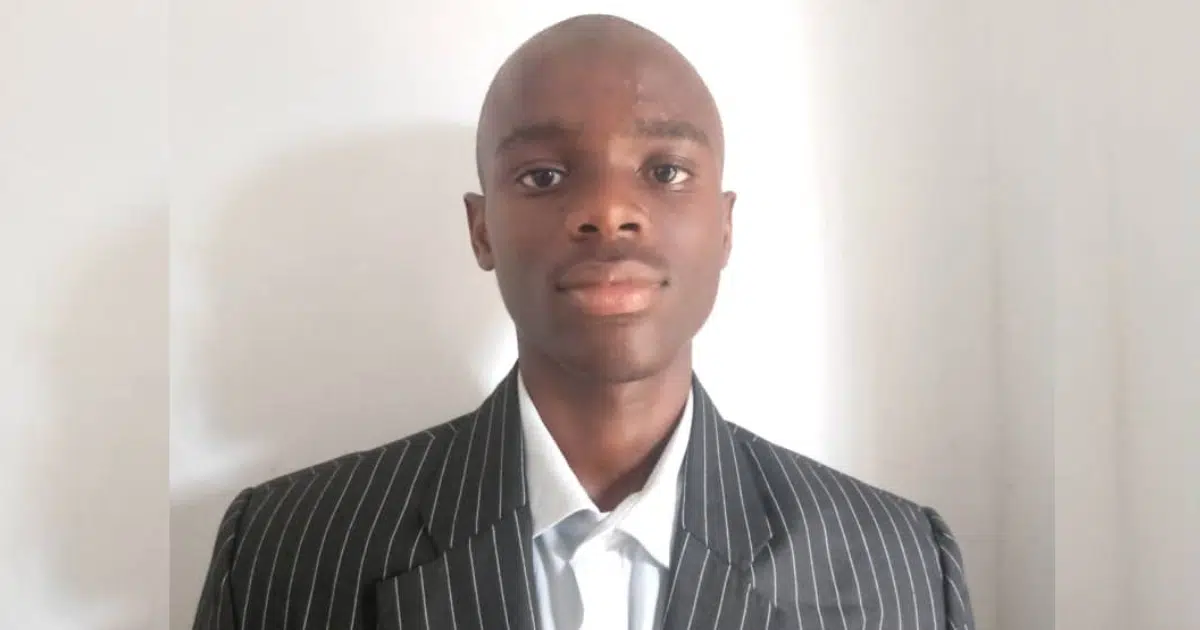

At 16, most teenagers are still trying to figure out what they want to do with their lives. For Ibrahim Temitope Kolade, the question has been how quickly he could learn enough to start.
For someone who has not yet entered the university system, Kolade has gained experience on freelance marketplaces and in the field of artificial intelligence. Frustrated by a personal problem, Kolade decided to build Tasknory, an Africa-focused work platform for AI specialists.
In this edition of After Hours, he shares his journey from learning desktop publishing in secondary school to teaching himself coding and experimenting with AI systems.
Early interactions with technology
My earliest interaction with technology was actually at home with my dad. He works as an accountant, and sometimes he asks me to help him type documents. At that time, I didn’t really understand technology deeply; I just liked typing and being around computers.
When I got into secondary school, I became the kind of student who preferred computer practicals to theory. I always wanted to be in the computer lab. My computer teacher noticed my interest and eventually gave me a scholarship to study desktop publishing at a private tech training centre in Lagos.
That was really my first proper exposure to technology. Before then, I didn’t have any technical skills. I just knew the basics we were taught in school.
At the training centre, we started with Microsoft Word to get used to typing and to understand the keyboard properly. We later moved to Excel, PowerPoint, Publisher, MS Access, and eventually CorelDRAW — where I started learning graphic design.
I graduated as one of the best students, and I was selected to tutor other students in desktop publishing as part of a vocational programme. Looking back now, I think that was one of my first experiences teaching people and understanding technology beyond just using it.
Around that period, I also started meeting older students who introduced me to a tech hub near my school. The hub focused mainly on freelancing and digital skills. But when I researched how some of the training worked, I became uncomfortable with parts of it.

Victoria Fakiya – Senior Writer
Techpoint Digest
Stop struggling to find your tech career path
Discover in-demand tech skills and build a standout portfolio in this FREE 5-day email course
Some of the things being taught included creating multiple accounts on freelance platforms, using identities that were not their own, and using browser extensions that violated platform rules. I decided I didn’t want to go down that route. Instead, I wanted to understand freelancing properly for myself.
Learning to code and discovering a problem worth solving
I registered on platforms like Fiverr, Upwork, and Freelancer.com with my parents’ support. At the time, graphic design was the only skill I had, so that was what I offered. But I didn’t get any job.
The more I used those platforms, the more I realised the problem wasn’t only mine. New users struggled to get visibility because the systems rewarded people who already had ratings and completed jobs. But without jobs, you couldn’t get ratings in the first place.
At some point, I was even banned from one of the platforms while speaking with a potential client, even though I hadn’t broken any rules. That experience made me start asking bigger questions about how freelance systems were structured and whether there was a better way to build around them. That was where the idea for Tasknory came from.
At first, it was just an idea in my head because I still didn’t know how to build websites. Graphic design felt creative, but coding felt different. Coding made me feel like I was solving problems with logic.
So I started learning programming through freeCodeCamp. I initially focused on responsive web development, but after some time, I realised I needed more practical experience. Later, I enrolled at a Proxy Coding School in Abeokuta, where I deepened my learning in frontend and backend development.
I finished frontend quickly and immediately started building the first version of Tasknory before I had even completed backend development. Initially, I used Supabase with AI-assisted tools to bootstrap the backend. Later, after improving my backend skills, I rebuilt parts of the platform using Django.
Why I built Tasknory
Tasknory was built on the idea that freelance platforms should not make visibility dependent solely on ratings. When I used Fiverr, most of the messages I received were scam messages. Eventually, you start blocking people, and you can no longer tell which opportunities are legitimate anymore. So I started thinking differently about how freelance systems could work.
When I first launched the MVP in 2025, Tasknory was a general-purpose platform, but after feedback from colleagues, I realised that competing directly with global platforms like Fiverr and Upwork right away would be difficult. So I chose to focus specifically on African AI specialists. I wanted to create something more niche and more intentional.
On Tasknory, clients cannot immediately begin chatting freely with freelancers. Before deeper communication can happen, the client must fund the project. I designed it that way because unrestricted communication can easily create opportunities for scams.
Another major difference is how freelancers are vetted. Instead of relying heavily on ratings, I want freelancers to undergo manual verification, including live skill assessments. If ratings determine visibility, only highly rated people will continue to be seen, while new freelancers remain invisible. That creates bias in the system. So on Tasknory, matching is not supposed to depend on ratings. I want it to depend more on actual skill and proper verification.
Right now, the platform is still in its early stages. We currently have a small number of users and have completed a few projects, which I personally sourced from schools I attended, to build initial case studies. Natural traction is still limited for now, but I understand that building something meaningful takes time.
I think being young has made my journey both exciting and challenging. On one side, I had to learn many things independently very early. But at the same time, it’s made me more willing to experiment and start things without waiting for everything to be perfect.
I started freelancing before fully understanding the market. I started coding before I fully understood how websites worked. I started building Tasknory before finishing backend development training. Most of my learning has happened while building.
How technology fits into my everyday life
Technology is a very big part of my everyday life. Most of my days are spent learning, building, researching ideas, and trying to solve practical problems. I spend a lot of time trying to understand what I can improve and what I can build better.
I also use AI frequently, but mostly to speed up what I’m already doing rather than replace thinking completely.
One of the more unusual projects I experimented with recently involved building an artificial intelligence system that could learn like a human child without relying on expensive GPU clusters. The idea was to create an AI that could learn gradually from scratch, the way children learn language and understanding. I experimented with different Python structures and even used AI tools to speed up parts of the development process. But it failed.
I tried several different structures, but the AI didn’t actually learn anything meaningful. Still, I think the experiment taught me a lot about how intelligence systems work and how difficult it is to recreate human learning.
The tech product I cannot live without would be VS Code. Probably Google Chrome too. I can easily stay away from social media, but I can’t really stay away from building.
One of the biggest challenges I’ve faced with technology has been infrastructure. When I moved from Lagos to Abeokuta, I was still using an old laptop with a very bad battery. The laptop would constantly hang while I was building projects, and the power supply was also inconsistent. Sometimes what should take one week stretches into months because of those limitations.
A lot of learning technology in Nigeria means learning how to continue despite unstable electricity, weak devices, or difficult conditions.
I think technology in Africa over the next decade will be much better than what we see right now. We are already seeing many young people building inspiring things, and I believe that with proper support for young entrepreneurs, Africa can go very far technologically.
Access to technology and remote opportunities will continue to increase, enabling more African talent to participate globally.
I think many people are now ready to build solutions from Africa for Africa, especially because they understand the problems personally. For me, that is one of the most important things about technology: not just building products, but building systems that solve real problems people actually experience.