




If you’re a TikTok or Snapchat user, there’s a strong chance that sometime in the last two years you’ve come across an ad for a dramatic, slightly ridiculous “movie” that ends just as it gets interesting and asks you to download an app to keep watching.
There’s also a decent chance that, despite rolling your eyes at the predictability, you downloaded the app anyway and watched a few episodes. Those “corny” clips are part of one of the fastest-growing segments in global entertainment: microdramas.
While they might look like throwaway content, the numbers suggest something far more serious is happening. In China, microdrama revenues exploded from $500 million in 2021 to $7 billion in 2024, with projections indicating the market could reach over $16 billion by 2030. Importantly, nearly 60% of the audience pays.
Globally, the market is catching up fast. Outside China, microdramas generated $1.4 billion in 2024 and are forecast to hit $9.5 billion by 2030, growing at a 28.4% CAGR. The United States alone crossed $800 million in revenue in 2024, with platforms like DramaBox and ReelShort generating $323 million and $400 million, respectively.
Now compare that to Nigeria, where Nollywood’s cinema revenue hit a record ₦15 billion (roughly $10 million) in 2025, and the reality becomes that Nollywood cannot afford to ignore this trend.
Microdramas just make sense for Nollywood
Microdramas look like everything traditional filmmakers dislike. They’re fast, cheap, and formulaic. Production timelines can range from two weeks to one month. Budgets are typically between $100,000 and $300,000. Storylines lean heavily on tropes: revenge arcs, billionaire romances, sudden betrayals. Compared to TV or cinema, the writing can feel thin.
It’s easy to dismiss them, but those qualities are exactly why they might be a perfect fit for Nollywood.
For decades, Nollywood has operated under similar constraints. Films are often shot in weeks. Budgets are tightly controlled. Production cycles are rapid. In fact, some of the industry’s most prolific filmmakers release 30 to 40 titles annually on YouTube, a pace that aligns almost perfectly with the volume demands of micro-drama platforms.
There’s more.
Microdramas typically do not rely on A-list actors, thereby significantly reducing costs. That plays directly into Nollywood’s ecosystem, where rising actors and mid-tier talent account for a significant portion of the industry’s output. And then there’s storytelling. Microdramas thrive on high-stakes, emotionally charged narratives — love triangles, family conflicts, sudden wealth, betrayal — these are not new to Nigerian audiences.
What is new is the format. Microdramas demand intensity every 60 to 90 seconds. Every scene must hook, escalate, or resolve tension quickly. This is where Nollywood will need to evolve its storytelling. The traditional slow build won’t work here.
But that’s a creative challenge, not a structural one, and arguably, it’s a solvable problem. More importantly, the timing may be right. With global platforms like Netflix and Amazon Prime scaling back investments in local African productions, many filmmakers have already pivoted to YouTube — a platform with qualities similar to micro drama platforms.
The monetisation puzzle and why it might actually work
One of Nollywood’s biggest and most persistent challenges has always been monetisation. Cinema revenues are limited. Streaming platforms struggle with subscriptions. Piracy remains an issue. Even YouTube, while helpful, requires massive scale to generate meaningful income.
Microdramas introduce a different model. Instead of paying a flat subscription fee for access to a catalogue, users make micro-payments to unlock episodes, typically between $0.50 and $2 per episode. Alternatively, they can watch ads to earn credits or coins that unlock new episodes.
Although the data shows that microdramas are more expensive than content on traditional streaming platforms, it also suggests that users would be willing to pay more if the content is addictive enough.
In China, nearly 60% of users pay. By 2030, advertising is expected to contribute 56% of total revenue, with subscriptions at 39% and commerce at 5%. That diversified revenue mix is what should give players some hope.
Furthermore, African audiences are already familiar with ad-supported content, largely due to YouTube. The idea of watching ads to unlock episodes is not foreign and would not require a change of behaviour.
That being said, monetisation will still be a challenge. If traditional streaming platforms have struggled to consistently acquire and retain paying users, there’s no reason to assume micro-drama platforms will magically solve that problem. Customer acquisition costs are high. Some reports suggest that platforms spend up to nine times the production budget on marketing alone.
That’s a serious barrier, but there’s a potential upside. Because production costs are relatively low, the economics of content acquisition are more flexible. Platforms could experiment with revenue-sharing models, creator-led distribution, or hybrid systems that resemble YouTube more than Netflix.
In other words, while monetisation is not guaranteed, the model at least introduces new levers — something Nollywood desperately needs.
Should Africa build or rent micro-drama platforms?
This is where the conversation becomes more complicated. There’s a strong and understandable desire within African media to own both content and distribution. The logic is sound: control the platform, control the economics, control the narrative.
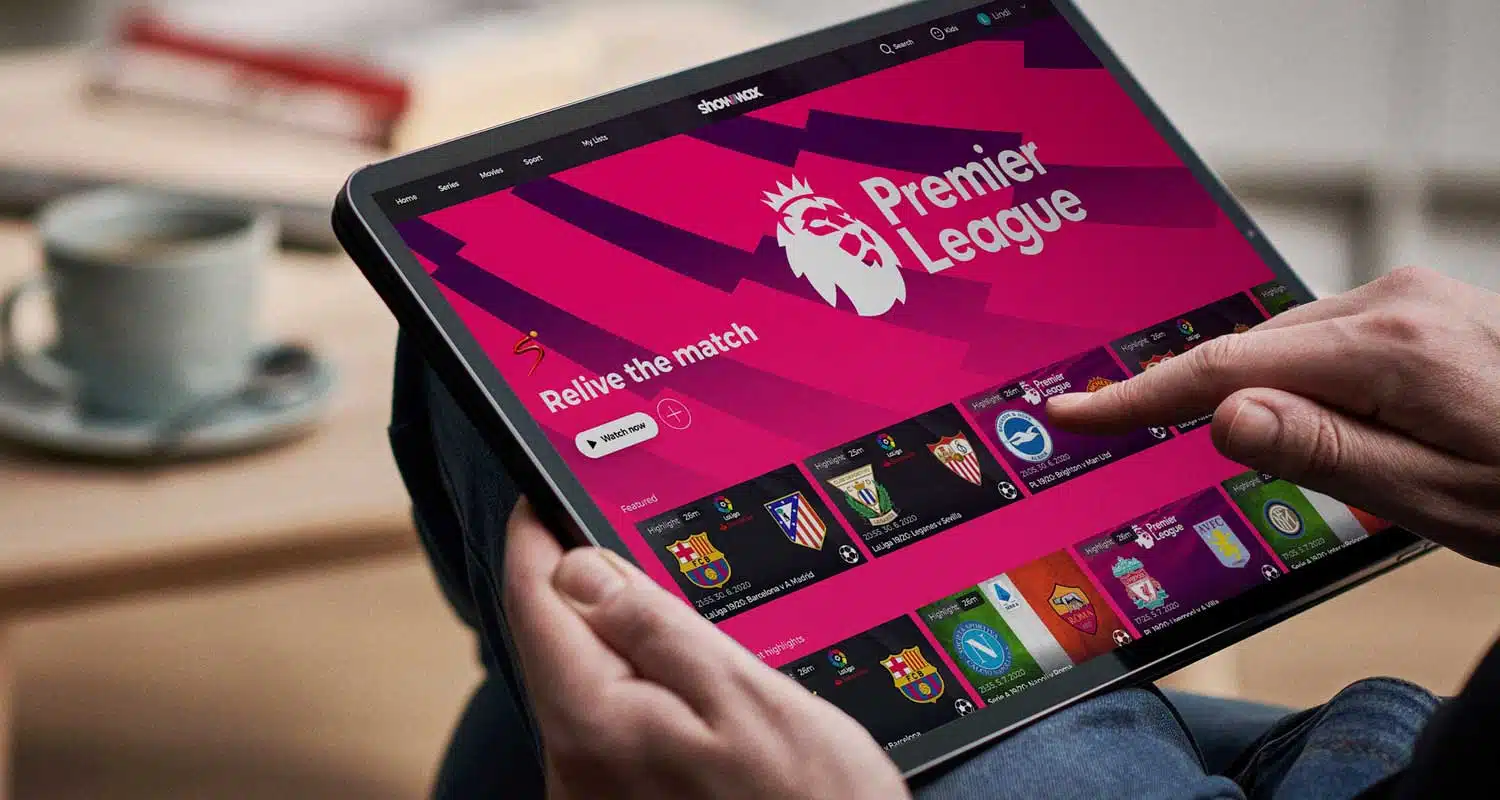
But history offers a cautionary tale. IrokoTV, once a pioneer in African streaming, eventually shifted focus away from the continent after struggling with monetisation. Showmax, backed by MultiChoice, faced its own challenges, and Showmax will now be shuttered following its acquisition by Canal+.
So the core issue hasn’t changed. Building and sustaining streaming infrastructure in Africa is expensive, and monetisation remains difficult; microdramas do not eliminate those challenges. In fact, they may amplify them.
Most of the leading micro-drama platforms today are owned — wholly or partially — by Chinese companies. They have a head start in technology, content pipelines, and user acquisition strategies. Hollywood is beginning to experiment in the space, but it is still playing catch-up.
For Nollywood, jumping straight into building platforms could be a costly mistake. There are two arguments against an infrastructure-first approach.
The first is cost. Building a platform requires significant investment not just in technology but in marketing, content acquisition, and ongoing operations.
The second is scale. Microdramas are a volume game. Success depends on a steady pipeline of content and the ability to distribute it across multiple regions and languages, especially given the African streaming market’s slower growth. Existing platforms are already leveraging AI-driven dubbing to localise content globally without reshooting. Any African platform would need to match that level of scale to compete effectively.
That doesn’t mean infrastructure should be ignored entirely. But it does suggest a different starting point: content first, distribution partnerships later.
Nollywood filmmakers could begin by supplying content to existing platforms, learning the mechanics of the format, and building intellectual property within the ecosystem. Over time, that experience could inform more sustainable platform strategies.
The case against microdramas
For all the excitement, it’s worth taking the scepticism seriously. Critics argue that microdramas could dilute storytelling standards, a similar concern that has been raised about the rise of YouTube as a distribution channel. The emphasis on speed and volume naturally comes at the expense of depth and originality.
There’s also the question of cultural fit. Will African audiences, accustomed to longer-form storytelling, fully embrace ultra-short episodic content? Early signs from social media suggest they will.
And then there’s sustainability. If the model relies heavily on aggressive marketing and high user acquisition costs, profitability could remain elusive, especially in markets with lower disposable income.
So, what should Nollywood do?
Microdramas represent a rare alignment of elements that Nollywood is uniquely positioned to exploit. The industry already has the production agility, storytelling instincts, and talent pipeline required to compete. What it needs now is adaptation. Stronger hooks. Data-driven storytelling. Stronger distribution. And perhaps most importantly, a willingness to experiment.
While microdramas may not replace traditional film and television, they are carving out a niche in the global content ecosystem, and Nollywood needs to own a seat at the table.