



Nigeria’s urban population has grown steadily over the past decade. Its waste management systems, however, have not kept pace.
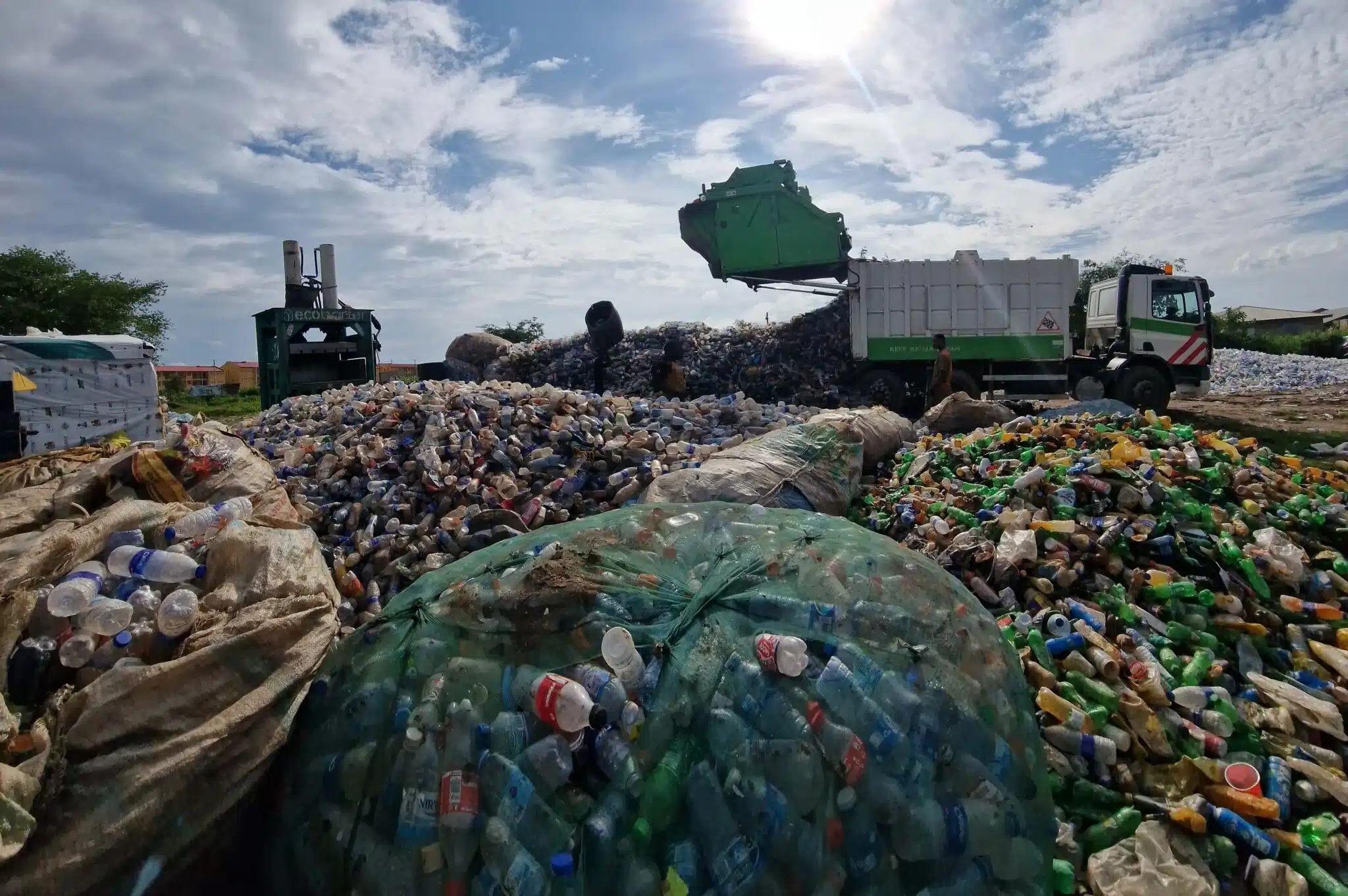
In major cities like Lagos, Abuja, and Port Harcourt, the consequences are visible in plain sight: heaps of refuse lining roads, drainage systems clogged with plastic, and the persistent smell of waste in densely populated neighbourhoods.
According to some estimates, Nigeria generates over 30 million tonnes of waste annually, and managing that waste falls largely to local government councils, supported by a handful of private operators. In practice, however, collection is inconsistent, and disposal is often inadequate. Waste goes uncollected for days or weeks, and when it is eventually picked up, it is frequently dumped rather than properly processed.
Amidst this chaos, Ecobarter, a tech-enabled social enterprise, is bidding to make Nigeria’s cities cleaner while reducing environmental pollution. Founder Rita Idehai started the company in 2018 after struggling to find an organisation that would recycle items she had gathered at home.
EcoBarter collects and monetises waste — plastic, aluminium, and other metals — by transforming it into new products. Rather than charging users for waste collection, a standard practice among government-backed agencies, the company pays them. Households and businesses can exchange recyclable waste for cash. In 2025, the company expanded its scope to include organic waste, which it now channels into a biogas plant in Abuja.
The idea is as much behavioural as it is operational. By attaching monetary value to waste, Ecobarter incentivises users to separate and store recyclables rather than disposing of them indiscriminately. According to Idehai, this shift is critical, as people are less likely to dispose of waste indiscriminately when they see it as valuable.
From informal beginnings to digital infrastructure
Today, the company serves roughly 13,000 users across Lagos, Abuja, Port Harcourt, and Ibadan. Waste pickups are scheduled twice monthly for recyclables like plastic and paper, while organic waste is collected weekly. For users, the process introduces a level of predictability that is often absent in traditional waste collection systems.
But Ecobarter did not start with this level of structure. Between 2018 and 2021, operations were largely manual. Idehai relied on grassroots outreach, speaking directly to neighbours and local residents to onboard early users. Scheduling pickups involved phone calls, informal agreements, and, at times, Google forms, while payments were similarly improvised.
The system worked, but it was not perfect. As the user base grew, the limitations became clear, particularly for customers who expected a more seamless, digital-first experience.
In 2021, Ecobarter built a mobile application to streamline its operations. The app now serves as the central interface for users. Through it, customers can schedule pickups, track collections, and receive payments. Earnings can be withdrawn or used directly within the app to pay for utilities such as airtime and electricity.
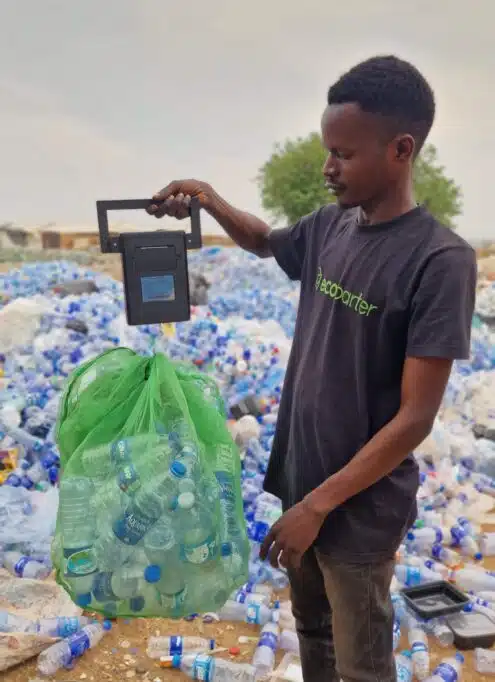
On collection days, waste is weighed on-site by collectors and logged into the app. Users receive immediate confirmation, along with details of their earnings. For those who prefer not to wait for scheduled pickups, the app also provides drop-off locations where users can scan a QR code to complete transactions.
Behind all this is a hybrid collection network, with Ecobarter working with three categories of collectors.
In areas with high user density, the company employs its own collectors to maintain control over service delivery. Elsewhere, it partners with informal waste collection businesses, operators that already have local infrastructure but lack digital tools and have no intentions to build any. By integrating these partners into its platform, Ecobarter effectively digitises their operations, enabling them to manage collections and payments more efficiently.
A third category consists of small businesses that are not directly involved in waste management but have physical spaces that can serve as collection points. This distributed model allows Ecobarter to expand its footprint without heavy upfront investment in infrastructure.
The approach appears to be working. The company currently serves over 3,600 households and collects between 250,000 and 400,000 kilograms of waste annually. Since its inception, it has processed more than one million kilograms of waste.
Revenue comes from two primary sources. Some of the collected materials are recycled in-house and transformed into new products, while the rest are sold to third-party processors or businesses. Plastics and cartons, for example, are baled and sold in bulk once sufficient volume is reached.
For harder-to-recycle materials like sachet water packaging and single-use plastics, Ecobarter has taken a more hands-on approach. It spun up a sister operation that manually converts these materials into fabric, which is then used to produce items such as tote bags and school bags. These products have found buyers among organisations like the Tony Elumelu Foundation and UNICEF.
Yet operating in Nigeria’s waste management ecosystem is not without complications. One persistent challenge for private waste operators is navigating relationships with government agencies. Turf wars are not uncommon, particularly when private companies are perceived to be encroaching on officially designated responsibilities.
Ecobarter’s strategy has been to avoid direct confrontation. Instead, it works alongside government agencies where possible and structures its operations in a way that minimises friction. Users are encouraged to store recyclable waste within their homes rather than placing it outside for general collection. This reduces the likelihood that materials intended for recycling are picked up by municipal services before Ecobarter can access them.
Scaling with partners, not trucks
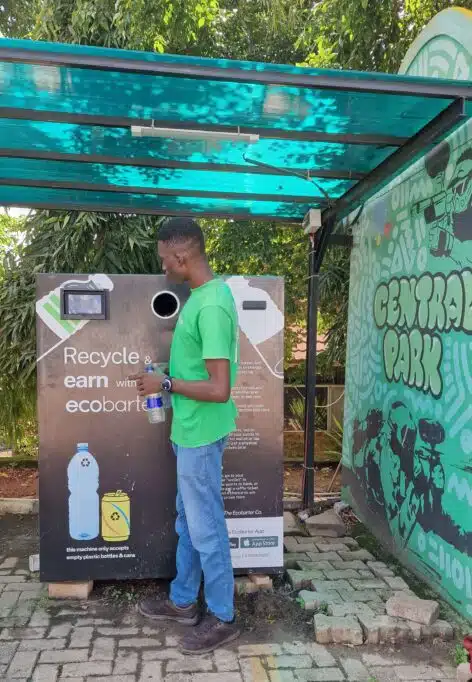
Even with these precautions, structural challenges remain — chief among them, infrastructure. From collection trucks to processing facilities, much of what is needed to operate at scale must either be built from scratch or sourced at significant cost.
This reality is shaping Ecobarter’s next phase of growth. Rather than continuing to expand as a fully integrated operator, the company is gradually repositioning itself as a technology layer within the waste management value chain.
Scaling a capital-intensive model in a market with limited infrastructure and funding is difficult. By contrast, building a platform that enables other players to operate more efficiently offers a more asset-light path to expansion.
“When we think about scale, we’re no longer thinking about complete ownership,” Idehai explains. “We’re thinking about becoming an infrastructure backbone that others can plug into.”
Elements of this model are already in place. In cities like Port Harcourt and Ibadan, Ecobarter operates without owning collection trucks, relying instead on local partners. Even in Lagos, the company owns just one truck on the mainland, supplementing it with partner capacity. The approach reduces capital expenditure while allowing the company to focus on its core strengths: technology, coordination, and user engagement.
Financing, however, remains a constraint. Since its founding, Ecobarter has largely been bootstrapped, supplemented by grants. While Idehai is open to external funding, she is clear-eyed about the company’s position within the investment landscape, noting that waste management does not fit into the high-growth, venture-backed model that dominates startup funding.
Instead, Ecobarter is exploring alternative financing structures that better align with its operational realities. The company is looking to raise $1.5 million, which it plans to deploy to expand its partner collector network and invest in shared infrastructure. One proposed approach is a lease-to-own model, where collection partners can access equipment without bearing the full upfront cost.