



The worst time to find out your startup name is already taken is after you’ve built a brand around it.
Key takeaways
- Registering a company name is not the same as owning a trademark, yet many African founders mistakenly assume one automatically grants the other.
- Nigeria is not a party to the Madrid Protocol. That means Nigerian startups cannot use a single international filing to secure protection abroad; they must file individually in each foreign market.
- The OAPI system allows one trademark filing to cover 17 Francophone African countries. For startups targeting West and Central Africa, this can be one of the most cost-effective ways to secure regional protection.
- Investors increasingly scrutinize intellectual property. During due diligence, a weak trademark position can slow deals, raise legal risks, or even reduce your valuation.
If you’re building a company in Africa, understanding trademark registration for an African startup is part of building a defensible business. Across most African jurisdictions, trademark law follows a first-to-file system, meaning legal ownership usually goes to whoever files the trademark application first, not necessarily the founder who created or popularized the brand.
Registering a company name or incorporating your startup simply creates a legal business entity, but it doesn’t give you exclusive rights to the name in the marketplace.
In this guide, I’ll walk you through how trademark registration works for startups across Africa, including timelines, costs, required documents, and common mistakes to avoid.
Understanding the three filing routes in Africa
| Route | Coverage | Filing type | Avg timeline | Key note |
| Madrid Protocol | Multiple international member states (including some African countries) | International system via WIPO | 12–18 months | Convenient for global filings, but enforcement depends on each country’s IP system |
| ARIPO | 13 participating states in Eastern and Southern Africa | Regional “bundle” system where countries are designated individually | 12–18 months | Enforcement varies depending on national adoption of the Banjul Protocol |
| OAPI | 17 Francophone African countries | Unitary regional trademark covering all member states | 6–12 months | One filing protects the entire region; you cannot select individual countries |
| Nigeria (NIPO) | Nigeria only | National | 12–24 months | Not a Madrid Protocol member |
| Kenya (KIPI) | Kenya only | National | 10–16 months | ARIPO + Madrid member |
| South Africa (CIPC) | South Africa only | National | 18–24 months | Separate from ARIPO |
Here is a breakdown of the three primary filing routes available to your startup.
Route 1: International filings
The Madrid Protocol (WIPO or World Intellectual Property Organization)
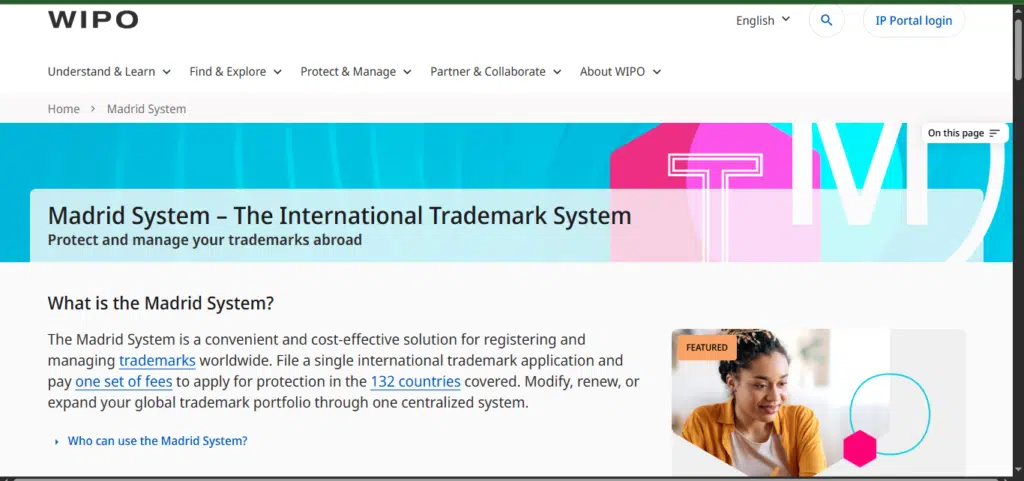
Member states: 24 African jurisdictions are members.
Fee: 572 Swiss francs (for one class) and 119 Swiss francs (for each additional class).
Timeline: 12 – 18 months.
The Madrid Protocol, administered by WIPO, allows startups to seek protection in multiple countries with a single application and one currency (Swiss francs).
While the administrative convenience is appealing, this route carries significant risk in Africa.
- Effectiveness varies widely. Your application still depends on the laws and enforcement capacity of each designated country.
- Legislative gap. In countries like Eswatini and Lesotho, limited examination capacity and poor legislation can create uncertainty around enforcement.
- The “Tacit Acceptance” problem. If a national office misses the deadline to issue a refusal, the designation may appear accepted internationally, even though the trademark has not been meaningfully examined locally.
Route 2: Regional filings
1. The ARIPO route (African Regional Intellectual Property Organization)
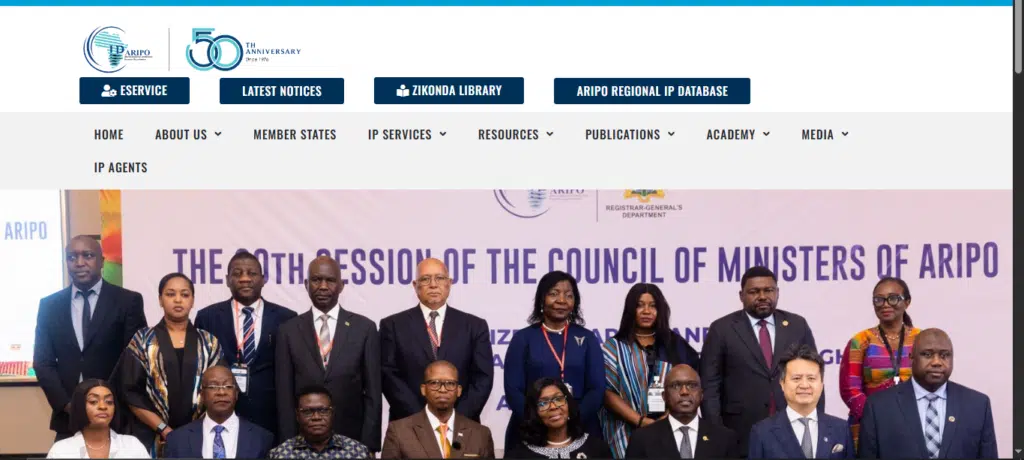
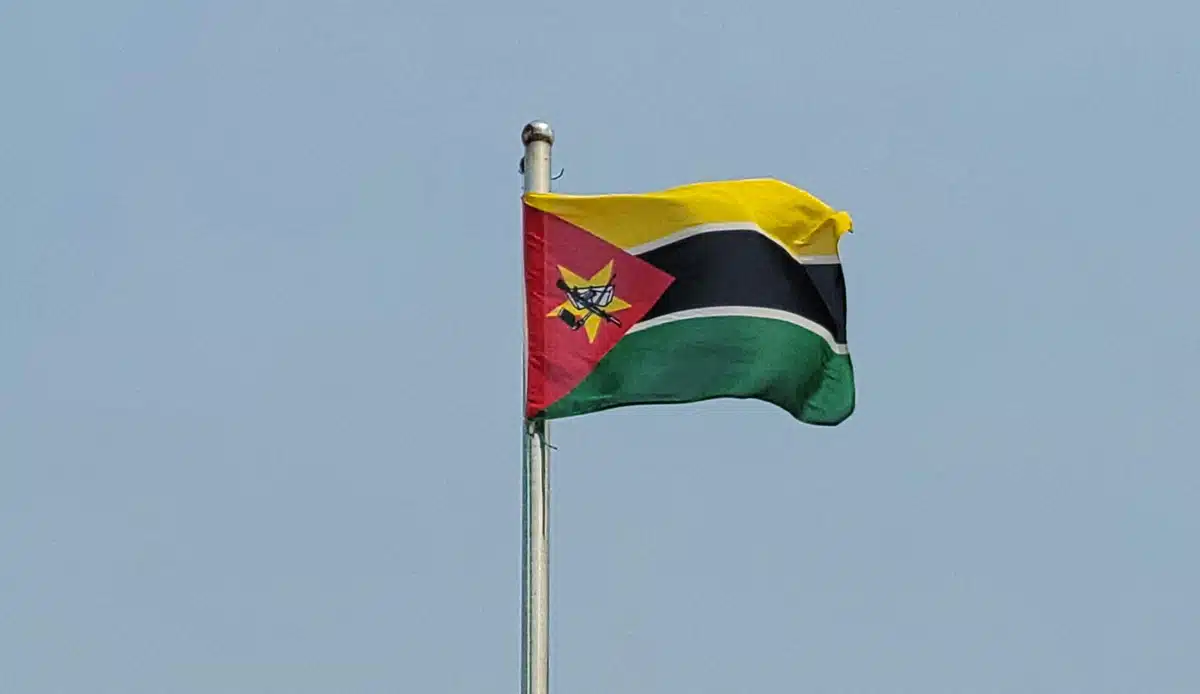
Member states: 13 states are party to the Protocol as of 2025 (Botswana, Cape Verde, Eswatini, The Gambia, Lesotho, Liberia, Malawi, Mozambique, Namibia, São Tomé and Príncipe, Tanzania, Uganda, and Zimbabwe).
Application fee: $200 (paper filing) and $160 (electronic filing). All other necessary fees are available here.
Duration: 12 – 18 months.
Office: Harare, Zimbabwe.
ARIPO offers a regional filing system under the Banjul Protocol. It operates as a bundle system, where you file a single application with the ARIPO office in Harare and designate the specific member states where you want protection. While the organization has 22 members, only 13 states are party to the Protocol.
The main strategic risk here is that several member states have not fully implemented the Banjul Protocol into their national legislation. For example, a Tanzanian court recently ruled that an ARIPO registration was unenforceable because the country had not ratified the protocol. Consequently, ARIPO temporarily declared Tanzania ineligible for designation.
2. The OAPI Route (Organisation Africaine de la Propriété Intellectuelle)

Member states: 17 (Benin, Burkina Faso, Cameroon, Central African Republic, Chad, Comoros, Congo, Côte d’Ivoire, Equatorial Guinea, Gabon, Guinea, Guinea-Bissau, Mali, Mauritania, Niger, Senegal, and Togo).
Duration: 6 – 12 months.
Office: Yaoundé, Cameroon.
The OAPI covers most of francophone West and Central Africa.
Unlike ARIPO or the Madrid Protocol, OAPI operates as a unitary trademark system. When you file a trademark with OAPI under the Bangui Agreement, the protection automatically covers all 17 member states at once.
The trademark either applies to the entire region or not at all; you can’t choose individual countries. A refusal in one country means refusal in all, making it the most straightforward and predictable route on the continent.
Route 3: National filings
1. Trademark Registration in Nigeria (NIPO)
Application fee: ₦16,749 (all other fees are on the official website).
Timeline: 12–24 months (from filing to certificate issuance).
Trademark registration in Nigeria is handled by the Nigerian Industrial Property Office (NIPO).
Once it’s granted, the trademark is valid for seven years initially, after which it can be renewed every 14 years indefinitely.
NOTE: Nigeria can’t be covered through the Madrid Protocol, so international filings won’t automatically protect your brand.
2. Trademark Registration in Kenya (KIPI)
Application fee: Ksh 4,000 (local) and $200 (foreign). All other necessary fees are on their official website.
Timeline: 10 to 16 months.
The Kenya Industrial Property Institute (KIPI) administers trademark registrations in Kenya.
Once approved, a Kenyan trademark remains valid for 10 years and can be renewed for additional 10-year periods.
NOTE: Unlike Nigeria, Kenya is a member of the Madrid Protocol, which means founders can designate Kenya as the international filing location when filing through the Madrid system.
3. Trademark Registration in South Africa (CIPC)
Application fee: R590 (other necessary fees are available on the official website).
Timeline: 18 – 24 months (filing to registration).
In South Africa, trademark registrations are handled by the Companies and Intellectual Property Commission (CIPC).
The process is known for being thorough, which makes timelines usually longer than in some neighboring markets. Once registered, trademarks in South Africa are valid for ten years and can be renewed indefinitely in ten-year increments.
NOTE:
- South Africa operates independently from the ARIPO regional system and is not a member of the Madrid Protocol, necessitating direct national filings.
- Unlike Nigeria, Kenya, and most other African markets that use first-to-file, South Africa operates on a first-to-use or “use in commerce” priority system. If someone can prove they were using a trademark in South Africa before your filing date, they may have superior rights, even if you filed first.
The step-by-step trademark filing process
While each jurisdiction has its own nuances, the core process follows a similar structure.
Step 1: Conduct a trademark search first
This involves checking existing registrations to ensure your mark is available and doesn’t conflict with prior rights. Each office provides a database for this purpose.
Step 2: Understanding the Nice Classification system
Trademark protection doesn’t apply universally across all industries. Instead, applications must specify the categories of goods or services where the mark will be used.
Most countries follow the Nice Classification, an international system administered by WIPO, which divides trademarks into 45 classes (34 for goods and 11 for services).
For many startups, particularly technology companies, the most common classes include:
- Class 35 – Business services, advertising, and marketplace platforms.
- Class 38 – Telecommunications and digital communication services.
- Class 42 – Software, technology development, and SaaS platforms.
Filing in the wrong class leaves your actual business unprotected.
Step 3: Filing requirements
Although the exact paperwork varies by country, most African trademark offices request similar information during the application stage.
In general, you’ll need to provide:
- A clear representation of the trademark (word mark, logo, or combined mark).
- Applicant details, including the legal entity name and address.
- A description of the goods or services linked to the trademark classes.
- A Power of Attorney if a trademark agent is filing on your behalf.
Step 4: Opposition periods
After examination, most trademark offices publish the application in an official journal. This opens a public window for opposition, allowing third parties to challenge the registration if they believe it conflicts with their existing rights.
Typical opposition periods include:
- Nigeria: 2 months.
- Kenya: 60 days.
- South Africa: 3 months.
- OAPI: 6 months.
- ARIPO: 3 months.
- WIPO: Up to 12 months.
If an opposition is filed, the process becomes a legal dispute. The applicant must file counterarguments and evidence to defend their mark, and the relevant office or court will issue a final decision.
Working with a trademark agent
Some jurisdictions allow founders to file trademark applications themselves. But in practice, working with a qualified trademark agent is usually the safer option, especially if you’re filing across multiple countries.
If you decide to work with an agent, a few questions are worth asking early:
- Are you licensed or accredited to file trademarks in this jurisdiction?
- What filing strategy do you recommend for our target markets?
- Do you provide renewal monitoring and portfolio management after registration?
Why trademarking in Africa isn’t optional anymore
1. First‑to‑file reality in Africa
Most African markets operate strictly on a first‑to‑file basis. The law generally awards trademark rights to whoever files first, not necessarily the person who built the brand. Nigeria and Kenya are examples.
2. Company registration ≠ trademark ownership
One of the most persistent misconceptions I encountered during my research was that many founders assumed that registering a business name automatically gives them exclusive rights to that name as a brand. It doesn’t.
Those entities merely acknowledge your legal entity; they do not give you a legal monopoly over how that name or logo is used in commerce across product and service categories.
Securing a domain name doesn’t protect you either. When a competitor files a trademark claim, they can force your removal from platforms like the Apple App Store or Google Play because the brand owner has superior rights.
3. Investor and platform risk
Today, intellectual property scrutiny, especially around trademarks, is standard in investor due diligence. If you can’t demonstrate clear, robust IP ownership and territorial coverage, it can become a negotiation liability and even reduce investor confidence in your growth plan.
Common mistakes African founders make
Mistake 1: Filing in the wrong class
If your startup runs a SaaS product, marketplace, or telecom service, the classes must reflect that. Align your trademark classes with your real revenue model and future product roadmap.
Mistake 2: Waiting until fundraising
By that point, it may already be late. File when the product launches, not when you’re preparing a term sheet.
Mistake 3: Misunderstanding ARIPO coverage
ARIPO filings don’t automatically guarantee enforceability in every member state. Always confirm how the protocol is implemented in each target country.
Mistake 4: Ignoring renewal deadlines
Trademarks expire if they’re not renewed on time. Set reminders at least six months before expiry. A lapsed trademark resets your priority position.
FAQs
Do I need a trademark if I’ve already registered my company name?
Yes. Registering a company name only establishes your legal business entity; it does not grant exclusive rights to use that name as a brand in commerce. Trademark registration is what protects how your brand name, logo, or slogan is used across specific goods and services.
How long does trademark registration take in Nigeria and Kenya?
It typically takes 12 to 24 months from filing to final approval in Nigeria. Kenya’s process averages 10 to 16 months. Of course, all of this depends on examination timelines and whether any objections or oppositions arise.
Can I file a trademark application myself?
In some jurisdictions, yes. But in most cases, working with a trademark agent is advisable. Also, many countries require foreign applicants to work with local agents.
Conclusion
As ecosystems mature and funding rounds become more sophisticated, intellectual property is increasingly treated as a core business asset.
If you’re building a startup today, the real question isn’t whether you should register your trademark. It’s about where and how you do it strategically.
Understanding the differences between national filings, ARIPO, OAPI, and the Madrid system gives you the flexibility to protect your brand in the markets that actually matter for your growth.
In a first-to-file environment like Africa’s, the founders who secure their brand early are protecting the foundation of everything they’re building.
Disclaimer!
This publication, review, or article (“Content”) is based on our independent evaluation and is subjective, reflecting our opinions, which may differ from others’ perspectives or experiences. We do not guarantee the accuracy or completeness of the Content and disclaim responsibility for any errors or omissions it may contain.
The information provided is not investment advice and should not be treated as such, as products or services may change after publication. By engaging with our Content, you acknowledge its subjective nature and agree not to hold us liable for any losses or damages arising from your reliance on the information provided.
Always conduct your research and consult professionals where necessary.