


The Government of Rwanda has signed a three-year memorandum of understanding (MoU) with Anthropic, a US AI research company behind Claude, to harness AI in public health, education, and government systems.
The agreement, which is Anthropic’s first formal multi-sector government partnership in Africa, aims to accelerate Rwanda’s national goals on health outcomes by using AI tools to support the elimination of cervical cancer, reduce malaria, improve maternal health, and enhance public services.
Under the MoU, Anthropic will provide access to its AI products (including Claude and Claude Code), hands-on training, API credits, and training for developer teams across Rwandan public institutions.
It also formalises an existing education initiative that included 2,000 Claude Pro licenses for educators, AI literacy training for public servants, and deployment of a Claude-powered learning companion (Chidi) in eight African countries.
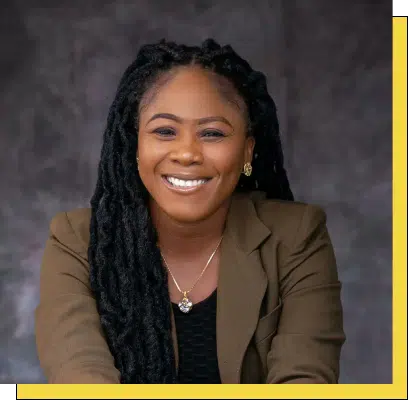
“This partnership with Anthropic is an important milestone in Rwanda’s AI journey,” said Paula Ingabire, Rwanda’s minister of information and communications technology and innovation. “The collaboration reflects Rwanda’s broader strategy to integrate AI into core national systems with an emphasis on our context.“
Rwanda already has national strategies targeting the elimination of diseases such as cervical cancer.
In 2025, Rwanda launched an accelerated plan to eliminate cervical cancer by 2027, years ahead of global targets, backed by vaccination and screening programmes.
But gaps remain in diagnostics, data systems, and workforce capacity, areas where AI could support clinical decision-making, data analysis, and public health outreach.
AI partnerships across Africa
This isn’t the first time a global tech company has collaborated with an African government on AI readiness.
In Nigeria, the government partnered with Google and Apolitical to launch the Government AI Campus, an initiative to train civil servants on AI fundamentals, ethical frameworks, and strategic adoption to improve governance and public services.
Where the Google–Nigeria partnership focused on skills and awareness-building, the Anthropic–Rwanda MoU goes further by integrating AI into specific national priorities such as health and education while embedding capabilities within public institutions.
Similarly, OpenAI partnered with the University of Lagos (UNILAG) to create an AI research hub in Nigeria to accelerate AI research and talent development locally. A strategy that could produce deeper, long-term results than government training alone.
While these partnerships can accelerate skills transfer and expose public systems to new technologies, implementation can be an obstacle, especially for African governments that often lack frameworks to effectively absorb advanced technologies.
Meanwhile, this partnership could serve as a template for future collaborations between African governments and global AI companies.