



Γεια σου,
Victoria from Techpoint here,
Here’s what I’ve got for you today:
- Sun King moves from solar to smartphones
- Chowdeck faces pricing transparency suit
- SMEs cry foul over Takealot’s Buy Box rules in SA
- Liberia suspends Starcell’s telecom licence
Sun King moves from solar to smartphones

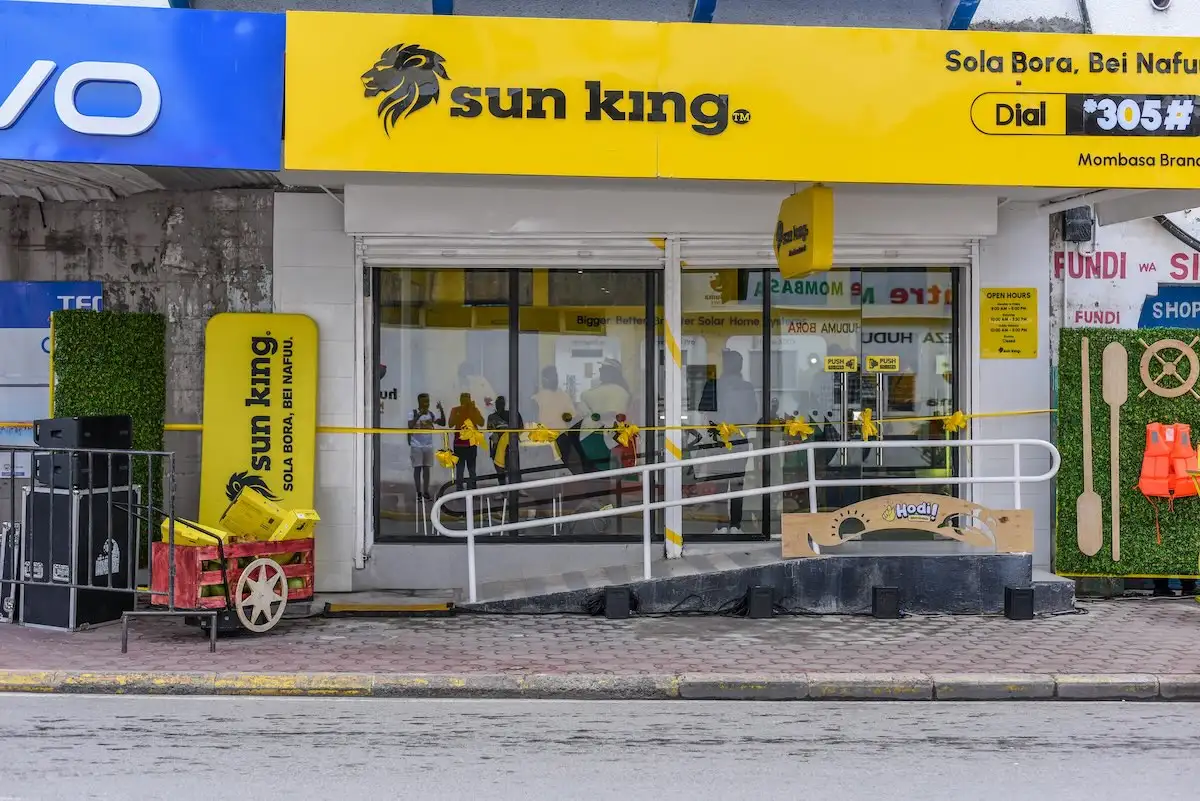
Sun King, the company you probably know for yellow solar lanterns and pay-as-you-go home power, has officially launched its first smartphone in Kenya, shaking up the mobile market. The EZ 1 is the company’s own brand of entry-level phone, and it’s being built locally at Sun King’s new manufacturing facility in Nairobi, part of a big push to make devices more accessible and grow local tech production.
The twist isn’t really the hardware. The EZ 1 looks like many basic Android phones with 4 GB RAM, 128 GB storage, a 6.56-inch display, and a big 5000 mAh battery. What then is? How Sun King is selling it. Kenyans can get the phone with a KSh 2,999 deposit and KSh 60 daily payments through the same “lipa pole pole” pay-as-you-go model that has helped hundreds of thousands afford solar kits.
Why should you care? Because high upfront costs still keep many people out of the digital economy in Kenya. Smartphones are essential for communication, mobile money, education, and small businesses, but imported devices often cost more than some households can manage. Sun King’s model makes ownership feel affordable day-to-day, even if the total cost over time could be higher than buying a cheap phone outright.
There’s also broader context: Kenya’s local phone assembly scene has been growing, with companies like M-Kopa assembling millions of devices locally, though import competition and grey-market phones still dominate the market and complicate the economics for homegrown makers. Sun King’s move is part of this trend, using industrialisation and financing to tackle digital exclusion, even as consumer perceptions and quality concerns around locally assembled phones linger.
But it’s not all sunshine. Word on the street is pointing to the “poverty penalty” — paying over time, can mean you end up spending far more than the cash price if you had the money upfront, and entry-level specs won’t always keep up long term. Still, for many Kenyans priced out of the smartphone market, the EZ 1 could be the ticket to staying connected and earning a living, and that’s why this launch matters.
Chowdeck faces pricing transparency suit

A lawsuit filed at Nigeria’s Competition and Consumer Protection Tribunal could put Chowdeck’s pricing model under the spotlight, and potentially reshape how food delivery apps operate in the country. The suit, brought in Abuja by Dolapo Adedeji, accuses the fast-growing delivery platform of inflating menu prices without clearly telling customers that the listed prices may already include hidden markups.
Per the claimant, a meal ordered on Chowdeck was significantly more expensive than the same item at the restaurant’s physical outlet. The assumption at the time was that the difference reflected a bigger portion or better packaging. But when the food arrived, it reportedly looked no different from what’s sold in-store.
The suit further claims that vendors revealed Chowdeck controls pricing on the platform, contradicting the impression that restaurants independently set their own prices. Some items were allegedly marked up between 25% and 50% before delivery and service fees were even added.
If the Tribunal agrees that this amounts to misleading representation or an unfair trade practice under the Federal Competition and Consumer Protection Act (FCCPA) 2018, the consequences could be significant. The claimant is asking for clearer disclosure of any embedded markups, restitution of alleged excess charges, and declarations that certain non-refundable fees are unfair. More broadly, the case could force delivery platforms to rethink how transparently they communicate pricing structures to users.
Why does this matter? Price discrepancies between in-store menus and delivery apps are not unique to Chowdeck. Globally, it’s common practice for restaurants to increase platform prices to offset commissions that can range from 15% to 30%. In Nigeria’s tight-margin food business, that often means passing costs on to customers. The question before the Tribunal isn’t just whether prices are higher, but whether consumers are being clearly told why.
Chowdeck, founded in 2021, has quickly become one of Nigeria’s leading quick-commerce players and recently expanded into Ghana. It has earned praise for operational efficiency and reportedly strong rider pay, but pricing has periodically drawn complaints. The FCCPA itself was enacted before app-based food delivery became mainstream in Nigeria, meaning the Tribunal’s interpretation could set a precedent for how digital platforms disclose pricing going forward.
At stake is more than one company’s policy, it’s the balance between platform economics, restaurant survival, and consumer transparency in Nigeria’s growing tech ecosystem.
SMEs cry foul over Takealot’s Buy Box rules in SA

South African small businesses say they’re being squeezed out of their own digital shelves, and they’re pointing the finger at both Takealot and the country’s competition watchdog, the Competition Commission.
At the centre of the row is Takealot’s Marketplace, where local sellers claim a surge of Chinese merchants is undercutting them on price while operating with far longer delivery times. Some allege these sellers use intermediaries and rotate bank accounts to stay under VAT thresholds. Takealot, for its part, insists all sellers face the same tax, regulatory and platform rules.
The flashpoint is the “Buy Box” — that small but powerful feature that decides which seller’s offer is selected by default. After a 2023 Competition Commission inquiry, Takealot was ordered to tweak the Buy Box so it highlights the cheapest option, not just the fastest delivery. The Commission argued consumers don’t automatically prefer speed over price. But merchants say that change has opened the door for ultra-cheap cross-border sellers to win the default spot even if delivery takes 20 days.
Why does this matter? Because more than 90% of shoppers click whatever sits in the Buy Box. If overseas sellers can edge out locals by a rand or two, they effectively capture the sale. Local SMEs, bound to stricter 3–5 day lead times and warehousing costs, say they simply can’t compete on those terms.
Takealot says cross-border commerce is standard in modern eCommerce and that it is “responsibly piloting” international sourcing to expand choice and affordability. The Competition Commission did not respond to questions before publication. What’s clear is that as South Africa’s online retail market matures and rivals like Temu loom, the tension between price, speed, and protecting local enterprise is only just beginning.
Liberia suspends Starcell’s telecom licence

A telecom licence is on the brink in Liberia, and this time, it’s a company that never even switched on the network.
The Liberia Telecommunications Authority (LTA) has suspended Starcell International Liberia’s Universal Telecommunications Operating Licence and Spectrum Authorisation for 90 days, effective February 9, 2026. The regulator says the company breached multiple provisions of the 2007 Telecommunications Act, including failing to respond within 30 days to a proposed licence revocation notice issued in September 2025.
In simple terms, Starcell got the green light in May 2020 but never actually launched operations. According to the LTA, it also failed to meet financial obligations to both the Liberia Revenue Authority and the regulator itself, and did not comply with other applicable regulations. During the 90-day suspension window, the company is expected to begin operations, clear its debts, and meet all regulatory requirements or risk losing its licence entirely.
The move comes at a delicate time for Liberia’s telecom market. The country has been seeking more operators to deepen competition, but the space remains largely dominated by Orange and MTN. As of Q3 2025, Orange Liberia led with about 3.1 million subscribers; MTN followed with 2.1 million, while state-owned Libtelco trailed far behind with roughly 14,000 users, according to Omdia.
Why does this matter? Because spectrum is a national asset, and licences are meant to translate into real infrastructure, jobs and connectivity. When a licensed operator fails to roll out services for years, it slows competition and limits consumer choice. The LTA says it remains committed to accountability and sustainable sector growth. For Starcell, the next 90 days may well determine whether it ever gets to compete at all.
In case you missed it
- StySwap wants to free AI images from the prompt
- How to file tax returns for individuals with multiple streams of income
What I’m watching
- Why You Should Get Married Now
- Everything You Need to Know About Logic – Joe Folley
Opportunities
- OPay is looking for a data analyst and operation support. Apply here.
- Briter is hiring for several roles in many countries, including Kenya and Nigeria. Apply here.
- Amazon is recruiting a Partner Development Manager, Africa. Apply here.
- Korapay is looking for Head of Growth and Partnerships (The Curve Africa by Kora). Apply here.
- Misan by Bamboo is hiring a Community and Social Media Manager. Apply here,
- Spend Valentine’s Day meaningfully at no cost with Let Love Lead, a free cultural experience promoting unity through art and music, now open for registration on EventPark here.
- Credpal is hiring for several roles. Apply here.
- Lagos Business School is recruiting a Programme Officer (Delivery and Coordination). Submit a cover letter and your CV here.
- Kuda Technologies is looking for a Head of Product (Credit). Apply here.
- MTN Nigeria is hiring a Specialist – International Remittance (Product Manager). Apply here.
- Moniepoint is hiring for several roles. Apply here.
- Bamboo is hiring a quality assurance manager. Apply here.
- Paystack MFB is hiring for a few roles. Apply here.
- Don’t miss the Cavista Technologies Hackathon happening between February 21 and 22. Register your team and go home with cash prizes here.
- Kuda is recruiting a Head of Product (Credit). Apply here.
- Jumia is looking for a Senior Key Account Manager. Apply here.
- MTN is hiring a Specialist, International Remittance (Product Manager). Apply here.
- Moniepoint is hiring for over 100 roles. Apply here.
- We’re hosting a debate on AI in daily life. Join us to share your insights and perspectives.
- Techpoint Africa is creating a video series where people discuss and debate policies and current events. If you enjoy thoughtful conversations, fill out this form. Apply here.
- Building a startup can feel isolating, but with Equity Merchants CommunityConnect? You can network with fellow founders, experts, and investors, gaining valuable insights and exclusive resources to help you grow your business. Click here to join.
- Help us make Techpoint better for you! Your feedback shapes what comes next (your responses may potentially save my job. A bit dramatic, but still). It will only take 30 seconds to tell us what works and what doesn’t. Fill it here.
- To pitch your startup or product to a live audience, check out this link.
- Have any fresh products you’d like us to start selling? Check out this link here.
- Follow Techpoint Africa’s WhatsApp channel to stay on top of the latest trends and news in the African tech space here.
Have a superb Thursday!
Victoria Fakiya for Techpoint Africa