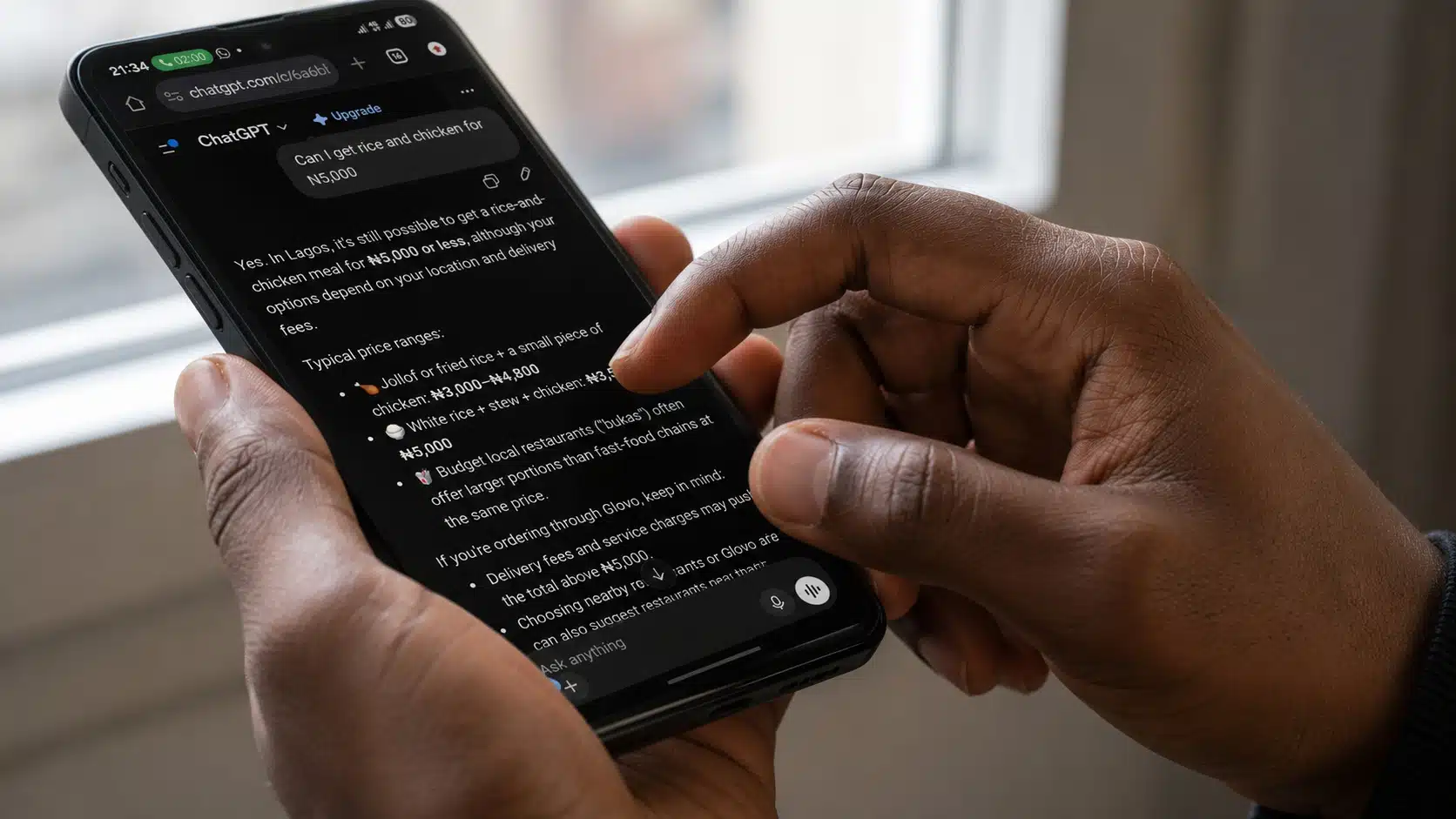




Last week, LemFi announced that it was launching multicurrency accounts for users in Nigeria. The startup says it is targeting freelancers and digital entrepreneurs who need to receive money from outside the continent. After seeing the news, I commented on WhatsApp, “I expect to see airtime and DSTV by Q2 2026.”
If you’re not Nigerian or don’t closely track the local tech ecosystem, the airtime reference may not immediately land. I’ll get back to that in a bit.
Around the same time, Terrahaptix CEO Nathan Nwachukwu tweeted that he would be sharing some company updates in the coming days. He ended the tweet with an interesting aside — Nigeria’s best minds cannot be stuck building fintech and SaaS.
It may have been said in jest, but it captures a growing disenchantment with the country’s innovation status quo.
Ask anyone with even a passing familiarity with the ecosystem what they think about fintech, and you’ll likely hear a version of the same thing: it’s oversaturated. But a more damning line, one often used by insiders, goes like this — in the end, we all sell airtime.
Why do we sell airtime?
Last month, Mono’s CEO, Abdulhamid Hassan, explained why startups often default to selling airtime in a blog post.
“The brilliance of airtime,” he wrote, “is that it’s both habitual and universal. It’s not sexy, but it’s guaranteed demand. Everyone with a phone needs it. That means distribution and engagement are already built in. When you sell airtime, you’re not introducing a new behaviour, you’re just capturing a piece of an existing one.” (emphasis mine).
That point is crucial to understanding the behaviour of many Nigerian fintechs. Airtime is one of the most reliable ways to make money. You don’t have to generate demand; it runs on autopilot. Margins may be thin, but usage — and by extension revenue — is predictable.
Which brings me to the point: selling airtime is not so much a failure of innovation as it is a response to reality.

Victoria Fakiya – Senior Writer
Techpoint Digest
Make your startup impossible to overlook
Discover the proven system to pitch your startup to the media, and finally get noticed.
And while I’m speaking primarily about airtime, it is a useful lens for understanding the broader convergence of innovation across the continent.
Everyone has a deck until they hit the market
Every founder begins with assumptions — about how systems work, how users behave, and why existing solutions fall short. Many are convinced they have found the right answer. That belief often survives right up until they meet the market.
Then you realise that the gap you identified, and for which no obvious solution existed, may have been there for a reason, not for lack of effort by other entrepreneurs.
In the early days, and sometimes for the first few years, there’s a lot of hope. One more government policy. Smartphone adoption passes a certain point, and you’ll begin to see traction.
Then funding begins to dry up. Where you once raised a pre-seed round on promises, you now need traction. But you don’t have it. You convince a few investors to extend your runway. But salaries are due. Subscriptions pile up, and yet, the market remains indifferent.
One line that captures this dilemma came from a 2024 conversation with Sim Shagaya:
“We started Konga about the same time Flipkart started in India and Souq started in the Middle East. We all had the same investors and the same learnings. Flipkart became a massive exit. Walmart bought it. Souq was acquired by Amazon. That didn’t happen for me. We did everything right, but Nigeria did not come to the altar.”
At this point, existential choices follow. Innovation takes a back seat because innovation doesn’t pay the bills. So you sell airtime. You facilitate utility payments. Because even though that wasn’t your dream, it keeps the company alive.
The freedom to be stubborn
Startups are meant to be experiments. They test ideas, challenge systems, and sometimes create entirely new markets. But experiments require time, and time is too often a function of money. Only startups that remain alive get to innovate, and stubbornness about vision is a luxury many African founders cannot afford.
We celebrate stubborn founders in hindsight. The ones who refused to pivot. Who ignored sceptics. Who kept going when the numbers didn’t make sense. What we rarely interrogate are the conditions that made that stubbornness survivable. Runway matters. Patient capital matters. Markets that tolerate experimentation matter. Without these, stubbornness is less a virtue and more a liability.
In practice, founders rarely choose between innovation and conformity. They are choosing between survival and shutdown. When traction is slow, the question stops being whether the idea is good and becomes whether the company can last long enough for the idea to matter.
So perhaps the question isn’t why founders stop being stubborn. The better question is who gets the freedom to remain so.
The role of investors as catalysts
Contrary to what motivational speakers suggest, the ability to dream isn’t free. Holding on to conviction when signals are weak is often a function of how much money you have. The fewer zeros in the bank account, the harder it is to insist the market will eventually come around.
Few ecosystems demand patient capital like Africa, and for good reason. Founders here contend with unreliable infrastructure, fragmented markets, regulatory uncertainty, and lower purchasing power. While startups elsewhere can hit meaningful milestones quickly, African founders often need far longer timelines to achieve similar outcomes.
Interswitch is a useful reference. It helped lay the groundwork for modern digital payments in Nigeria. Yet years after becoming a unicorn, it only hit the $100 million revenue mark in 2024. This is not a failure of execution. It is a reminder of how long scale takes in this market, even when you do many things right.
If innovative business models are to become the norm, capital allocators have a role to play.
Investors may not consciously reward conformity, but their patterns shape founder behaviour. When capital flows to a narrow set of ideas, founders learn quickly. Another cross-border fintech emerges — only this time with stablecoins — not necessarily because the problem is most urgent, but because the path to funding feels clearer.
Over time, the loop compounds. Capital follows familiarity. Familiarity attracts founders. The range of what gets built narrows because imagination without backing is expensive.
Founders molded by the system
When many startups begin to look the same, it’s tempting to call it a failure of innovation. But convergence is rarely accidental. More often, it reflects the boundaries of what a system can support.
The drift toward familiar products suggests that innovation isn’t limited by ideas alone, but by tolerance — for long timelines, for uneven adoption, for businesses that require several things to go right at once. Where that tolerance is thin, experimentation slows. Startups build for survival.
In that sense, airtime becomes a safety net. It offers predictability in markets where predictability is scarce. Once a few companies prove the model works, others follow.
This is why founders cannot enter the arena starry-eyed. Some uncomfortable questions must be confronted early. What if the market doesn’t validate your idea on your timeline? What compromises are you willing to make to stay alive? Which parts of your vision are non-negotiable, and which only sound good in a deck?
The answers won’t always be flattering, and they are not meant to discourage ambition or excuse conformity. They acknowledge that building in fragile ecosystems demands trade-offs that are often invisible at the start.
So when we say, “In the end, we all sell airtime,” what we’re really observing is a system nudging founders toward what it can sustain. The challenge isn’t to romanticise resistance or condemn adaptation, but to recognise the forces at play and decide, eyes open, which ones you’re willing to push against.