



Sora Technology, a startup using drones and artificial intelligence to fight infectious diseases, has raised an additional $2.5 million in a second close of its late seed round to expand its malaria elimination efforts across Africa.
The new funding brings the company’s total capital raised to about $7.3 million, following a $4.8 million late seed round announced in March 2025.
The latest round attracted three new investors: Daiwa House Group Investment Limited Partnership, Central Japan Innovative Research Fund I, and UNERI Capital Fund Series I, joining existing backers such as Nissay Capital and SMBC Venture Capital.
Sora’s work is centred on malaria, a disease that affects more than 200 million people every year and causesnearly 600,000 deaths globally, with the vast majority occurring in Africa.
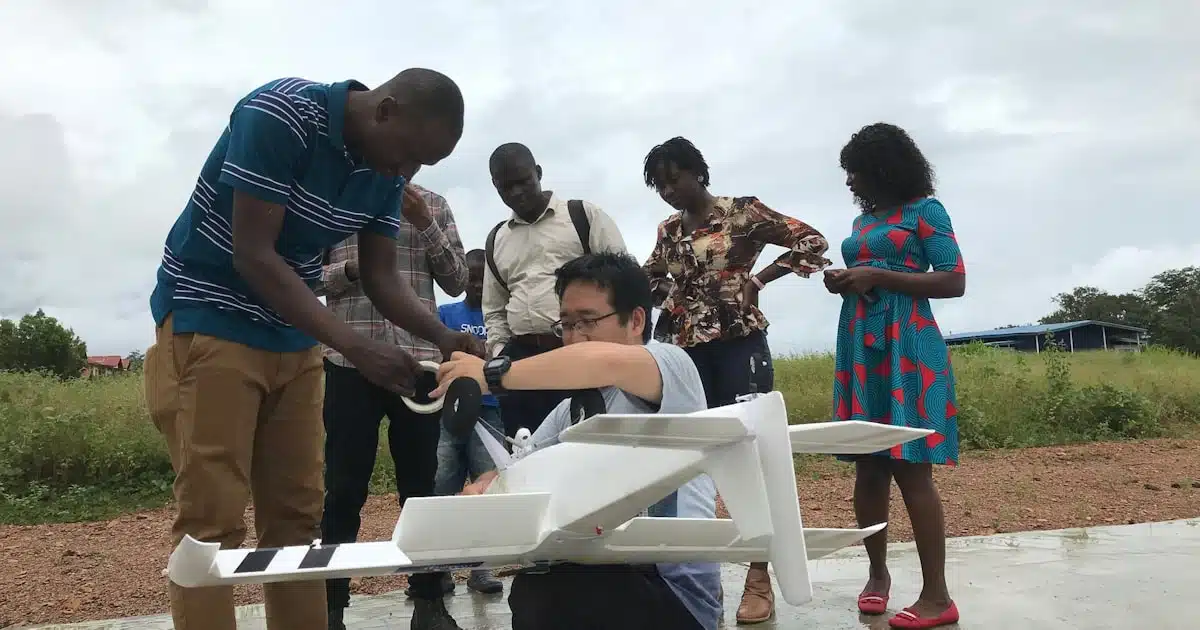
Through its flagship initiative, SORA Malaria Control, the company combines satellite data, drones, and AI models to predict outbreaks, analyse environments, and deploy targeted vector control interventions.
The company uses AI to find and map mosquito breeding sites while also ranking which ones pose the highest risk.
Interestingly, Sora is a Japanese company launched in 2018; however, its flagship project, SORA Malaria Control, is focused on Africa, where it is already active in more than 10 countries, including Ghana, Sierra Leone, Benin, the Democratic Republic of the Congo, Senegal, Kenya, and Mozambique.
According to CEO and founder Yosuke Kaneko, the company is “working to address critical healthcare infrastructure challenges – primarily across Africa .”
The fresh capital will be used to advance Sora’s AI-powered disease prediction tools, team expansion, and strengthen partnerships with governments and international health institutions.

Victoria Fakiya – Senior Writer
Techpoint Digest
Make your startup impossible to overlook
Discover the proven system to pitch your startup to the media, and finally get noticed.
It has worked with national and local governments, research institutions, and international organisations, and has partnered with the World Health Organisation to support sustainable malaria control efforts in Mozambique.
While malaria remains its primary focus, Sora’s technology is also being applied to other sectors on the continent. These include environmental monitoring for mining companies and productivity and environmental impact optimisation in agriculture, extending its relevance beyond public health alone.
This puts it in competition with companies like Zipline when it comes to healthcare and Nigeria’s Terra when it comes to mining and agriculture. Terra disclosed in 2024 that the mining industry is where they have the most customers, recoding$2 million orders that same year.
Meanwhile, Sora plans to deepen its presence across partner countries in Africa while strengthening its local operational capabilities and technical infrastructure ahead of a future Series A round.