



In 2016, Nigerian fintech Paystack joined Y Combinator for its winter batch, becoming one of the earliest African startups to break into the famed accelerator. Just four years later, it was acquired by Stripe — another Y Combinator alumnus — in a deal worth more than $200 million. In many ways, that deal did more than showcase Paystack’s potential. It also signalled the relevance of accelerators for African founders.
Accelerators — short, intensive programmes that help early-stage startups scale rapidly in exchange for equity — have existed since the early 1990s. However, it is programmes like Y Combinator and Techstars that have propelled the model into global prominence. Despite their short duration, accelerators are intentionally designed to provide concentrated value, pairing founders with funding, mentorship, and high-pressure environments that force rapid iteration.
While they are often confused with incubators, accelerators operate quite differently. Startup incubators typically focus on the earliest, most experimental stages of business formation, sometimes even helping to conceive the idea itself.
Accelerators, on the other hand, tend to work with startups that have already begun operations. In some cases, they may admit exceptional founders without a fully formed idea, but the preference is almost always for founders who have started building, whether that’s a minimum viable product or a few hundred early users.
They also differ significantly in structure and pace. Accelerators run for a short period — usually a few weeks to a few months — and almost always culminate in a demo day where startups pitch to investors. Incubators, by contrast, stretch for much longer, sometimes lasting more than a year, and prioritise gradual development over the intensity accelerators are known for.
In this article, we look at why startup accelerators are important, what founders should know when applying to accelerators and identify 10 top African accelerators.
Why startup accelerators are important

Early validation
Startup accelerators have become an increasingly important part of Africa’s tech ecosystem because they provide early validation for certain ideas. In markets where investors can be cautious and due diligence cycles can drag for months, getting accepted into a respected accelerator often signals that a startup is solving a real problem and has the potential to scale. This early vote of confidence often becomes the catalyst for media attention, investor interest, and even early customer trust.
Access to funding
While Africa’s venture capital landscape has grown, early-stage funding remains one of the biggest hurdles for new founders. Accelerators help fill this gap with initial cheques that allow startups to build MVPs, hire early team members, and gain enough traction to raise larger rounds. Although some of these cheques may be small, they are often transformative in markets where institutional funding rarely goes to unproven teams.
Access to strong networks
A strong network can accelerate a startup’s journey far more than capital alone. Through accelerators, founders gain access to investors, industry experts, corporate partners, and fellow founders who can open doors that would otherwise take years to reach. On the continent, where relationships significantly influence deal flow and partnerships, these networks can be the difference between stagnation and scale.
Mentorship
Building a startup in Africa comes with an added layer of complexity, from regulatory uncertainty to infrastructure gaps and talent shortages. This is why mentorship becomes such a powerful advantage. Accelerators pair founders with people who have built, scaled, or invested in companies before, and their insights help founders avoid common mistakes that kill early-stage ventures. For first-time founders especially, this guidance often shapes everything from product development to fundraising strategy.
Learning and resources
The startup journey is such that founders essentially learn on the job. Even for repeat founders, a lot of experiences can be new territory, and having access to resources that can help is invaluable. Accelerators typically feature sessions led by experts designed to help founders navigate the journey a little bit more easily. Without these resources, founders may have to depend on learning from their mistakes, a luxury many African startups cannot afford in such a resource-constrained environment.
Ongoing support
One of the most underrated benefits of accelerators is that their support does not end at demo day. Many continue to open up their networks to alumni, help resolve regulatory conflicts, and even provide additional funding. Y Combinator, for example, has been known to back its alumni long after graduation, with Chowdeck receiving additional funding during its Series A round earlier in 2025.
10 top African startup accelerators
Africa’s startup ecosystem has expanded rapidly in recent years, giving rise to a number of accelerator programmes across the continent. Below is a curated list of the top 10 African accelerators that are helping shape the next generation of startups.
Katapult Africa Accelerator
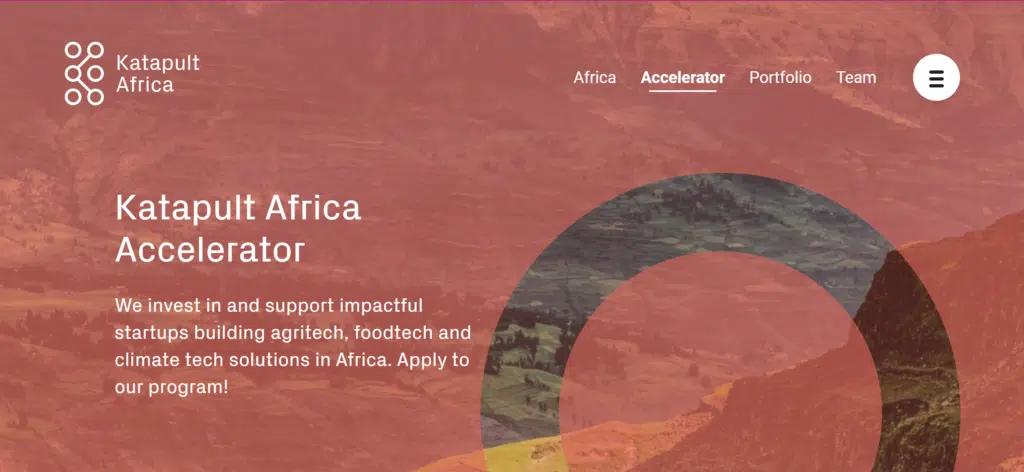
The Katapult Africa Accelerator is run in partnership with the Tony Blair Institute for Global Change, Norrsken, and Smart Africa. The three-month hybrid programme supports early- and growth-stage startups from across Africa, typically investing in up to 15 companies per cohort.
Katapult Africa focuses on ventures building scalable solutions in agriculture, logistics, supply chains, and climate technology, with an emphasis on impact-driven businesses addressing structural challenges on the continent. Startups participate in sessions covering growth strategy, impact measurement, and investor readiness, alongside access to Katapult’s global network of partners and investors.
Selected startups can receive between $150,000 and $500,000 in funding, depending on stage and fit. The accelerator’s portfolio includes notable African startups such as SimbaPay, RxAll, OKO Finance, and Complete Farmer.
Accelerate Africa
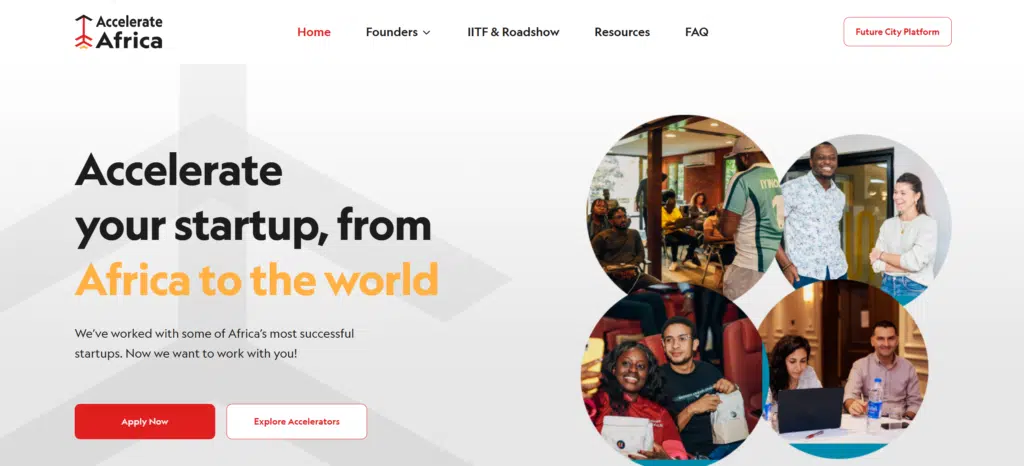
Accelerate Africa was founded in 2024 by Iyinoluwa Aboyeji and Mia von Koschitzky-Kimani to help fill the gap created by Y Combinator’s reduced investment activity in Africa. The accelerator targets early-stage startups across the continent and runs an eight-week programme focused on company building, product refinement, and investor readiness.
While participation in the programme does not guarantee funding, startups may be eligible for investment of between $250,000 and $500,000 from Future Africa, subject to additional diligence and internal processes. Applications are accepted on a rolling basis, with two cohorts per year.
Accelerate Africa is selective, requiring applicant startups to have at least two co-founders. Previous cohorts have included startups such as Afriskaut, Flickwheel, and PipeOps.
Baobab Network
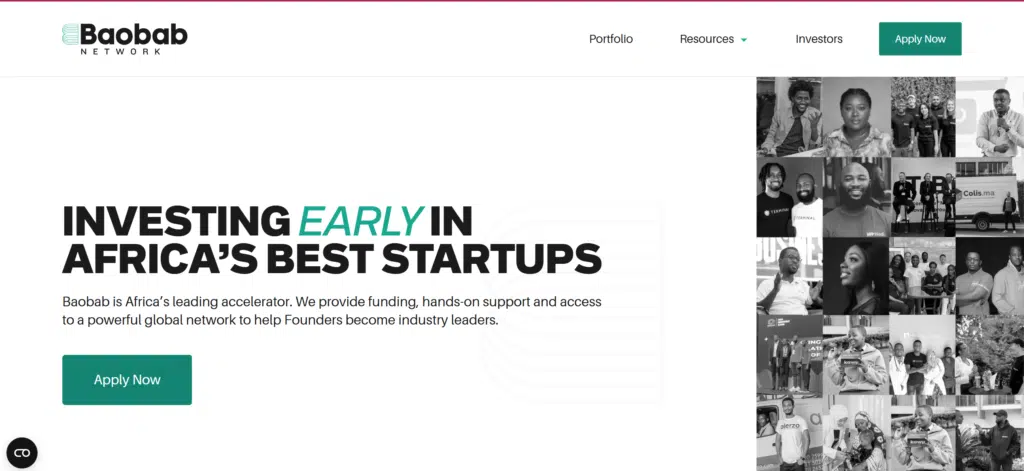
More than 65 startups have passed through Baobab Network, getting help with product positioning and $100,000 in funding. Startups targeting the African market or building from Africa are all encouraged to apply, as the accelerator is sector agnostic. Like many accelerators, the ability to build technology in-house, demonstrated by having at least one technical co-founder, is crucial. However, this does not disqualify startups. Notable alumni include Pocketfood, Sidebrief, Rentscore, Vove ID, and Lendha.
Antler
Now operating accelerator programmes in Kenya and Nigeria, Antler blends traditional acceleration with a venture-building model. Unlike most accelerators, Antler does not require applicants to have an existing startup. Instead, founders are selected as individuals and supported through an intensive 10-week programme focused on team formation, idea validation, and early product development.
During the programme, participants are guided through the process of identifying viable problems, testing solutions, and forming companies with co-founders. Investment is not guaranteed, but teams that successfully validate their ideas may receive an initial $100,000 investment for 10% equity. Antler also offers follow-on support and, in some cases, venture debt or structured financing, allowing founders to preserve ownership in the earliest stages of the business.
Grindstone
Grindstone is a growth-focused accelerator that has run programmes across Africa, with its roots in South Africa. Launched by Knife Capital, Grindstone is designed for post-revenue, high-growth startups looking to scale sustainably rather than early-stage experimentation.
The accelerator operates primarily as an online programme, making it accessible to founders across the continent. Participating startups receive support focused on financial management, unit economics, governance, and operational excellence. Grindstone is particularly well regarded for its data-driven approach, helping founders track performance, improve decision-making, and become more attractive to later-stage investors.
Injini
Edtech startups in Africa attract significantly less venture capital than founders in sectors such as fintech or logistics, a gap that Injini works to close through its specialised accelerator programmes. Founded in 2017 and based in Cape Town, Injini is Africa’s first accelerator focused exclusively on education technology, supporting early-stage startups across Sub-Saharan Africa.
Injini provides equity-free funding, backed in recent years by the Mastercard Foundation, alongside mentorship, sector-specific guidance, and access to a curated library of learning resources. The accelerator is known for its deep expertise in the African edtech landscape, offering founders practical insights drawn from years of research and hands-on support.
Spark Accelerator
Safaricom’s Spark Accelerator is a three-month programme designed to support early-stage startups in Kenya, with a strong focus on technology-enabled solutions that can scale locally and regionally. Backed by Safaricom and supported by ecosystem partners, the accelerator targets seed-stage founders building in areas such as fintech, digital commerce, health, and enterprise technology.
The programme combines structured business training with mentorship, technical support, and access to Safaricom’s APIs, infrastructure, and distribution channels, offering startups a unique advantage within Kenya’s tech ecosystem. Participating companies receive equity-free grant funding and tailored support to improve product-market fit, governance, and investor readiness.
Spark concludes with a Demo Day, where startups pitch to investors, partners, and ecosystem stakeholders. Alumni include Incourage, FaidiHR, and VunaPay.
Visa Fintech Accelerator
Global fintech Visa runs a three-month hybrid accelerator programme for seed to Series A-stage fintech startups across Africa. The programme combines virtual programming with in-person sessions and culminates in a live Demo Day, alongside an Investor Week.
While participation does not guarantee investment, Visa notes that up to half of participating startups may receive funding from either Visa itself or its programme partner, Plug and Play Ventures. Beyond capital, startups benefit from mentorship, product and regulatory guidance, and access to Visa’s extensive fintech and payments ecosystem.
The accelerator requires a high level of founder commitment, with participants discouraged from joining other accelerators concurrently. Notable alumni include Anchor, Bumpa, Bridgecard, Eversend, Curacel, and Kredete.
Nailab
The Nailab Accelerator is one of Kenya’s longest-running startup support programmes, playing a foundational role in the country’s tech ecosystem. Based in Nairobi, Nailab supports early-stage startups across sectors including fintech, e-commerce, media, health, and enterprise technology, with a strong emphasis on building scalable, market-ready businesses.
The accelerator runs a programme that combines business training, product development support, and mentorship from experienced founders and industry experts. Startups receive guidance on customer discovery, go-to-market strategy, and fundraising, alongside access to Nailab’s extensive local network of corporates, investors, and ecosystem partners.
Africa Fintech Foundry
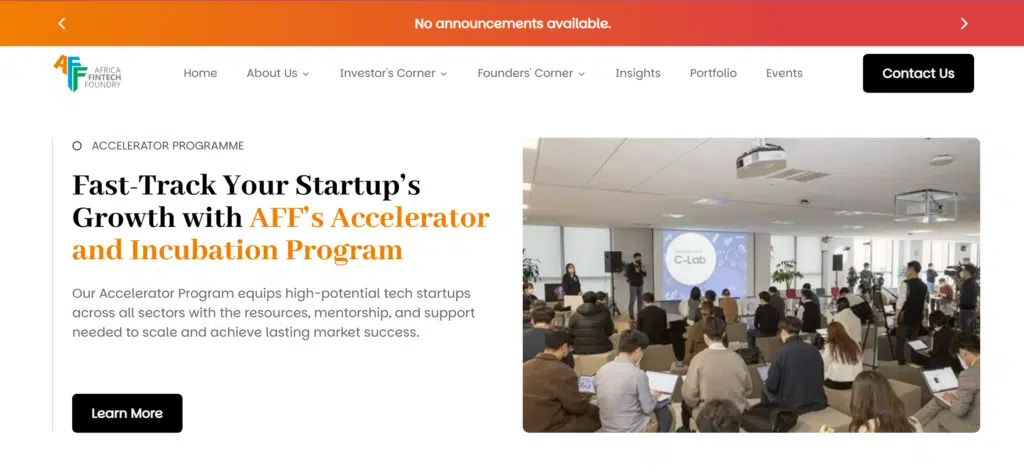
Africa Fintech Foundry (AFF) is a Lagos-based accelerator designed to support early- to growth-stage startups building solutions for payments, education, lending, digital banking, wealth management, and financial inclusion across Africa.
AFF runs a structured accelerator programme that combines product refinement, regulatory and compliance support, and business development guidance.
While investment is not guaranteed, selected startups benefit from deep industry mentorship and exposure to corporate and institutional partners. The programme culminates in a Demo Day, where founders pitch to investors and ecosystem stakeholders.
How to choose the right accelerator for your startup
Choosing the right accelerator can significantly influence your startup’s trajectory, so it’s essential to be intentional about where you apply. Not all programmes are created equal, and the best fit depends on your stage, sector, and long-term goals. Here are a few factors to consider before committing to an accelerator.
Clarify what you want to achieve
Before diving into the list of accelerator options, pause to think carefully about what you hope to gain from joining one. Being clear on your priorities helps you choose a programme that aligns with your needs.
Ask yourself what your biggest gap is at the moment. Do you urgently need capital to build out your product or expand your team? Are you searching for guidance from seasoned operators who have built or scaled companies before? Or are you hoping to plug into a strong community of founders working in the same space?
Your needs should determine the type of accelerator you apply to. Many programmes offer mentorship and networks but no direct funding, so joining such a programme when cash is your key requirement will only lead to frustration. Once you understand exactly what you’re looking for, filtering through available options becomes a more intentional and manageable process.
Look for programs that fit your stage and sector
With your goals defined, the next step is to find accelerators that match your startup’s maturity level and industry. Accelerators are not one-size-fits-all. Some are designed specifically for very early-stage teams, while others cater to startups that already have traction or revenue.
Industry focus also matters. Certain accelerators specialise in verticals like fintech, healthtech, deep tech, or climate solutions. While general accelerators can be helpful, those with expertise in your sector often provide more targeted mentorship, relevant investor introductions, and deeper insight into industry-specific challenges.
Examine the accelerator’s track record
An accelerator’s history tells you a lot about the value it delivers in practice. Not every program lives up to its marketing, so take time to investigate their performance. Look at alumni companies: have they grown meaningfully since completing the programme? Did they raise follow-on rounds, secure key partnerships, or reach new markets?
If funding is part of the offer, confirm that past participants actually received the support that was promised. Review the network the accelerator claims to bring — who are the mentors, and what experience do they bring? Which investors regularly attend demo days or back alumni? The answers to these questions reveal whether the programme consistently develops strong, successful startups.
Review the terms and conditions
Don’t get carried away by an acceptance email. Always scrutinise the terms before committing. Most accelerators take equity in exchange for their support, but the amount varies widely. Understand how much ownership you are expected to give up, the structure of any investment offered, and when the funding will arrive.
These terms matter because accelerators, like VCs, remain part of your cap table and reputation for years. If possible, speak with a legal advisor or an experienced founder before signing anything, especially if you’re new to fundraising.
Consider location and delivery format
Location still plays a role even in an increasingly remote-friendly world. If you prefer an in-person experience, think about the markets you’re trying to reach and where your industry’s strongest ecosystems are located. Being physically present in a startup hub can unlock spontaneous opportunities, richer mentorship, and on-the-ground partnerships.
However, if your schedule is tight or you prefer flexibility, a virtual programme may serve you better. Many accelerators now run fully remote cohorts without compromising on quality, making them accessible to founders regardless of geography.
Tips for preparing your applications
The top accelerator programmes get inundated with applications. Naturally, they end up rejecting a great deal of the applications they receive. Below are four tips to bear in mind as you prepare your application.
Research
You never want to be the guy whose application looks half-assed. It sends the wrong signal to the team reviewing applications and significantly hurts your chances, if not ends them entirely. You should understand whether the accelerator focuses on a specific sector, the typical terms they present to founders, whether they are location-specific, and the level of commitment required. Many accelerators host information sessions or webinars you can attend, and for those that don’t, insights from previous founders can be invaluable.
Team
A strong team is key to a successful accelerator application. You don’t need to list every team member, but you should highlight why your core team is uniquely positioned to solve the problem. Some accelerators prefer teams with at least two founders who offer complementary skills, but if you’re a solo founder, emphasise relevant experience, advisors, or early hires who strengthen your execution capability.
Idea
Your idea should be clearly explained and grounded in a real problem. Outline who your target users are, why the problem is urgent, and how existing solutions fall short. Demonstrate the insight or unique angle your team has uncovered. Accelerators want to see that you understand your market more deeply than the average applicant.
Traction
Traction isn’t limited to revenue. Share meaningful signals such as user growth, retention metrics, waitlists, pilot commitments, partnerships, or even successful prototypes. Be specific with numbers and timelines. Traction tells accelerators that you can execute, iterate quickly, and move the idea beyond theory.
Frequently asked questions
What’s the average acceptance rate for top accelerators?
Top accelerators get a lot of applications and can be very selective. It isn’t uncommon to see a 1% to 3% acceptance rate for these accelerators.
Should I give up equity for accelerator funding?
What you give up depends on the specific accelerator. While some require some equity, others do not. But at all times, ensure the equity you give up is commensurate to the value you receive. Remember, investors often stay with startups for a significant period.
Can I apply to multiple accelerators?
Absolutely. Many accelerators understand they can’t make any guarantees about acceptance and rarely make a fuss about founders applying to multiple startups. However, where an accelerator requests that you disclose this information, it’s always helpful to be honest.
Do I need to relocate for the programme?
Not always. Thanks to the coronavirus pandemic, many accelerators were forced to go remote. A lot have retained that format. If your startup won’t allow you to relocate for some time, then you should stick to remote programmes.
What happens after the accelerator?
You’ll return to continue building your business, leveraging the lessons you’ve learnt at the accelerator. Some programmes continue to provide you with funding, mentorship, market insights, or media exposure.
Conclusion
Accelerators have become critical infrastructure for Africa’s startup ecosystem, offering validation, capital, networks, and hard-earned insight. For founders navigating complex markets, choosing wisely matters. This guide, highlighting 10 top african accelerators, equips entrepreneurs to apply strategically, maximise value, and accelerate sustainable growth across the continent.