



Many fintech founders see strict data laws as a barrier, but what if I told you that it could be a ladder?
Key takeaways
- Regulation rewards early movers. Fintechs that build for strict data laws early turn compliance costs into long-term barriers competitors struggle to cross.
- Trust becomes a product feature. Strong data protection directly improves customer retention, enterprise sales, and regulator confidence.
- While growth tactics get copied, deep regulatory readiness compounds over time.
- Data laws increase switching costs. Once users’ financial data is securely embedded in compliant systems, churn drops sharply.
- Investors price regulatory maturity. In tightening markets, compliant fintechs command better valuations and survive longer.
I’ll be the first to admit that regulators have a long history of stressing fintechs, and often, regulation can seem like something designed to work against startups. Ultimately, however, regulation isn’t what kills great fintechs. Avoiding it does.
We’ve watched fintech founders panic every time new data laws tighten: stricter consent rules, heavier breach penalties, and data localization mandates that seem to slow everything down. The instinctive reaction is fear. But the fintechs that stay ahead of the curve do the opposite by using regulation to their advantage.
In this piece, I’ll break down six ways strict data laws create defensible advantages for fintechs, grounded in real business logic and practical outcomes.
1. Compliance costs quietly become entry barriers
Strict data laws make fintech development more expensive.
Once regulations go hard, costs rise across the board: legal reviews aren’t cheap, infrastructure often has to be redesigned for data localization and encryption, and internal operations get heavier with audits, reporting, and breach-response planning.
Even non-data professionals can see how this can slow down business. But this is exactly where the advantage is.
For well-capitalized or early-compliant fintechs, these costs are amortized over scale. Once the systems are in place, every new customer becomes cheaper to serve. Compliance stops being a recurring headache and becomes a fixed-cost advantage.
For new entrants, though, the math looks brutal. They’re forced to spend heavily before they’ve proven demand, just to reach regulatory parity.

Victoria Fakiya – Senior Writer
Techpoint Digest
Stop struggling to find your tech career path
Discover in-demand tech skills and build a standout portfolio in this FREE 5-day email course
In markets with strict data laws, you don’t get to launch fast, test recklessly, and “figure compliance out later.” That playbook collapses early. Founders either commit to building properly, or they never make it past the pilot stage.
The result is a thinner, more serious competitive field.
In this way, regulation filters the ecosystem. Fintechs that survive that filter enjoy fewer competitors, which means more pricing power, more regulatory goodwill, and a much clearer path to scale.
2. Data localization locks in infrastructure advantages
Data localization, in theory, sounds simple enough; it requires companies to keep user data in-country. In practice, however, it’s one of the most infrastructure-heavy requirements a fintech can face.
Strict data laws often mandate local data hosting, domestic cloud partnerships, and in-country disaster recovery. That means negotiating with approved providers, redesigning data flows, duplicating systems, and repeatedly proving (often) that sensitive information never leaves jurisdictional boundaries.
This is where early movers pull far ahead.
Fintechs that localize early get to design compliant architectures from day one. Their stacks grow with regulation. By the time competitors arrive, the hard work is already sunk—costs absorbed, systems stress-tested, regulators familiar.
Latecomers don’t get that luxury.
They face painful re-architecture, delayed launches while approvals crawl forward, and higher burn just to reach baseline compliance. Worse, localization isn’t something you can “quickly fix” your way out of.
Even if they manage to put localized infrastructure in place, they still have to deal with ridiculous switching costs. Migrating regulated financial data across borders, clouds, or vendors becomes a legal and operational nightmare. Customers stay put. Regulators tend to prefer incumbents. Partners hesitate to onboard newcomers.
Data localization cements the advantage of whoever builds first and builds right.
3. Trust compounds faster under strict laws
Trust operates differently in fintech. Users are far more sensitive about financial trust than founders realize.
When it comes to fintech, people don’t just ask whether your app works. They worry about where their data lives, who can access it, if their transactions and money are safe, and what actually happens when something goes wrong. Strict data laws force fintechs to answer those questions clearly and publicly.
That pressure turns compliance into a powerful trust signal.
When regulations are tight, users subconsciously associate compliance with stability. A regulated fintech feels safer, longer-term, and less likely to disappear overnight. Naturally, I don’t sign up with fintechs that aren’t licensed by the CBN.
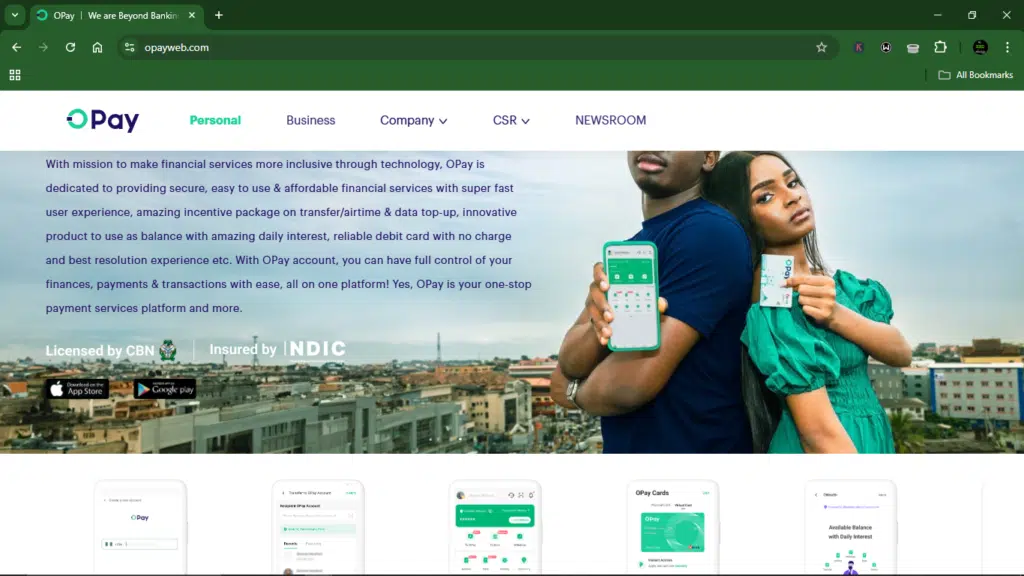
Over time, this creates a compounding effect. The longer a compliant fintech operates without incidents, the more trust it accrues, and the harder it becomes for newer players to earn the same confidence.
Strict data laws accelerate trust compounding. Instead of spending endlessly on marketing to prove credibility, compliant fintechs let time and regulation do the heavy lifting.
4. Regulatory alignment unlocks enterprise and government clients
Some of the largest contracts and the stickiest revenue for fintechs come from institutions that care most about data laws, such as governments, banks, and large enterprises. In addition to paying for features, these clients are buying assurance that sensitive financial data is handled correctly, compliantly, and securely.
That creates a unique advantage. Companies that have aligned early with strict regulations can confidently pitch to these clients, offering guarantees and compliance certifications that non-compliant startups simply cannot provide. Large contracts follow naturally, often multi-year and high-value, with built-in renewal incentives.
Competitors who skipped compliance or treated it as an afterthought find doors closed before they knock. Regulatory alignment helps sales and effectively locks out non-compliant newcomers from the most lucrative, high-trust channels.
5. Data laws reduce platform and big tech competition
Global tech giants often struggle to dominate highly regulated local markets. Their infrastructure is built for cross-border scalability, not for country-specific compliance.
Their one-size-fits-all privacy policies, centralized data flows, and global-first operating models make it difficult for Big Tech to satisfy stringent local requirements.
Local fintechs, on the other hand, adapt quickly. They build data handling, storage, and governance processes tailored to national regulations. By operating close to regulators and understanding the legal landscape intimately, they can implement compliant systems faster than foreign entrants.
Strict data laws level the playing field, neutralizing the advantage of deep-pocketed global platforms. Suddenly, local fintechs are protected players, with regulatory moats that keep competitors at arm’s length.
6. Compliance creates proprietary data advantages
Strict data laws fundamentally reshape how fintechs access and use data. When regulations require permissioned data, limit sharing, and enforce audit trails, not all datasets are created equal. Historical transaction histories, consented user behaviors, and verified identity records become rare, highly valuable assets.
For compliant fintechs, this creates a proprietary data advantage. Over time, they accumulate clean, audited, regulator-approved datasets that competitors cannot easily replicate. These datasets are the backbone for:
- Smarter underwriting models for loans and insurance.
- Improved fraud detection and prevention.
- Tailored product recommendations and risk scoring.
Because the data is legally and technically tied to the compliant infrastructure, years of accumulation cannot be copied overnight. Even well-funded entrants are forced to start from zero or risk non-compliance.
This flywheel not only improves operational efficiency and customer outcomes but also deepens the competitive moat, as every additional year of compliant data strengthens the fintech’s market position, making late entrants increasingly disadvantaged.
Why investors love regulatory moats, often quietly
While regulation often feels like a headache for founders, from an investor perspective, it’s a quiet reassurance for long-term capital. Predictable rules reduce market chaos and make outcomes easier to model.
Key impacts on valuation:
- Lower competition. Compliant incumbents dominate high-barrier markets.
- Longer customer lifetimes. Trust and regulatory alignment increase retention.
- Higher switching costs. Moving to non-compliant alternatives is costly or impossible.
In summary, the same laws that intimidate new fintechs provide confidence to patient investors, making regulatory moats one of the most undervalued forms of defensibility in emerging markets.
When strict data laws become a liability
Regulatory moats have a flip side.
Over-compliance can slow product development, create clunky user experiences, and lock teams into inflexible architectures. Some startups spend more time checking boxes than solving real customer problems.
Balance is key here.
Treat compliance less like bureaucracy and more like a strategic design principle. The best fintechs integrate regulatory requirements into their products from day one. They automate reporting, incorporate consent management into the user journey, and architect systems that scale without constantly revisiting legal checklists.
FAQs
Do strict data laws slow fintech innovation?
Short-term, yes. But in the long term, they favor serious builders who use compliance as a growth advantage.
Are regulatory moats stronger than network effects?
They often reinforce each other. Compliant fintechs build trust that amplifies user retention, which, in turn, deepens the moat.
Should startups enter highly regulated markets early?
Only if they plan to stay, scale, and strategically absorb compliance costs. Early entry compounds advantages over time.
Conclusion
Strict data laws are secret weapons. Fintechs that build systems aligned with regulation gain trust, enterprise access, proprietary data, and an almost impenetrable competitive moat.
Founders shouldn’t treat compliance as a checkbox. Instead, use it as a strategic lever to outlast competitors and scale responsibly. For investors, regulated fintechs offer both growth and predictability, a rare combination in emerging markets.
Disclaimer!
This publication, review, or article (“Content”) is based on our independent evaluation and is subjective, reflecting our opinions, which may differ from others’ perspectives or experiences. We do not guarantee the accuracy or completeness of the Content and disclaim responsibility for any errors or omissions it may contain.
The information provided is not investment advice and should not be treated as such, as products or services may change after publication. By engaging with our Content, you acknowledge its subjective nature and agree not to hold us liable for any losses or damages arising from your reliance on the information provided.
Always conduct your research and consult professionals where necessary.