




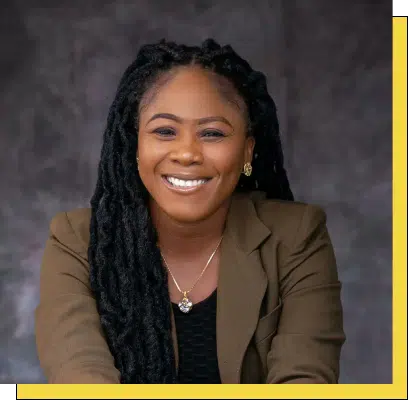
Born in Nigeria, Seyi Fabode quickly learnt to synthesise information, distil it, and use it to drive financial and investment decisions. After a job at a metal factory in Agege and, luckily, landing a job at GTBank, he left Nigeria to work across the UK and US.
Through a failed startup, funding raises, and an exit that opened doors for his staff, Fabode has survived the world of tech entrepreneurship and now manages an AI-powered energy infrastructure in the diaspora.
His underlying belief, which still drives him today, is simple: “If you know better, you will do better.”
In this edition of Techpoint Diaspora, we follow Fabode’s journey from his early experiences with entrepreneurs to building and now working in venture scale.
The starting point
My professional approach began in childhood, shaped by curiosity. I would go to the library, choose a topic, and consume almost every book available on it. My mother noticed my reading habit and required me to summarise what I had read so she could quickly grasp what I had learnt.
This honed my ability to synthesise information, distil it to its core essence, and then communicate it clearly.
The businesses I have built are centred on curating information from disparate sources to empower people to make confident financial or investment decisions without being overwhelmed by complexity.
From Lagos to London
I studied Metallurgical and Materials Engineering at the Federal University of Technology, Akure. Although that wasn’t really like traditional engineering, I was curious, wild, and random.
After graduation, I started working at a metal factory in Agege, Lagos, owned by someone who had studied abroad. Returning to Nigeria, he had realised that a bunch of the businesses in Lagos needed metal parts. So he set up a factory to supply metal to many companies.

Victoria Fakiya – Senior Writer
Techpoint Digest
Stop struggling to find your tech career path
Discover in-demand tech skills and build a standout portfolio in this FREE 5-day email course
In my head, I was like, “this random dude here is making a bunch of money off this business that no one is really paying attention to.” That was fascinating to me.
After that, post-NYSC, I worked at Guaranty Trust Bank (GTB) as a Risk Analyst. Funny enough, I actually drove one of my friends to the interview, and while waiting, the security guy told me to go in. I did the test, and was one of the 10 people selected that year out of thousands of applicants.
The job was boring, though, especially since we were mostly using Excel, but I noticed something interesting there. 98 out of every 100 loan applicants I was analysing risk for were entrepreneurs. They showed up at random hours of the day, asking for more money than I’d ever seen in my life. This experience, coupled with watching my father running his own business after leaving the bank, was fascinating to me.
I pursued a postgraduate degree in Manufacturing Systems Engineering, which was basically a continuation of my undergraduate studies, but with more focus on workflows, production processes, and the operational optimisation of large-scale infrastructure and facilities.
This led me to work on the operations side of a 1,000-megawatt power station in East London, which supplied electricity to approximately half a million homes in the Greater London area.
The technology pivot to entrepreneurship
My true transition to tech began at the power plant during a financial crisis. When one of our three major corporate off-takers went bankrupt, we were left with a 350-megawatt surplus that needed to be traded. We had to develop a software to trade this excess energy on exchanges.
Two technology founders were contracted to build this system. As the plant liaison, I spent time with them, witnessing the creation of a sophisticated system to trade millions of dollars’ worth of electricity daily. They built it, and it worked. That experience was transformative.
I left the power plant and joined them because I knew I had to be part of this. The firm built EnergyQuote, which was partly based on the custom software they had built for us. They turned it into a B2B and B2C product, eventually selling to major corporations like Asda, the UK version of Walmart.
Simultaneously, inspired by my father and his entrepreneurial friends, I began to cultivate my own business aspirations.
A failed startup and an exit
When I got married, my wife and I decided to move back to the US, and so I quit and launched my own venture, Power2Switch.
This company was essentially the US counterpart to Energy Quote, launching when US energy markets were opening up. The core mission remained consistent: to take disparate information from the grid and distil it so that consumers and businesses could make smarter financial decisions about their energy usage. We successfully raised about $3 million in 2009.
After approximately five years, we achieved a successful exit. What I value most from this experience is not just the financial outcome, but the impact on the team. Every single person who worked at Power2Switch, about 11 or 12, went on to launch their own companies, aside from one lady. The exit served as a crucial catapult, enabling them to launch their own ventures without immediate financial pressure.
Following the exit, I spent time in the venture capital world with Evergreen Climate Innovation, one of our investor funds. I helped out with their thesis for “Where is the Energy Industry going?”
I founded an IoT company that was sensor-driven for the city’s water systems, and we’ll pull in data to make decisions. We raised $4 million, but it was shut down after 4 years because we never hit an inflexion point, and it wasn’t going to be venture-scale.
Experience and building in the diaspora
My experience building in the UK and the US provides a perspective on the challenges of development. In the US, I observed that the problems founders complain about are relative. Unlike other markets, the US already possesses significant existing infrastructure and utility backend interfaces; we were rarely starting from zero, and partners were often willing to allow us to build APIs to connect.
To African founders considering building in the US, my advice is to build solutions for problems you deeply understand. Utilise that distinct tenacity, but scale the solution to the broader market, rather than limiting it to a niche. Humans are fundamentally the same everywhere.
The company I am building now is effectively Power2Switch for the AI age, focusing on two interdependent angles, information play and deployment play.
We are creating a platform to help infrastructure investors make better asset investment decisions on the US National Grid. Our system assesses the value of individual assets (e.g., a wind farm currently paying the grid to upload power) and matches them to better contracts or co-location opportunities (like a data centre) to maximise revenue.
I believe Africa is uniquely positioned for the next wave of data centre development. While I believe the US is nearing an oversupply of power capacity for data centres, Africa offers a compelling economic proposition.
A data centre with its own private power source in Africa is potentially cheaper than one in the West. This stems from a distorted perception of risk. Foreign investment often assigns an unnecessarily high premium to non-market risks in emerging markets. In reality, local partnerships can lower regulatory friction. For instance, promising a village power in exchange for land use and protection can lower friction.
Here in the US, a project of the same size can face years of bureaucracy and interest payments before the first shovel hits the ground. Africa’s localised, integrated power solutions represent a significant economic advantage.