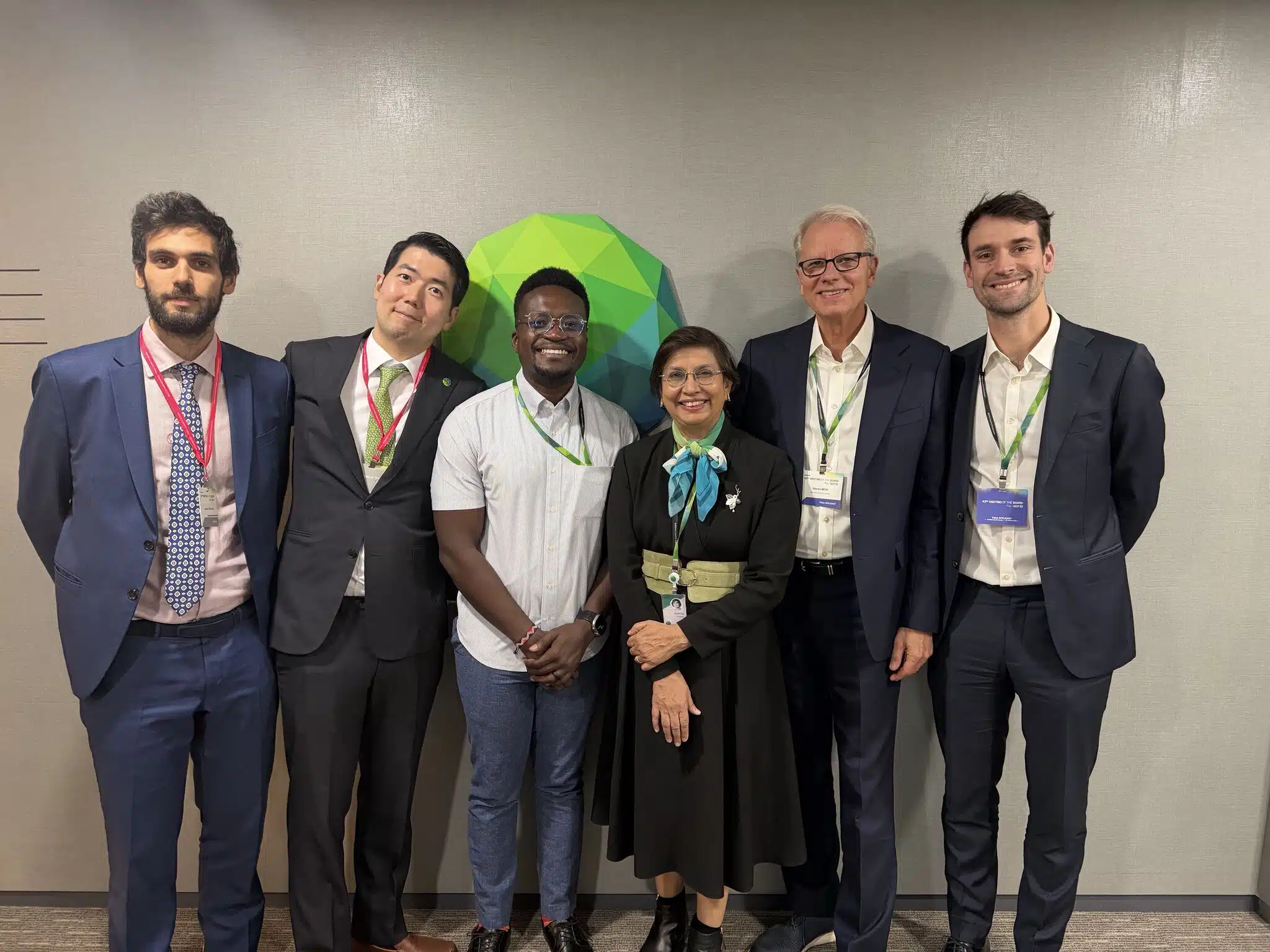





When Sulaiman Adewale decided to build Xara, he was sure it would be a hit, but he did not expect it would lead to a job offer from xAI. According to him, it was an extra layer of validation for a product he initially built because he is short-sighted.
Xara, in a way, became his eyes. The AI-powered banking assistant could look through his camera lens, capture an account number, and send money to it.
In the ten months since launch, the product has evolved into more than just an accessibility tool. It can now act as a personal financial analyst. Users can ask questions like: “Who did I send money to the most in the last one month?”

They can also give it future instructions, such as: “Send ₦40,000 ($25) daily to my girlfriend’s account for four months.”
Adewale is proud of what he has built. He describes Xara as the first of its kind. While similar ideas exist globally, most stop at support. According to the Central Bank of Nigeria (CBN), the top three use cases for AI by Nigerian financial institutions are fraud detection, customer support, and credit scoring.
Xara’s bet is more ambitious: turning the conversation itself into the banking interface.
However, the most interesting thing about Xara is not just what it can do — or even the 45,000 users it has acquired in ten months — but Adewale himself and his unlikely journey into tech.
Building Xara

Xara runs on WhatsApp. It behaves like a contact that understands your finances and can also execute transactions on your behalf.
The decision to build on WhatsApp was deliberate. While Adewale initially built the product for himself, he also wanted something simple enough for Nigeria’s older generation. And if there is any app they are already familiar with, it is WhatsApp.

Victoria Fakiya – Senior Writer
Techpoint Digest
Make your startup impossible to overlook
Discover the proven system to pitch your startup to the media, and finally get noticed.
Still, building an AI banking assistant that can initiate transactions is far from straightforward.
“We had to tame the LLMs in order to operate with enough stability for users. They’re unstable and unpredictable. To build on them, you need to know every way they can break and prepare for it.”
Adewale describes this as the biggest technical challenge behind Xara. According to him, it is also why attempts to replicate the product have struggled — building it goes far beyond simply wrapping an existing model.
While he does not disclose the exact large language model powering Xara, he says it is based on a fine-tuned version of a publicly available model. Despite the complexity of building a financial product on top of LLMs, he adds that the platform has not experienced a security breach, even with over 45,000 users.
Security is also a key consideration given its WhatsApp-based interface.
“People have no idea how secure WhatsApp is,” he says.
To reinforce this, Xara uses a four-digit PIN to authorise transactions, avoids OTP-based authentication entirely, and implements strict KYC protocols.
For now, the company operates through partnerships with multiple fintechs. User wallets, for example, are created through a partnership with Rubies MFB, while services like airtime purchases are powered by Kuda.
Adewale describes Xara as a financial layer sitting on top of existing infrastructure — a positioning that has made it easier to secure partnerships.
“It was easy because the technology we presented was amazing, and they were also interested in it.”
However, Xara does not plan to rely on these partnerships indefinitely. The company has bigger ambitions — ones that may require obtaining its own licences and, potentially, evolving into Nigeria’s first AI-powered neobank.
School is not a scam, but Adewale didn’t need it
Adewale does not like to talk about being a self-taught developer, even though he has been coding since 2010. He worries that people might take his story as an excuse to skip formal education. But for him, university was not a path he rejected — it was one he simply could not afford. Instead, he attended a technical college.
While his journey turned out well, he is quick to admit that not everyone has the discipline required to learn on their own.
“I’m a very dogged person. I could have gone to secondary school like my peers, but I wanted hands-on learning, and I really wanted to learn about computers.
From Technical College Osogbo, I proceeded to school myself.”
From Osogbo, Adewale went on to work on international projects, including the Voya app, a Singaporean social platform. He also served as Lead Software Engineer at Boost, a Zambian startup.
If things go well, he could also find himself working with xAI — an opportunity he says he looks forward to. However, with Xara gaining traction, it is a move he would only make if it does not come at the expense of his startup.
Rapid growth
AI companies have redefined what rapid growth looks like. OpenAI, which ushered in the current AI boom in 2022, reached one million ChatGPT users within five days of launch.
Lovable grew to 2.5 million users in eight months, while Cursor reached one million users sixteen months after launch.
A similar pattern is emerging in Africa. Decide, the AI-powered data analyst built by Abiodun Adetona, recorded thousands of users within weeks. Dala, often described as Africa’s version of Lovable, reached 85,000 users in four months.
Xara is part of this new wave. In ten months, it has grown to 45,000 users. In its first seven months, it processed ₦4 billion ($2,500,000) in transactions. Three months later, it had processed another ₦4 billion, effectively doubling its total transaction volume to ₦8 billion ($5,000,000).
But growth, especially the kind driven by novelty, raises a different set of questions: What exactly are users sticking around for, and how does that translate into a sustainable business?
For now, Xara makes money the way most Nigerian fintechs do: by charging transaction fees and earning commissions on services like airtime and data purchases. It’s a familiar model, but one that depends heavily on volume and thin margins, raising questions about how far Xara’s current scale can take it.
There is also the matter of dependence. Xara does not hold customer funds directly; instead, it sits on top of a network of banking partners, including Kuda and PalmPay, acting as a conversational layer that connects users to existing financial infrastructure.
It is a smart way to move quickly in a regulated industry, but one that inevitably limits how much control the company has over its own stack — at least for now.
But, Adewale is betting that what Xara lacks in control today, it can make up for in expansion tomorrow.
A business-focused version of the product is already in the works, one that could introduce subscription revenue and unlock new use cases like payroll, invoicing, and bulk payments, all through the same chat interface. If successful, it would move Xara beyond everyday consumer transactions into the operational layer of businesses.
Adewale does not see Xara as just another fintech app — or even a neobank. In his view, it could evolve into something closer to WeChat: a single interface where users don’t just bank, but interact with digital services, all through conversation.
Whether that vision materialises remains to be seen. But if Xara’s early growth is anything to go by, the idea of banking by simply chatting may be a bigger need than anyone imagined.