




Halo,
Victoria from Techpoint here,
Here’s what I’ve got for you today:
- Telecoms in Niger face fresh regulatory heat
- Herotel and Amazon team up for rural Internet in SA
- Rwanda launches eKash instant payments platform
- IHS Towers secures fresh funding for expansion
Telecoms in Niger face fresh regulatory heat

Niger is losing patience with poor mobile service. The country’s telecom regulator, ARCEP, has fined Airtel Niger, Moov Africa Niger, Niger Telecoms, and Zamani Telecom after inspections in Niamey found that the operators failed to meet the minimum quality-of-service standards required under their licences. The regulator said the penalties are meant to push operators to improve call quality, internet speeds and network reliability for millions of subscribers who continue to complain about dropped calls and poor connectivity.
The move matters because reliable telecommunications have become essential infrastructure for everything from mobile money and eCommerce to education and healthcare. Poor network quality doesn’t just frustrate consumers; it slows businesses, limits digital inclusion and makes it harder for governments to deliver digital public services. Across Africa, regulators are becoming increasingly willing to impose financial penalties on operators that fail to meet their licence obligations, signalling that network quality is becoming just as important as network coverage.
The latest sanctions didn’t come out of nowhere. ARCEP has spent the past few years carrying out nationwide quality-of-service audits and warning operators to improve their networks. In 2022, the regulator identified service shortcomings and gave operators several months to fix them. Follow-up inspections found that improvements had fallen short of expectations, prompting financial penalties. Similar regulatory action has since spread across the continent, with countries such as Cameroon also fining operators, including MTN and Orange, over poor coverage and service quality.
Unlike some neighbouring markets, Niger’s telecom industry has struggled with infrastructure challenges, including power shortages, security concerns and the high cost of expanding networks into remote areas. At the same time, demand for mobile internet has continued to rise as smartphone adoption increases. Regulators argue that operators must continue investing despite these challenges, while telecom companies often point to difficult operating conditions and rising costs as obstacles to faster network improvements.
This development is unrelated to MTN’s proposed acquisition of IHS Towers, which involves telecom infrastructure across several African markets but does not include any of Niger’s mobile operators. Still, the story highlights a broader trend across the continent: governments are no longer judging telecom companies solely by subscriber growth. Increasingly, they’re demanding measurable improvements in customer experience, and operators that fail to deliver risk paying a hefty price.
Herotel and Amazon team up for rural Internet in SA

Amazon has announced that Amazon Leo, its low-Earth orbit (LEO) satellite broadband service, will launch commercially in South Africa in 2027 through a partnership with local Internet provider Herotel. The service, branded evry, will target households and small businesses in rural and underserved communities where fibre and traditional wireless networks remain difficult or too expensive to deploy. It will be Amazon Leo’s first commercial partnership on the continent.

Victoria Fakiya – Senior Writer
Techpoint Digest
Stop struggling to find your tech career path
Discover in-demand tech skills and build a standout portfolio in this FREE 5-day email course
The deal is significant because it gives South Africa another major satellite Internet option as demand for reliable broadband continues to grow. Millions of South Africans living on farms, in small towns and remote communities still struggle to access fast internet because extending fibre infrastructure isn’t always economically viable. Herotel, which already serves more than 350,000 customers across over 550 towns, will handle installations, customer support and field operations, using its nationwide footprint to bring Amazon’s service to areas traditional networks have struggled to reach.
The announcement also adds a new twist to the battle for Africa’s broadband market. SpaceX’s Starlink has already expanded into more than 20 African countries, but it has yet to launch in South Africa due to local licensing and Black Economic Empowerment (BEE) requirements. Amazon is taking a different approach by partnering with an established local provider rather than entering the market alone. The move comes as governments across Africa increasingly view satellite broadband as a practical way to close connectivity gaps that mobile towers and fibre networks cannot easily address.
Amazon’s satellite ambitions have been years in the making. The project began as Project Kuiper in 2019 before being rebranded as Amazon Leo in November 2025. Since then, the company has accelerated satellite deployments, with more than 390 satellites now in orbit and thousands more planned. Earlier this month, Amazon confirmed it expects to begin initial broadband services in other markets later in 2026 while also expanding partnerships with telecom operators, including Vodafone and Vodacom, to connect remote mobile base stations across Africa.
As competition between Amazon Leo, Starlink and other satellite operators intensifies, consumers could benefit from better coverage, improved service quality and, eventually, more competitive pricing. If successful, South Africa could become the launchpad for Amazon Leo’s wider expansion across the continent, bringing high-speed internet to communities that have long been left behind by traditional infrastructure.
Rwanda launches eKash instant payments platform
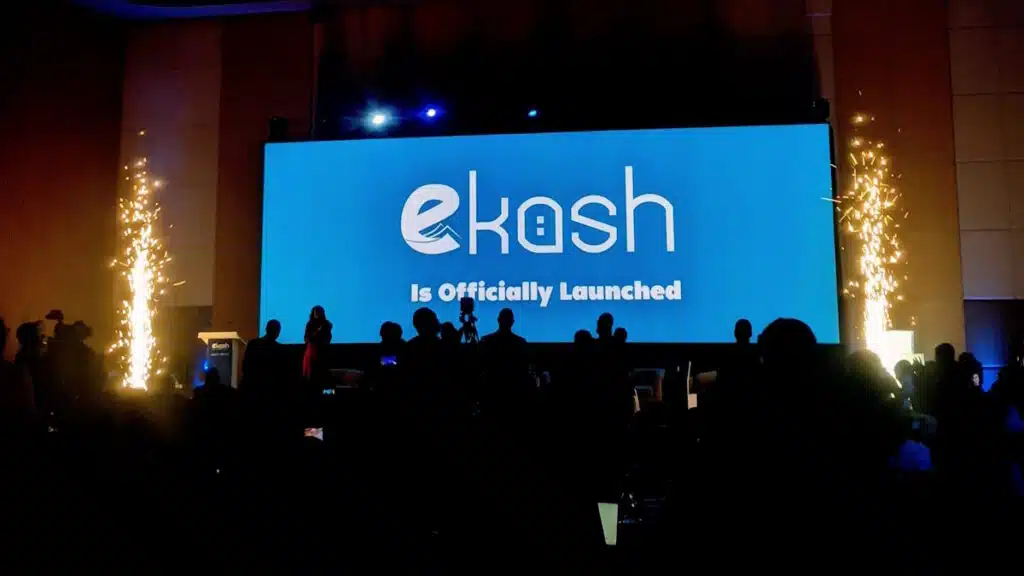
Sending money in Rwanda is about to become a lot easier and much cheaper. The country has officially designated eKash as its national instant payment system, with the platform going live on July 14, 2026. The new system allows people to send money instantly between bank accounts and mobile wallets without signing up for a new service. Better still, transfer fees are capped at just RWF 20 (about $0.01) regardless of the amount being sent, while users can transfer up to RWF 10 million (around $6,800) in a single transaction.
The launch is a big deal because it removes one of the biggest headaches in digital finance: moving money between different financial institutions. Whether someone is sending funds from a bank account to a mobile wallet, from one wallet to another or between two banks, eKash will handle it through a single interoperable network. Customers can continue using their existing banking apps, USSD codes and mobile money wallets, meaning there’s no need to download another app or create a new account.
Countries including Nigeria, Ghana, South Africa, Tanzania and Egypt have spent the past few years building national instant payment systems to reduce reliance on cash, lower transaction costs and make digital payments more accessible. These systems are becoming the backbone of modern financial services, allowing money to move between banks and mobile money providers in seconds instead of hours or days. Rwanda’s version is among the continent’s cheapest, with a flat transaction fee regardless of payment size.
The rollout has been in the works for months. The National Bank of Rwanda (NBR) directed that all domestic interoperable retail payment transactions transition to eKash, while RSwitch, the country’s national payment switch, oversaw the migration. Local banks, including the Bank of Kigali, had already begun notifying customers ahead of the July 14 launch. Under the new pricing model, transfers that previously cost as much as RWF 5,000 (about $3.40) now cost just RWF 20, dramatically lowering the cost of digital payments for consumers and businesses alike.
For Rwanda, eKash is more than just another payment platform; it’s a key piece of the country’s digital economy strategy. By making banks and mobile money providers work seamlessly together, the government hopes to encourage more people and businesses to embrace electronic payments, improve financial inclusion and reduce friction in everyday transactions. As more African countries invest in interoperable payment infrastructure, Rwanda’s latest move reinforces its reputation as one of the continent’s most ambitious digital economies.
IHS Towers secures fresh funding for expansion

Africa’s telecom infrastructure is getting another financial boost. Standard Bank has extended a new financing facility to IHS Towers, one of the continent’s largest independent tower companies, to support the rollout and upgrade of telecommunications towers across several African markets. The funding is expected to accelerate the deployment of infrastructure needed for expanding 4G and 5G coverage, helping mobile operators keep pace with growing demand for data services.
The deal matters because telecom towers sit at the heart of Africa’s digital economy. Every phone call, mobile money transaction, or video stream depends on the infrastructure that companies like IHS build and maintain. Rather than constructing their own towers, operators such as MTN, Airtel, Orange and Vodacom typically lease space from independent tower companies. That model reduces costs, speeds up network expansion and allows operators to focus on delivering services instead of managing physical infrastructure. With smartphone adoption and data consumption rising rapidly across the continent, demand for new towers has never been higher.
The funding also comes at a pivotal moment for IHS Towers. Founded in Nigeria in 2001, the company has grown into one of the world’s largest independent tower operators, managing roughly 39,000 towers across Africa and Latin America. Over the years, it has expanded through acquisitions, including buying thousands of MTN-owned towers in countries such as Côte d’Ivoire, Cameroon, Zambia, Rwanda and, later, South Africa under sale-and-leaseback agreements. Those deals allowed MTN to free up capital while continuing to use the towers through long-term leasing arrangements.
But the relationship between the two companies is changing dramatically. On February 17, 2026, MTN Group announced an agreement to acquire 100% of IHS Towers in an all-cash transaction valuing the company at approximately $6.2 billion. The acquisition, which is still subject to regulatory and shareholder approvals, marks a strategic reversal for MTN. After spending years selling tower assets to specialist operators, Africa’s largest mobile network operator is now bringing that infrastructure back in-house. The move is expected to give MTN greater control over network expansion, reduce long-term leasing costs and strengthen its 4G and 5G rollout strategy across key African markets.
For Africa, the Standard Bank financing and MTN’s proposed acquisition point to the same trend: telecom infrastructure is becoming an increasingly strategic asset. As operators race to expand broadband access, deploy 5G and support AI-driven services, owning — or financing — the towers that power those networks is becoming just as important as attracting subscribers. Whether under IHS or eventually MTN, continued investment in tower infrastructure will play a critical role in closing Africa’s connectivity gap and supporting the continent’s next phase of digital growth.
In case you missed it
How Ismail Eleburuike is building the operating system for African schools with SchoolTry
What I’m watching
- Mentality | Mental Health Documentary
- Why You Keep Betraying Yourself (And Call It Weakness)
Opportunities
- Visa is hiring for several roles across many countries. Apply here.
- Qore is hiring for several positions. Apply here.
- inDrive is hiring to fill several vacancies in different countries. Apply here.
- Are you a female-led tech or tech-enabled business preparing for sustainable growth and opportunity to access capital? Apply for the Female Founders Growth Programme and grab up to $2 million. Apply here.
- Bamboo is hiring in Ghana and Nigeria. Apply here.
- Cowrywise is recruiting some engineers. Apply here.
- PiggyVest is looking for a Product Technical Manager. Apply here.
- Paystack is hiring for a few roles. Apply here.
- Moniepoint is recruiting for several roles. Apply here.
- Flutterwave is hiring for several roles in Nigeria, the UK, and the US. Apply here.
- As one of Techpoint Africa’s most engaged readers, you have a direct hand in shaping what we publish next. Take our quick, 3-minute survey to tell us the stories and features you value most. Your responses are anonymous, and your feedback will help guide our editorial focus in the months ahead. Fill the survey here.
- Moniepoint is hiring for over 100 roles. Apply here.
- To pitch your startup or product to a live audience, check out this link.
- Follow Techpoint Africa’s WhatsApp channel to stay on top of the latest trends and news in the African tech space here.
Have a superb Thursday!
Victoria Fakiya for Techpoint Africa