




مرحبًا,
Victoria from Techpoint here,
Here’s what I’ve got for you today:
- Flutterwave lands Series E, hits $3.2B valuation
- This Nigerian startup wants to be Spotify for writers
- How a botched deal left Telkom Kenya in limbo
Flutterwave lands Series E, hits $3.2B valuation

Flutterwave has raised a new Series E funding round that values the African fintech giant at $3.2 billion, marking its first major fundraising announcement since February 2022. The round includes a strategic investment from Ripple, the U.S.-based blockchain payments company behind the RLUSD stablecoin. While Flutterwave and Ripple did not disclose the size of the investment, the significance of the deal goes beyond the valuation bump.
Flutterwave plans to integrate Ripple’s RLUSD stablecoin and XRP Ledger infrastructure into its payment network, allowing merchants and consumers to send, hold, convert, and settle transactions using digital dollars. In practical terms, Flutterwave is betting that stablecoins can help solve one of Africa’s biggest financial challenges: expensive and slow cross-border payments. The company expects the partnership to significantly increase stablecoin transaction volumes as more businesses look for cheaper ways to move money across borders.
Interestingly, back in April 2026, local media reports claimed that President Bola Tinubu had approved a $75 million investment in Flutterwave through the Ministry of Finance Incorporated (MoFI). A now-deleted social media post from a presidential aide also suggested the company was preparing to raise as much as $250 million through an initial public offering. Flutterwave quickly distanced itself from the reports, saying it had no knowledge of any government investment and dismissing suggestions that such a transaction had been finalised. The clarification fuelled speculation about the company’s fundraising and IPO plans, but the latest Series E round now provides a clearer picture of how Flutterwave is choosing to finance its next phase of growth.
The fintech has spent the past year repositioning itself as a broader financial infrastructure. In January 2026, it secured a Nigerian microfinance banking licence through its acquisition of Mono. The funding also matters because it arrives during a transitional period for African tech. Startup funding has slowed compared to the boom years of 2021 and 2022, and investors have become far more focused on profitability and sustainable growth. Flutterwave appears to be responding to that shift. CEO Olugbenga Agboola has increasingly emphasised profitability, stablecoin-powered payments and cross-border trade corridors. The company says it has processed more than $40 billion in payments and over a billion transactions, giving it a scale advantage that few African fintechs can match.
The road to this moment has been years in the making. Flutterwave was founded in 2016 and became a unicorn in March 2021 after raising $170 million in a Series C round at a valuation above $1 billion. Less than a year later, in February 2022, it raised $250 million in Series D funding and tripled its valuation to over $3 billion, becoming Africa’s highest-valued startup at the time. Since then, the company has expanded across multiple markets, launched remittance and enterprise products, pursued acquisitions and strengthened its regulatory footprint.
The bigger story is that Flutterwave is trying to evolve from a payments company into a financial operating system for African commerce. The Mono acquisition in January 2026, the banking licence in April, recent stablecoin partnerships, workforce investments and now a fresh Series E round all point in the same direction: building deeper infrastructure rather than simply moving money. For investors, the bet is that the next decade of African fintech growth will be driven not just by payments but by companies that own more layers of the financial stack.
This Nigerian startup wants to be Spotify for writers

What if the future of reading looks less like a book and more like a WhatsApp status? That’s the question James Nelson found himself asking after years of sharing thoughts, stories, and observations on WhatsApp. He noticed something curious: people who would never read a long blog post were happily tapping through dozens of status updates. The format was short, easy to consume, and surprisingly engaging.
That insight eventually led to the creation of Storipod, a Nigerian startup trying to reinvent how people read and how writers get paid. Founded by a team of four product and engineering professionals, the platform lets writers publish stories in short, bite-sized formats known as “pods”. Instead of asking readers to commit to lengthy articles or books, Storipod breaks content into smaller chunks designed for mobile-first audiences.
The idea appears to be gaining traction. Storipod says it has grown to more than 161,000 registered users and now hosts hundreds of thousands of stories on its platform. But for Nelson, user growth is only part of the story. The bigger goal is to build the infrastructure that helps African writers distribute their work and earn from it without relying on traditional publishers.
Nelson argues that while musicians can upload songs to Spotify and filmmakers have multiple streaming platforms, writers still face significant barriers to discovery and monetisation. Most aspiring authors won’t land major publishing deals, and many struggle to find audiences on their own. Storipod wants to solve that by giving creators tools to charge for content, receive tips from readers, lock stories behind paywalls, and even earn through a pay-per-view model that rewards engagement.
In a market where creator-economy conversations often focus on video, music, and influencers, Storipod is making a different bet: that writers deserve their own ecosystem, too. If the company succeeds, it could open up new income opportunities for thousands of African storytellers who have traditionally been left out of the digital creator boom. Check out Bolu’s story for more details on how Storipod plans to make that happen.
How a botched deal left Telkom Kenya in limbo
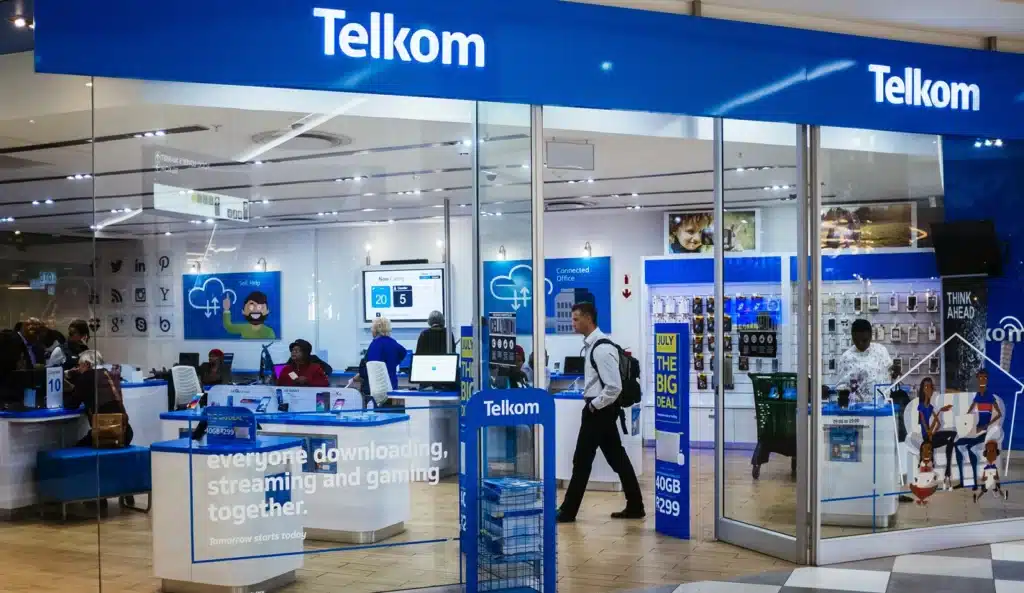
A fresh parliamentary probe has thrown Telkom Kenya back into the spotlight after it emerged that the government may not actually control the telecom operator, despite having spent billions to acquire it. Lawmakers investigating the deal, as reported by Business Daily, were told that seven months after the State paid KSh 6.1 billion to acquire a majority stake, ownership records still show a complex offshore structure linked to Jamhuri Holdings, a vehicle associated with private equity firm Helios Investment Partners. The revelations have reignited questions about one of Kenya’s most controversial corporate transactions.
Telkom Kenya provides critical communications infrastructure used by government agencies, security institutions, and key state operations. The government justified its 2022 buyout partly on national security grounds, arguing it needed greater control over the company. If ownership and control remain unclear years later, it raises concerns about governance, transparency and whether taxpayers ultimately got what they paid for.
The latest controversy is the culmination of a decade-long saga. In 2016, Helios acquired a controlling stake in Telkom Kenya from Orange through a special-purpose vehicle called Jamhuri Holdings, while the Kenyan government retained a minority stake. The investment was supposed to revive Kenya’s struggling third-largest telecom operator and help it compete more effectively against market leader Safaricom. But the turnaround never fully materialised as Telkom continued to lose market share and battle operational challenges.
Things began to unravel after the collapse of a proposed merger between Telkom Kenya and Airtel Kenya in 2019. Helios later argued that regulatory delays and the eventual failure of the transaction deprived Telkom of a crucial opportunity to scale and reduce the need for fresh capital injections. At the same time, disputes emerged over valuable Telkom assets, including a 79-acre property in Nairobi that Helios claimed was removed from the company’s balance sheet without compensation. By 2021, the private equity firm had had enough and triggered its exit process.
That exit led to the government’s controversial 2022 decision to buy Helios’s stake for KSh 6.09 billion while also assuming hundreds of millions of dollars in shareholder loans. What was presented as a clean buyout has since become the subject of multiple investigations, ownership disputes and questions over who really controls the telecom operator today. The latest parliamentary hearings suggest the Telkom story is far from over.
In case you missed it
- CBN gives banks and fintechs 6 months to localise payment data
What I’m watching
- The bizarre phenomena that medicine struggles to explain | David Linden: Full Interview
- Mental Models That Change How You Think | Bill Gurley
Opportunities
- Qore is hiring for several positions. Apply here.
- Oui Capital has an exclusive AI mixer coming up on June 26. Interested founders, researchers, and engineers should apply here. Apply here.
- inDrive is hiring to fill several vacancies in different countries. Apply here.
- Are you a female-led tech or tech-enabled business preparing for sustainable growth and opportunity to access capital? Apply for the Female Founders Growth Programme and grab up to $2 million. Apply here.
- Bamboo is hiring in Ghana and Nigeria. Apply here.
- Cowrywise is recruiting some engineers. Apply here.
- PiggyVest is looking for a Product Technical Manager. Apply here.
- Paystack is hiring for a few roles. Apply here.
- Moniepoint is recruiting for several roles. Apply here.
- Flutterwave is hiring for several roles in Nigeria, the UK, and the US. Apply here.
- As one of Techpoint Africa’s most engaged readers, you have a direct hand in shaping what we publish next. Take our quick, 3-minute survey to tell us the stories and features you value most. Your responses are anonymous, and your feedback will help guide our editorial focus in the months ahead. Fill the survey here.
- Moniepoint is hiring for over 100 roles. Apply here.
- To pitch your startup or product to a live audience, check out this link.
- Follow Techpoint Africa’s WhatsApp channel to stay on top of the latest trends and news in the African tech space here.
Have a wonderful Wednesday!
Victoria Fakiya for Techpoint Africa